Tired of Belt Damage? Try Properly Specified Conveyor Belt Rollers
Belt damage is a costly little villain. It doesn’t announce itself with a warning light—it announces itself with frayed edges, spillage, and downtime that eats into your production schedule. A conveyor belt roller can guard the belt from misalignment, abrasion, and fatigue while adding structural support through the entire conveyor line—but specification matters. Roll diameter,…
Conveyor Belt Idler Roller: Selection, Materials, and Service Life
A conveyor belt idler roller isn’t just a spinning tube. It’s the component that decides whether your belt runs straight or wanders, whether your bearings last three years or three months, and whether your maintenance team spends its shift fixing problems or preventing them. Get the roller specification wrong, and the belt pays for it—edge…
Essential Tips for Selecting Return Rollers for Belt Conveyors
Return rollers look simple—a steel tube, a shaft, and some bearings sitting under the empty side of the belt. But one wrong specification turns your conveyor into a maintenance headache: the belt sags, tracks crooked, and eventually damages itself against the structure. Buyers chasing the lowest price on return rollers often overlook the details that…
Essential Tips for Buying Drum Pulleys in Bulk
Drum pulleys look simple—a steel cylinder, a shaft, and some bearings. But one wrong specification turns your conveyor into a maintenance headache: belt slip, premature lagging wear, or a shaft that fatigues and fails without warning. Buyers chasing the lowest price on drum pulleys often overlook the details that actually matter: shell thickness, shaft material,…
Idler Rollers for Belt Conveyors: Selection, Warranty, and Service Life
Purchasing idler rollers for belt conveyors is a long-term operational decision. Roller quality directly affects belt tracking, energy consumption, and maintenance frequency. Since idlers operate continuously under heavy loads, buyers need to understand what influences roller service life, how to select the right type for their application, and what warranty protection typically covers. An unclear…
Metal Conveyor Rollers: Service Life, Maintenance, and Selection Guide
Metal conveyor rollers look simple—steel tubes with bearings inside. But when you’re moving thousands of tons of material every day, those rollers become the difference between smooth operation and unplanned downtime. One seized bearing, worn shell, or failed seal can turn a reliable conveyor into a maintenance nightmare. Haihui engineers in 2025 emphasize tube concentricity,…
Conveyor Roller Manufacturing Guide: Quality, Materials, and Selection
Conveyor rollers look simple—just steel tubes with bearings inside. But when you’re moving thousands of tons of material every day, those rollers become the difference between smooth operation and unplanned downtime. One undersized tube, wrong bearing seal, or poor concentricity can turn your conveyor into a maintenance nightmare. Haihui engineers in 2025 emphasize tube concentricity,…
Return Roller for Belt Conveyor: Service Life and Maintenance Guide
Return rollers for belt conveyors look simple—straight steel tubes with bearings inside. But when you’re moving thousands of tons of material every day, those return rollers become the difference between smooth belt tracking and unplanned downtime. A seized return roller can cause belt sag, edge damage, and tracking problems that ripple through the entire conveyor…
Industrial Conveyor Roller Manufacturing: What You Should Know
Conveyor rollers look simple—just steel tubes with bearings inside. But when you’re moving thousands of tons of material every day, those rollers become the difference between smooth operation and unplanned downtime. One undersized tube, wrong bearing seal, or poor concentricity can turn your conveyor into a maintenance nightmare. Haihui engineers in 2025 emphasize tube concentricity,…
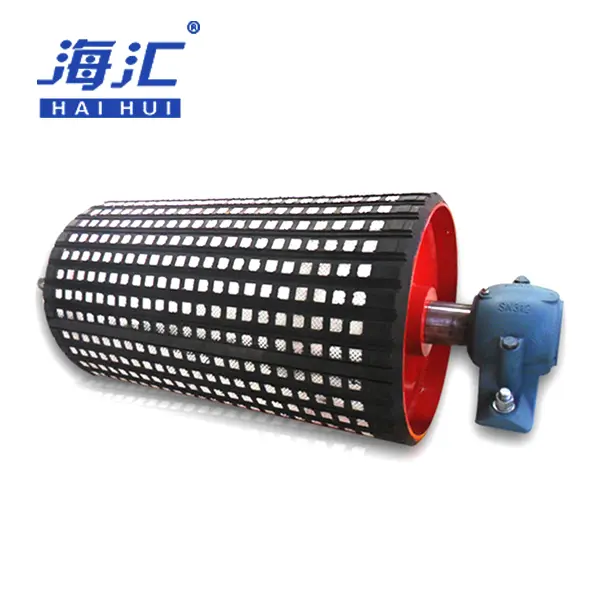
Best Guide to Mining Conveyor Pulley Rubber Lining Friction
Technical Analysis of Mining Conveyor Pulley Rubber Lining: Engineering Protocols, Friction Optimization, and Operational Lifespan Introduction to Mining Conveyor Pulley Rubber Lining Mining conveyor pulley rubber lining is a vital protective component designed to increase friction between the conveyor belt and the pulley shell, prevent belt slippage, and shield the metal pulley structure from severe…
Stop Conveyor Vibration: Advanced Pulley Balancing Machine for Mining
Conveyor Pulley Balancing Machine Optimization for Heavy Industrial Infrastructure Haihui Engineering Technical Insights A heavy-duty conveyor pulley isn’t just an iron drum—it’s a high-tension power transmitter, where a minor micro-gram imbalance can wreck bearings, shear structural mounts, and burn millions in unplanned operational downtime. Deep inside heavy transport lines, heavy rotating masses and punishing operational…
How to Design Belt Conveyor Drive Pulley to Prevent Misalignment
There are various causes of belt misalignment, each requiring a different approach. Belt misalignment is the most common fault in belt conveyors. Different causes of misalignment require different methods of rectification. Below are six adjustment methods commonly used on site. Part One: Adjusting the load-bearing idler group Applicable scenarios When the belt misaligns in the…
Practical Uses of Belt Conveyor for All Industries
Choosing the right material handling equipment directly defines production efficiency, labor costs, and operational stability for modern factories. Many enterprises rely on outdated manual handling or mismatched conveying equipment, resulting in low throughput, frequent material damage, and unnecessary labor waste. As a professional belt conveyor manufacturer, Haihui has summarized practical industrial experience to clarify the…
Best Types of Belt Conveyor for Industrial Use
Picking the right types of belt conveyor can greatly define your production efficiency, equipment stability, and long-term operational costs. Many factory managers make a common mistake: using a universal conveyor model for all materials and working conditions. This improper matching often leads to material slippage, frequent belt deviation, unnecessary wear and tear, and even unexpected…
Motorized Conveyor Pulley vs Conventional Drive: Which Saves More?
The real choice between a motorized conveyor pulley and a conventional drive setup hits your bottom line fast—energy costs, maintenance headaches, and space constraints aren‘t side issues anymore, they’re daily fires to put out. Old-school motor + reducer + chain setups pack punch, sure, but carry baggage. Motorized pulleys step in cleaner, safer, easier to…
Drum Pulley for Belt Conveyor:Stop Belt Slippage & Mistracking
The drum pulley isn’t just a component—it’s the difference between smooth belt tracking and costly belt damage when tension and alignment get out of hand. Conventional drive setups drag on maintenance and complicate alignment, while direct-motorized designs chase simplicity but demand precision in selection. Haihui engineers note that pulley selection dictates belt tracking, splice life,…
Mining Conveyor Pulley:Stop Belt Damage & Unscheduled Downtime
A mining conveyor pulley might look like just a steel drum with bearings—until one lagging failure or bearing seizure brings the whole production line to a grinding halt, and then it‘s a safety and compliance circus. For mine operators moving tons of coal, ore, or aggregate, “reliable” means certified lagging bond, induction-hardened shafts, and documented…
Mining Conveyor Rollers:Stop Bearing Failure & Belt Damage
Picking mining conveyor rollers isn‘t a price game; it’s a risk bet. One bad tube, wrong bearing seal, or soft shaft turns a smooth production run into belt damage, bearing seizure, and emergency change-outs. This guide outlines how to match materials, seals, bearings, and compliance so your underground belt hums daily. Key Points to Navigate…



 English
 العربية
 Português do Brasil
 Русский
 Español