
Stop Conveyor Vibration: Advanced Pulley Balancing Machine for Mining
Conveyor Pulley Balancing Machine Optimization for Heavy Industrial Infrastructure
Haihui Engineering Technical Insights
A heavy-duty conveyor pulley isn’t just an iron drum—it’s a high-tension power transmitter, where a minor micro-gram imbalance can wreck bearings, shear structural mounts, and burn millions in unplanned operational downtime.
Deep inside heavy transport lines, heavy rotating masses and punishing operational tensions must maintain flawless geometry. If they fall out of alignment, you trigger destructive harmonic vibrations, localized shell stress, premature belt wear, and maintenance teams raising alarms during critical production windows.
Haihui testing engineers note in 2026 technical field briefs that consistent dynamic balance tolerances and residual unbalance metrics directly extend bearing service life, reduce catastrophic shaft fatigue, and keep large-scale bulk handling infrastructure highly predictable.
Ready to eliminate structural vibration in your heavy conveyor networks?
Contact Haihui today for a comprehensive, 1-day balancing system proposal (equipment matching + software interface + quote) tailored to your structural requirements.
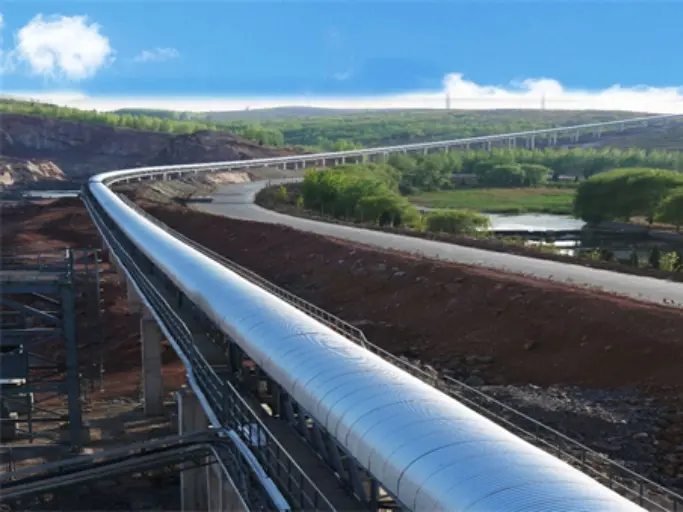
Rundown Notes: Conveyor Pulley Balancing Essentials
➔ Rotor Dynamics & Mass Redistribution: Precise correction plane calculations, proper counterweight geometry, and secure permanent welding ensure long-term balance stability and structural failure prevention.
➔ Vibration Analysis Mastery: Isolate mechanical noise, filtering extraneous sensory inputs, adjust multi-channel filtering parameters, and calibrate high-sensitivity piezoelectric sensors for flawless real-time displacement recording.
➔ ISO 21940 Compliance & Tolerances: Balance G-grade ratings to match specific operational speeds, optimize permissible residual unbalance limits, minimize rotational friction, and systematically meet stringent heavy industrial safety standards.
➔ Core Machine Structural Architecture: Select hard-bearing support pedestals, utilize rugged variable-frequency drive systems, integrate universal joint or end-drive mechanics, and install resilient structural damping frames.
➔ Predictive Maintenance & Quality Control: Regular calibration verification, force transducer testing, alignment checks, plus routine software data validation keep massive processing lines running smoothly on continuous shifts.
Anatomy of an Industrial Pulley Balancing Machine
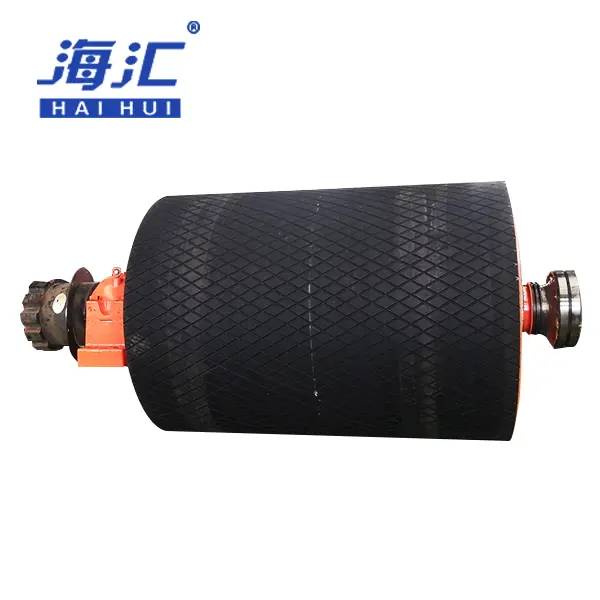
An industrial balancing machine might appear to be a straightforward mechanical bed, yet underneath its heavy steel framing rests a deeply synchronized network of sensors and data processors. From the heavy hard-bearing supports to the dynamic measuring computer, every component dictates how effectively a 20-ton pulley performs under brutal, real-world tensions.
Support Pedestals: Managing Massive Radial Loads
The support pedestal acts as the physical foundation of the dynamic balancing process. In a hard-bearing machine design, this rigid assembly directly converts the centrifugal forces generated by an unbalanced rotating pulley into high-precision micro-voltage sensor readings without allowing the workpiece itself to shift physically.
At the fundamental core:
- Heavy-duty roller carriages lock the pulley shafts into place.
- Internal high-stiffness piezoceramic sensors manage real-time force tracking.
- Adjustable height assemblies align the horizontal centerlines across various shaft diameters.
How it works in motion: The variable-frequency drive system spins the pulley up to its designated test speed. As the offset mass rotates, it exerts an outward centrifugal force. The calculation follows basic rotor dynamics:
$$F = m \times \omega^2 \times r$$
Where m represents the unbalance mass, \omega represents the angular velocity, and r represents the radial distance of the mass offset. The structural rigidity of the pedestal prevents displacement, forcing the total load into the sensor array for clean mathematical translation.
Sensor Calibration & Signal Processing Technology
The sensor network determines how cleanly the testing computer detects tiny variations in mass distribution. High-fidelity filtering is mandatory here; background factory rumbles must be filtered out entirely.
| Transducer Type | Sensitivity Range | Industrial Application Limit | Primary Asset Focus |
|---|---|---|---|
| Piezoelectric Force | High (Rigid Support) | Heavy Mining & Metallurgy | Large-diameter drive pulleys |
| Electrodynamic Velocity | Medium (Soft Support) | Power Generation & Hydro | High-RPM turbomachinery |
| Laser Displacement | Ultra-High (Non-contact) | Precision Lab Testing | Micro-component validation |
Brands like Haihui meticulously tune these data acquisition modules so that each industrial testing run produces crystal-clear phase angles and exact mass numbers without environmental interference. One smart adjustment prevents thousands of tons of steel from vibrating apart later.
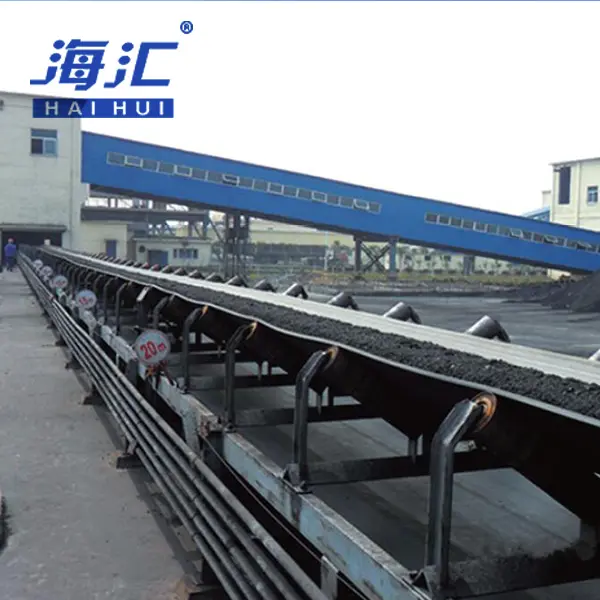
5 Steps! Mastering Pulley Dynamic Balancing Performance
Flawless dynamic balancing doesn’t happen by chance—it is calculated, calibrated, and proven through structured testing steps. From initial placement to final verification runs, every action dictates how that conveyor pulley survives inside punishing industrial environments.
- Step 1: Structural Geometry Recording and Initial Run Setup
Before spinning any heavy component, precise dimensions must be locked into the tracking software. Technicians measure the distance between the left and right correction planes, the sensor-to-plane spacing, and the radius where counterweights will eventually be welded or bolted. - Step 2: Low-Speed Spin and Initial Vector Detection
The machine initiates a controlled acceleration phase. The computer measures the raw, uncorrected vibration vector, plotting a baseline unbalance profile on a polar coordinate grid to pinpoint exactly where the heavy spot sits relative to the keyway. - Step 3: Calculating Trial Mass Additions for Calibration
A known trial weight is temporarily attached to a specific angle on the pulley rim. The system spins again, measuring how the known mass alters the vibration vector. This isolates the mathematical cross-talk between the left and right correction planes. - Step 4: Executing Permanent Correction Mass Installation
The calibration software outputs the exact required mass and angular location for correction. Technicians weld thick steel plates or insert heavy threaded plugs directly onto internal reinforcing rings or external face discs. - Step 5: Final High-Speed Verification and ISO Certification
The pulley accelerates to maximum operational speed. Sensors re-verify the residual unbalance against strict limits. The system outputs a permanent quality certificate proving the assembly falls securely within the target G tolerance limits before it leaves the workshop floor.
Heavy Industrial Sector Integration
Haihui heavy-duty dynamic balancing systems are engineered specifically for demanding, high-tonnage materials handling industries. We intentionally avoid building light-duty, commercial, or retail mall conveyor testing tools, focusing strictly on high-capacity infrastructure.
Our technologies are fully deployed across the following heavy industrial operating landscapes:
- Mining & Coal Logistics: Balancing primary drive, tail, and take-up pulleys handling tens of thousands of tons of raw ore and run-of-mine coal daily under high belt tensions.
- Metallurgy & Steel Mills: Ensuring stable material charging lines, ladle transport conveyors, and sinter plant delivery networks where extreme heat and abrasive dust challenge structural integrity.
- Power Plants & Hydroelectric Stations: Securing reliable coal-feeding lines and heavy debris-handling systems critical to continuous power generation.
- Chemical, Cement, & Petroleum Processing: Providing balance stability for corrosive material handling, heavy limestone crushing feeds, and specialized fertilizer packing conveyors.
- Ports, Terminals, & Paper Mills: Supporting ship loaders, high-speed stacker-reclaimers, and massive woodyard log-handling operations where structural breakdowns halt supply chains.
Technical Reference Classifications
- Rotor Dynamics Regulations – ISO 21940 Quality Standards
- Industrial Bulk Materials Handling – Conveyor Equipment Manufacturers Association (CEMA)
- Piezoelectric Force Sensing – International Measurement Confederation Data
 English
 العربية
 Português do Brasil
 Русский
 Español