
Metal Conveyor Rollers: Service Life, Maintenance, and Selection Guide
- 1. What Is the Typical Service Life of a Metal Conveyor Roller?
- 2. What Factors Have the Greatest Impact on Metal Conveyor Roller Lifespan?
- 3. How Do Bearings and Seals Affect Metal Conveyor Roller Service Life?
- 4. What Maintenance Practices Can Extend Metal Conveyor Roller Life?
- 5. What Are the Warning Signs That a Metal Conveyor Roller Is Failing?
- 6. How Can Buyers Maximize the Long-Term Value of Metal Conveyor Rollers?
- 7. Conclusion
- 8. FAQ
- 9. References
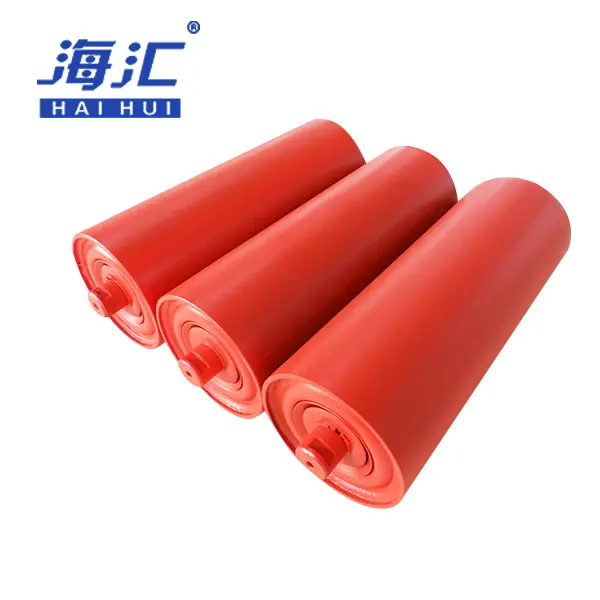
Metal conveyor rollers look simple—steel tubes with bearings inside. But when you’re moving thousands of tons of material every day, those rollers become the difference between smooth operation and unplanned downtime. One seized bearing, worn shell, or failed seal can turn a reliable conveyor into a maintenance nightmare.
Haihui engineers in 2025 emphasize tube concentricity, seal integrity, and bearing life as the foundation of reliable metal conveyor roller performance in heavy industrial environments.
1. What Is the Typical Service Life of a Metal Conveyor Roller?
Metal conveyor rollers are among the most numerous components in bulk material handling systems. A single conveyor can have hundreds or even thousands of rollers supporting the belt and load. When rollers fail, the entire system suffers.
Under normal operating conditions, the typical service life of a metal conveyor roller is 20,000 to 50,000 hours (approximately 2.5 to 6 years of continuous operation). Many well-designed rollers with proper seals and bearings can last longer, while rollers in harsh environments may fail much sooner.
Service life depends on several factors:
| Condition | Expected Service Life |
|---|---|
| Clean, dry environment | 40,000 – 60,000 hours |
| Moderate dust and moisture | 25,000 – 40,000 hours |
| Heavy dust, impact, or wet conditions | 15,000 – 25,000 hours |
| Severe abuse or contamination | Less than 10,000 hours |
A roller’s age doesn’t determine its condition. A three-year-old roller in a clean plant may outlast a six-month-old roller in a dusty mine.
2. What Factors Have the Greatest Impact on Metal Conveyor Roller Lifespan?
Several factors influence how long a metal conveyor roller will last. Understanding these factors helps operators extend service life and reduce unexpected failures.
2.1 Environmental Conditions
| Factor | Impact on Roller Life |
|---|---|
| Dust and grit | Accelerates bearing wear and seal damage |
| Moisture and humidity | Causes corrosion and lubricant degradation |
| Chemicals and corrosives | Damages seals, bearings, and tube surfaces |
| Temperature extremes | Affects lubricant viscosity and seal flexibility |
A metal conveyor roller that works well in a clean warehouse may fail within months in a quarry or cement plant.
2.2 Load and Operating Conditions
| Factor | Impact |
|---|---|
| Belt speed | Higher speeds increase bearing load and heat generation |
| Material weight | Heavier loads increase bearing stress and tube deflection |
| Impact forces | Repeated impact damages seals and bearings |
| Operating hours | Continuous operation accelerates all failure modes |
2.3 Manufacturing Quality
| Factor | Impact |
|---|---|
| Tube concentricity | Affects bearing alignment and seal performance |
| Bearing quality | Determines load capacity and fatigue life |
| Seal design | Determines resistance to contaminants |
| Coating quality | Affects corrosion resistance and surface life |
The difference between a metal conveyor roller that lasts five years and one that lasts five months is often in the details of seal design and bearing selection.

3. How Do Bearings and Seals Affect Metal Conveyor Roller Service Life?
Bearings and seals are the most critical components for metal conveyor roller longevity.
3.1 Bearing Selection
| Bearing Factor | Impact on Service Life |
|---|---|
| Load rating | Must exceed actual radial loads |
| Clearance | C3 or C4 for thermal expansion |
| Lubrication | Proper grease type and volume |
| Brand quality | Consistent performance and availability |
3.2 Seal Design
| Seal Type | Environment | Service Life Impact |
|---|---|---|
| Single labyrinth | Clean, dry conditions | Moderate |
| Double labyrinth | Moderate dust | Better |
| Labyrinth + contact | High dust or washdown | Superior |
| Triple seal | Wet, corrosive environments | Maximum |
The seal is the first line of defense. If dust gets in, the bearing is already dying.
4. What Maintenance Practices Can Extend Metal Conveyor Roller Life?
Preventive maintenance is the most cost-effective way to extend metal conveyor roller service life.
4.1 Routine Inspections
| Inspection | Frequency | Purpose |
|---|---|---|
| Visual check | Weekly | Look for damage, rust, or material buildup |
| Rotation check | Monthly | Ensure rollers spin freely |
| Temperature check | Monthly | Detect overheating bearings |
| Seal inspection | Quarterly | Check for damage or wear |
4.2 Cleaning and Housekeeping
| Practice | Benefit |
|---|---|
| Clean material buildup | Prevents tracking issues and uneven wear |
| Clear dust from seals | Extends seal life and bearing life |
| Remove debris from frames | Maintains proper alignment |
| Clean belt surfaces | Reduces abrasive contamination |
4.3 Replacement Timing
Replace metal conveyor rollers before they fail, not after. A seized roller damages the belt, causes tracking issues, and creates spillage. Planned replacement during scheduled maintenance is always cheaper than emergency replacement.

5. What Are the Warning Signs That a Metal Conveyor Roller Is Failing?
Operators should look for these common warning signs:
| Warning Sign | Indicates | Action |
|---|---|---|
| Roller doesn’t spin freely | Bearing or seal damage | Replace immediately |
| Unusual noise (squealing or grinding) | Bearing failure or dry bearing | Replace or re-lubricate |
| Excessive vibration | Imbalance or bearing wear | Replace |
| Tube damage (wear or scoring) | Material abrasion or misalignment | Replace |
| Heat (temperature above 60°C) | Bearing or seal failure | Investigate and replace |
| Belt tracking issues | One or more seized rollers | Locate and replace |
A seized metal conveyor roller doesn’t announce itself with a warning light. It announces itself with belt damage and spilled material.
6. How Can Buyers Maximize the Long-Term Value of Metal Conveyor Rollers?
When purchasing metal conveyor rollers, buyers should consider the total cost of ownership, not just the purchase price.
6.1 Selection Criteria
| Evaluation Factor | Importance |
|---|---|
| Tube wall thickness | Determines load capacity |
| Bearing brand and grade | Affects service life |
| Seal design | Determines contamination resistance |
| Coating and corrosion protection | Extends tube life |
| Manufacturing quality | Reduces premature failures |
| Test reports | Verifies quality claims |
6.2 Cost Comparison
| Cost Factor | Impact on Total Cost |
|---|---|
| Initial purchase price | Typically 10-20% of total cost |
| Installation labor | 5-10% of total cost |
| Maintenance and repairs | 30-50% of total cost |
| Downtime costs | Often exceeds all other costs combined |
A metal conveyor roller that costs twice as much but lasts three times longer is cheaper in the long run.

7. Conclusion
Metal conveyor roller service life depends on environmental conditions, load, maintenance practices, and manufacturing quality. Bearings and seals are the most critical components for roller longevity. Regular inspection, cleaning, and timely replacement reduce failures and extend service life.
Haihui serves heavy industries including paper mills, metallurgy, coal, steel, mining, power plants, hydropower stations, chemical plants, light industry, ports, cement plants, and petroleum. Our metal conveyor rollers are designed for stationary industrial applications—not portable systems or light-duty conveyors used in warehouses or retail settings.
8. FAQ
1. What is the typical service life of a metal conveyor roller?
Metal conveyor rollers typically last 20,000 to 50,000 hours (2.5 to 6 years) under normal operating conditions. Service life depends on load, environment, maintenance, and manufacturing quality.
2. What factors most affect metal conveyor roller lifespan?
The main factors are environmental conditions, load, belt speed, impact forces, seal design, bearing quality, and maintenance practices.
3. What are the most common metal conveyor roller failure modes?
Common failures include bearing seizure (dust ingress or lubrication failure), tube wear, seal failure, and corrosion.
4. How do seals affect metal conveyor roller service life?
Seals keep dust and moisture out of the bearing cavity. If seals fail, bearings fail. Seal selection is critical for roller longevity.
5. What maintenance practices extend metal conveyor roller life?
Regular inspections, cleaning, rotation checks, temperature monitoring, and timely replacement extend roller service life.
6. What warning signs indicate a metal conveyor roller is failing?
Signs include difficulty turning, unusual noise, excessive vibration, tube damage, heat, and belt tracking issues.
7. How do I choose the right metal conveyor roller for my application?
Consider load, belt speed, environmental conditions, required service life, seal type, bearing grade, and tube thickness.
8. Does a more expensive metal conveyor roller always last longer?
Not always, but cheap rollers often have inferior seals, bearings, and coatings. The total cost of ownership is more important than the purchase price.
9. What industries does Haihui serve?
Haihui supplies metal conveyor rollers to paper mills, metallurgy, coal, steel, mining, power plants, hydropower stations, chemical plants, light industry, ports, cement plants, and petroleum.
10. Do you supply portable or light-duty conveyor rollers?
No. Haihui specializes in heavy-duty industrial metal conveyor rollers for fixed installations.
9. References
- Haihui internal test reports and field data (2020-2026)
- MT/T 821-2006 – Coal mine belt conveyor idler technical conditions
- DIN 22112 – Belt conveyors – Idlers – Dimensions and technical requirements
- CEMA Standard No. 502 – Bulk material belt conveyor idler selection
- GB/T 10595-2017 – Belt conveyors
- Bearing manufacturer technical data (HRB, ZWZ, SKF, NSK)
- Seal and grease specifications – Industry standard test methods
- Field service records from Haihui customer sites (2020-2026)
 English
 العربية
 Português do Brasil
 Русский
 Español