Idler Rollers for Belt Conveyors: Selection, Warranty, and Service Life
- 1. What Warranty Terms Are Common for Idler Rollers for Belt Conveyors?
- 2. What Types of Failures Are Usually Covered Under an Idler Roller Warranty?
- 3. What Warranty Conditions Can Affect Idler Roller Coverage?
- 4. How Do Manufacturers Handle Idler Roller Repair or Replacement Claims?
- 5. What Additional Warranty and Service Options Are Available for Idler Rollers?
- 6. How Should Buyers Evaluate Idler Roller Warranty Before Purchasing?
- 7. What Selection Factors Affect Idler Roller Service Life and Warranty?
- 8. Conclusion
- 9. FAQ
- 10. References
Purchasing idler rollers for belt conveyors is a long-term operational decision. Roller quality directly affects belt tracking, energy consumption, and maintenance frequency. Since idlers operate continuously under heavy loads, buyers need to understand what influences roller service life, how to select the right type for their application, and what warranty protection typically covers. An unclear specification can lead to premature failures, unexpected downtime, and disputes with suppliers. Understanding common idler roller selection factors and warranty terms helps buyers make more informed purchasing decisions and protect their conveyor investment.
Common warranty terms for idler rollers for belt conveyors typically include a warranty period of 12 to 24 months after delivery or commissioning, coverage for manufacturing defects and material failures, repair or replacement obligations, and specific conditions related to installation, alignment, maintenance, and operating conditions. Some manufacturers may offer extended warranties or additional service agreements for critical conveyor applications, depending on project requirements and customer needs.
An idler roller warranty is more than a product quality guarantee—it reflects the manufacturer’s confidence in tube concentricity, bearing quality, seal design, and manufacturing processes. Reviewing warranty details carefully helps buyers protect their conveyor investment and ensure reliable long-term belt support.
1. What Warranty Terms Are Common for Idler Rollers for Belt Conveyors?
Idler rollers for belt conveyors are critical components that operate continuously under heavy loads, abrasive dust, and varying environmental conditions. Because idlers support the belt and material load, their reliability directly affects conveyor uptime and maintenance costs.
Common warranty terms for idler rollers for belt conveyors typically include:
| Warranty Element | Typical Terms |
|---|---|
| Warranty period | 12 to 24 months after delivery or commissioning |
| Coverage | Manufacturing defects and material failures |
| Corrective action | Repair or replacement of defective rollers |
| Exclusions | Damage from misuse, overloading, poor maintenance, or external factors |
A clear warranty protects customers by defining manufacturer responsibilities, coverage period, repair procedures, and replacement conditions.
2. What Types of Failures Are Usually Covered Under an Idler Roller Warranty?
Idler roller warranties generally focus on manufacturing-related problems.
Typical covered issues include:
- Defective tube materials
- Bearing manufacturing defects
- Seal installation errors
- Poor weld quality
- Failure to meet specified dimensional tolerances
Examples of covered failures:
| Failure | Typical Coverage |
|---|---|
| Bearing seizure due to manufacturing defect | Covered |
| Seal failure causing premature contamination | Covered |
| Tube splitting from material defect | Covered |
| Excessive runout from poor machining | Covered |
Coverage is usually conditional on correct installation and normal operating conditions.
3. What Warranty Conditions Can Affect Idler Roller Coverage?
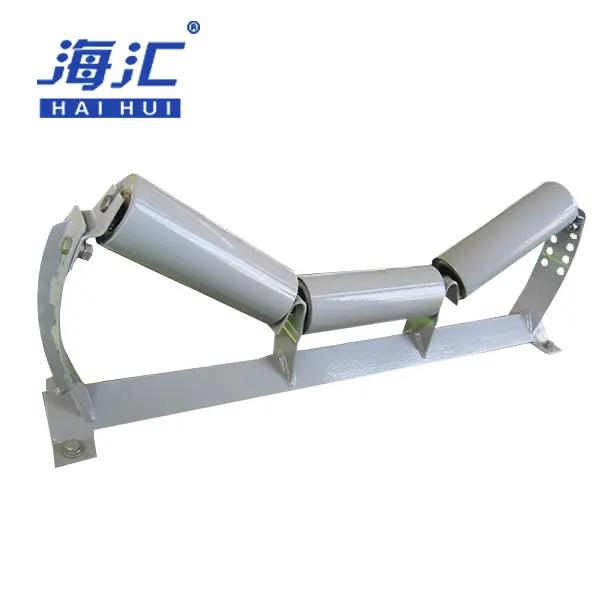
Warranty coverage for idler rollers for belt conveyors is usually subject to specific conditions. Manufacturers typically evaluate whether the rollers were installed, aligned, operated, and maintained according to agreed requirements.
Common warranty conditions include:
| Condition | Importance |
|---|---|
| Correct installation | Rollers must be aligned to the belt centerline |
| Proper frame support | Frames must be level and square |
| Operating within load limits | Rollers must not be overloaded |
| Regular maintenance | Bearings must be inspected and cleaned |
| Environmental protection | Seals must match the operating environment |
If installation or maintenance requirements are not followed, warranty claims may be affected.
4. How Do Manufacturers Handle Idler Roller Repair or Replacement Claims?
When idler rollers for belt conveyors fail during the warranty period, manufacturers typically follow a structured claim process.
Typical claim process:
- Customer reports failure – Provide roller details, failure description, and photos
- Manufacturer reviews records – Check purchase date, installation records, and operating conditions
- Technical investigation – Inspect the roller, check bearings, seals, and tube condition
- Determine warranty responsibility – Evaluate whether the failure is covered
- Provide solution – Repair, replace, or deny claim based on investigation findings
The final solution depends on the failure cause, warranty conditions, and product availability.
5. What Additional Warranty and Service Options Are Available for Idler Rollers?
Some manufacturers offer extended warranty or service agreements for critical conveyor applications.
Additional options may include:
| Option | Description |
|---|---|
| Extended warranty | Coverage beyond standard 12–24 months |
| Preventive maintenance | Scheduled inspections and bearing re-greasing |
| Spare parts kits | Pre-packaged replacement rollers and seals |
| Technical support | On-site alignment and troubleshooting assistance |
Extended coverage is especially valuable for critical conveyors where unplanned downtime is costly.
6. How Should Buyers Evaluate Idler Roller Warranty Before Purchasing?
Before purchasing idler rollers for belt conveyors, buyers should carefully review warranty documentation.
Important questions include:
| Question | Reason |
|---|---|
| What failures are covered? | Understand protection scope |
| When does coverage begin? | Avoid timing disputes |
| Are labor costs included? | Evaluate total support cost |
| What maintenance is required? | Protect warranty validity |
| Are all components covered? | Confirm complete protection |
Buyers should also verify:
- Manufacturing standards (MT/T 821, CEMA, DIN 22112)
- Material quality (tube grade, bearing brand, seal type)
- Factory testing procedures (rotation resistance, runout, seal integrity)
7. What Selection Factors Affect Idler Roller Service Life and Warranty?
Proper selection of idler rollers for belt conveyors directly affects both service life and warranty protection.
Key selection factors:
| Factor | Impact on Service Life |
|---|---|
| Tube diameter and wall thickness | Determines load capacity and resistance to bending |
| Bearing grade and seal type | Determines resistance to dust and moisture |
| Frame alignment | Prevents premature wear and tracking issues |
| Environmental conditions | Requires appropriate corrosion protection |
| Operating speed and load | Affects bearing and seal fatigue life |
Proper selection extends service life and helps maintain warranty protection.
8. Conclusion
Idler rollers for belt conveyors are a long-term investment in conveyor reliability. A well-defined warranty protects against manufacturing defects and material failures. Proper selection, installation, and maintenance help maintain warranty protection and extend roller service life.
Haihui serves heavy industries including paper mills, metallurgy, coal, steel, mining, power plants, hydropower stations, chemical plants, light industry, ports, cement plants, and petroleum. Our idler rollers are designed for stationary industrial applications—not portable systems or light-duty conveyors used in warehouses or retail settings.
9. FAQ
1. What is the typical warranty period for idler rollers for belt conveyors?
The standard warranty period is 12 to 24 months after delivery or commissioning, depending on the manufacturer and application.
2. What failures are covered under an idler roller warranty?
Covered failures typically include manufacturing defects, material failures, seal installation errors, and poor weld quality.
3. What failures are excluded from idler roller warranties?
Exclusions generally include damage from overloading, poor maintenance, incorrect installation, misuse, or external factors.
4. How does installation affect idler roller warranty?
Incorrect installation, such as poor frame alignment or loose mounting, may invalidate warranty coverage.
5. Does regular maintenance affect warranty validity?
Yes. Regular inspection and cleaning are often required to maintain warranty coverage.
6. How should I evaluate idler roller warranty before purchasing?
Review warranty duration, coverage scope, exclusions, maintenance requirements, and repair procedures.
7. What selection factors affect idler roller service life?
Tube diameter, bearing grade, seal type, frame alignment, and environmental conditions all affect service life.
8. What industries does Haihui serve?
Haihui serves paper mills, metallurgy, coal, steel, mining, power plants, hydropower stations, chemical plants, light industry, ports, cement plants, and petroleum.
9. Do you supply idler rollers for portable or light-duty conveyors?
No. Haihui specializes in heavy-duty industrial idler rollers for fixed installations.
10. References
- MT/T 821-2006 – Coal mine belt conveyor idler technical conditions
- DIN 22112 – Belt conveyors – Idlers – Dimensions and technical requirements
- CEMA Standard No. 502 – Bulk material belt conveyor idler selection
- GB/T 10595-2017 – Belt conveyors
- Haihui internal test reports and field data (2020-2026)
- Bearing manufacturer technical data (HRB, ZWZ, SKF, NSK)
- Seal and grease specifications – Industry standard test methods
- Field service records from Haihui customer sites (2020-2026)
 English
 العربية
 Português do Brasil
 Русский
 Español