
Practical Methods to Ensure Complete Cement Quality Control Efficiency
- Alignment with Advanced Technical Models in Environmental Engineering
- Statistical Quality Control Protocols in Raw Material Processing
- Technical Standards for Finished Cement Batches
- Quantitative Modeling of Cement Strength Prediction Curves
- Continuous Personnel Optimization and Quality Auditing
- Long-Term Sustainability and Structural Consistency
- References and Engineering Standards
Alignment with Advanced Technical Models in Environmental Engineering
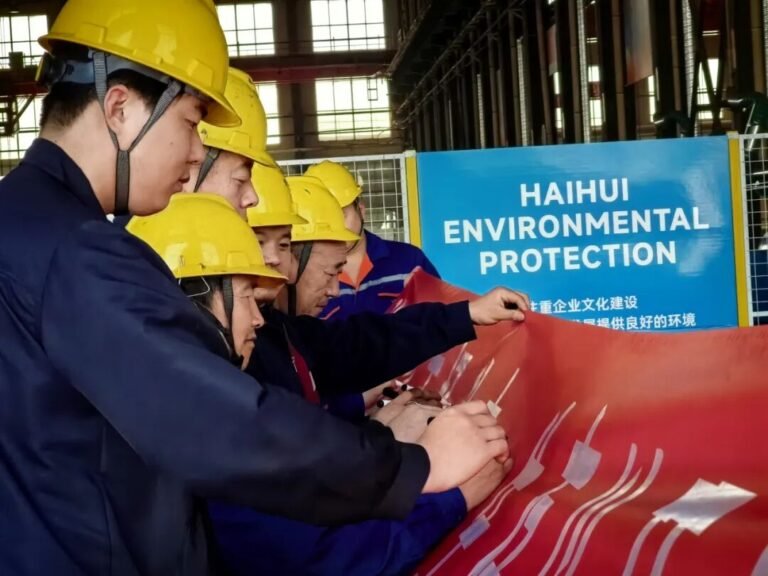
Listening to the operational reports from exemplary engineers, specifically Comrade Tian Jie from Haihui Environmental Protection Equipment Company (海汇环保设备公司), provides a clear practical framework for industrial quality management.
In heavy manufacturing and environmental engineering sectors, every technician must function as a standardized benchmark. Aligning individual laboratory workflows with proven field achievements ensures a reliable corporate operating matrix.
Statistical Quality Control Protocols in Raw Material Processing
Industrial quality management functions as the fundamental safety baseline for chemical production. Preserving this baseline requires integrating standard operating procedures directly into the testing of raw inputs, real-time kiln monitoring, and final batch testing.
To eliminate error propagation, quality control systems must transition from reactive sampling to proactive operational auditing. The quality management division maintains an internal continuous optimization protocol across three distinct analytical zones:
- Raw Material Intake: Verifying chemical composition consistency before blending.
- In-Process Kiln Monitoring: Continuous feedback adjustments based on thermal and chemical data.
- Finished Product Verification: Final testing to confirm total compliance with market standards.
Technical Standards for Finished Cement Batches
Modern construction standards require tight control over physical and chemical properties. To meet these rigorous environmental regulations, laboratory operations must achieve a 100% compliance rate for all shipped products.
The table below outlines the core chemical and physical parameters required to maintain optimal batch uniformity in cement production:
| Material Quality Metric | Operational Target Standard | Maximum Standard Deviation (σ) | Evaluation Method | Regulatory Reference |
| 3-Day Compressive Strength | $\ge 24.0\text{ MPa}$ | $\pm 1.2\text{ MPa}$ | Destructive hydraulic press test | EN 197-1 Standard [1] |
| 28-Day Compressive Strength | $\ge 52.5\text{ MPa}$ | $\pm 1.5\text{ MPa}$ | Extended curing compression loop | EN 197-1 Standard [1] |
| Sulfur Trioxide ($SO_3$) Mass | $\le 3.5\%$ | $\pm 0.15\%$ | High-temperature infrared combustion | ASTM C114 Profiling [2] |
| Loss on Ignition (LOI) | $\le 5.0\%$ | $\pm 0.20\%$ | Analytical mass variance via furnace | ASTM C114 Profiling [2] |

Quantitative Modeling of Cement Strength Prediction Curves
To systematically manage quality fluctuations and avoid batch non-conformity, the laboratory utilizes a standard empirical engineering formula. The Predicted 28-Day Compressive Strength ($S_{28}$) is calculated using a modified linear regression model based on early-stage curing data:
$$S_{28} = A \cdot S_3 + B \cdot \left(\frac{C_3A}{C_4AF}\right) + \alpha \cdot (T_{cure} – 20)$$
Where:
- $S_{28}$ = Predicted compressive strength after standard 28-day curing ($\text{MPa}$)
- $S_3$ = Experimentally verified compressive strength after 3-day curing ($\text{MPa}$)
- $A, B$ = Empirical scaling constants derived from historical plant blending data ($A \approx 1.45, B \approx 3.20$ [1])
- $C_3A / C_4AF$ = Mineralogical ratio of Tricalcium Aluminate to Tetracalcium Aluminoferrite, determined via X-ray diffraction (XRD)
- $\alpha$ = Thermal sensitivity coefficient for concrete hydration kinetics ($\alpha \approx -0.45 \text{ MPa/}^\circ\text{C}$ [1])
- $T_{cure}$ = Actual temperature monitored inside the curing chamber ($\text{C}^\circ$)
Maintaining strict control over the curing chamber environment ensures that the variance remains tight ($20 \pm 1^\circ\text{C}$), allowing engineers to quickly catch and fix anomalies before the final product is shipped [1].
Continuous Personnel Optimization and Quality Auditing
Technical upgrades are only as reliable as the personnel executing them. The laboratory division implements standard peer training structures to ensure team-wide alignment with changing environmental standards.
- Daily Operational Reviews: Conducting brief technical briefings prior to every shift change to review raw material changes.
- On-Site Technical Calibration: Running hands-on training sessions to calibrate X-ray fluorescence spectrometers against standard reference samples.
- Case Study Analysis: Reviewing industrial anomalies and instrument drifts to build stronger troubleshooting protocols.
Long-Term Sustainability and Structural Consistency
Maintaining high product reliability requires a steady commitment to precise daily metrics. Temporary improvements cannot substitute for a permanent, data-driven quality framework.
By continuing to refine analytical workflows, adopt modern automated instrumentation, and minimize human error in data logging, the quality control division helps ensure the factory’s long-term operational success and compliance.
References and Engineering Standards
- [1] European Standard EN 197-1: Composition, specifications and conformity criteria for common cements, European Committee for Standardization.
- [2] ASTM C114 – 24: Standard Test Methods for Chemical Analysis of Hydraulic Cement, ASTM International Standards Manual.


 English
 العربية
 Português do Brasil
 Русский
 Español