
Drive Pulley Conveyor:Stop Failure & Maximize Uptime
Choosing the right drive pulley conveyor manufacturer can make or break your bulk handling operation. In high-tonnage mining and aggregate, a weak partner burns cash, stalls production, and dents plant reliability fast.
Grand View Research’s 2025 industry analysis reports sustained growth in global conveyor component demand, driven by mining, aggregate, and cement applications tightening uptime and safety scrutiny.
Pick partners built for scale, speed, and standards that last.
Types of Drive Pulley Conveyor Designs
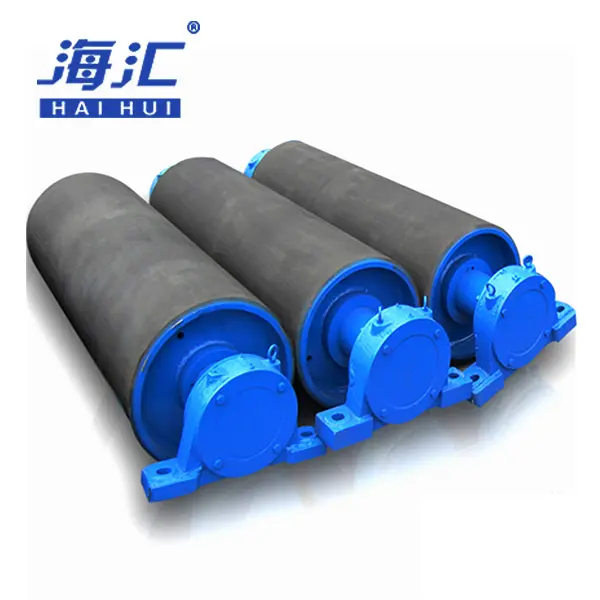
Drive pulley conveyor manufacturers know the pulley isn’t just steel and lagging—it shapes belt tracking, torque transfer, and plant uptime. From quarry head drives to overland conveyors, drive pulley choices affect traction, fatigue life, and maintenance cost. Smart manufacturers weigh performance and durability side by side.
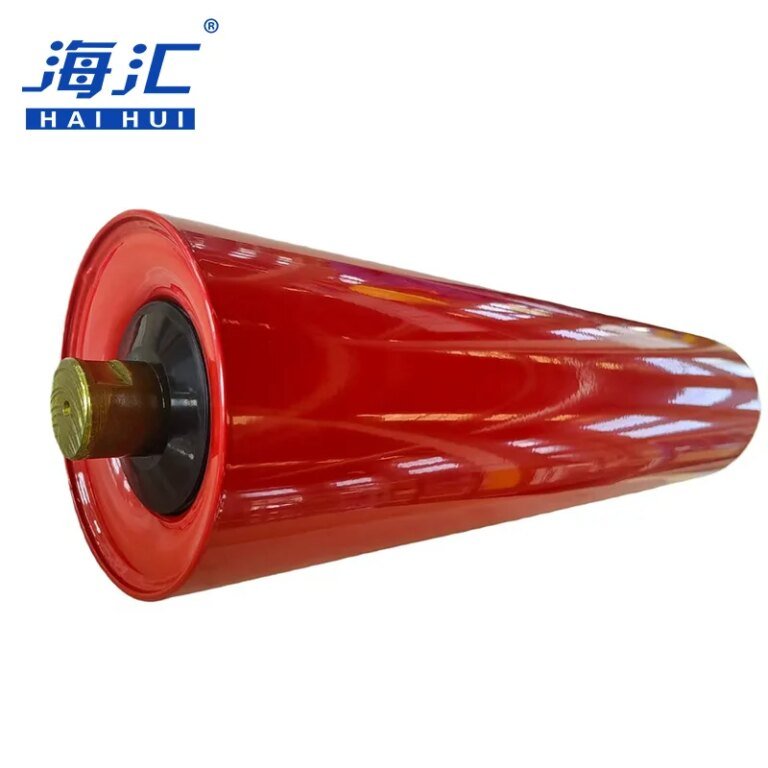
Standard Fabricated Drive Pulley
Among drive pulley conveyor designs, fabricated steel remains a favorite for good reason.
Core performance
- Rolled S355 steel shell transfers torque efficiently
- Full-penetration end plate welds provide structural integrity
- Vulcanized rubber lagging (60-75 Shore A) delivers traction
Operational perks
- Smooth shell surface improves belt contact
- Works well with standard CEMA frames
- Keeps durability under daily use
Many operations prefer fabricated pulleys for general quarry duty. Haihui aligns its drive pulley manufacturing with these specs, balancing strength and cost without overcomplicating production.
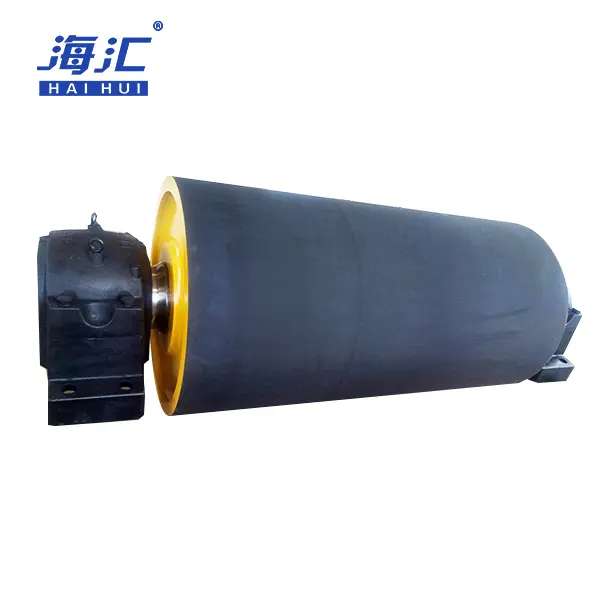
Engineered Forged Shaft Drive Pulley
For high-tension mainlines, drive pulley conveyor manufacturers still rely on forged shafts.
Material advantages
- 42CrMo4 forged steel increases fatigue life (up to 3x vs. bar stock)
- Induction-hardened bearing seats (HRC 50-55) resist scoring
- Recognized as premium construction
Operational advantages
- Higher torque capacity for long overland belts
- Compatible with CEMA D/E class applications
- Stable under high start-stop cycles
Mining and heavy aggregate applications often choose this path. It’s practical, tough, and easy for manufacturers managing critical conveyor lines.
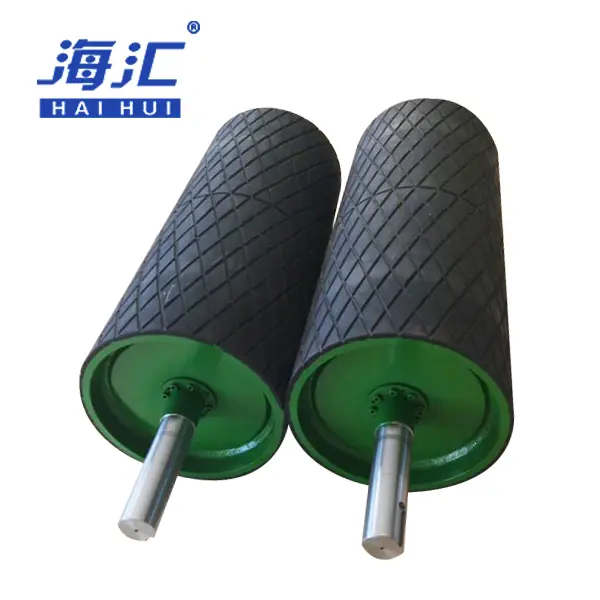
Ceramic Lagged Drive Pulley
Traction is shifting fast in wet or muddy applications.
Traction upgrade
- Ceramic tiles (92-95% Al₂O₃) embedded in rubber matrix
- Herringbone grooves shed water and fines
- Friction coefficient 0.5-0.6 vs. 0.4-0.5 for rubber
Operational impact
- Supports sustainable uptime in wet conditions
- Appeals to safety-focused mine operators
- Signals high-reliability positioning
“Reliability remains a primary driver of innovation in bulk handling components,” notes Smithers in its 2024 Future of Conveyor Components report.
That line hits home for drive pulley conveyor manufacturers aiming to stay relevant.
Recycled Content Steel Shells for Eco-Friendly Pulleys
Material sourcing now goes deeper.
Alloy strategy
- Increase recycled steel content in shells
- Blend post-consumer and post-industrial material
- Maintain strength in rolled plate
Circular goals
- Lower carbon output per pulley
- Support circular economy targets
- Reinforce brand-level sustainability
Haihui works with drive pulley conveyor manufacturers that prioritize eco-friendly sourcing without sacrificing shell integrity.
Stainless Steel Pulleys for Chemical or Washdown Applications
Corrosive environments matter just as much as load.
Corrosion protection
- 304 or 316 stainless shells form a protective barrier
- Passivated surfaces resist chemical attack
- Designed for fertilizer, food, or washdown conveyors
Compliance focus
- No coating to fail or corrode
- Stable internal lining against rust
- Meets FDA expectations for food-grade material handling
For manufacturers serving chemical or food-processing brands, these pulleys aren’t optional—they’re the baseline for safe, reliable conveyor operation.
4 Standards Governing Drive Pulley Manufacturing
Conveyor standards can feel like red tape, but for drive pulley conveyor manufacturers, these specs shape daily operations. From shaft hardness to weld integrity, compliance keeps pulleys aligned with global safety and performance expectations.
CEMA Standards for Pulley Classifications
For drive pulley conveyor manufacturers handling heavy-duty applications, CEMA standards reach deep into design and testing.
Pulley classification
- CEMA B, C, D, E classes based on belt tension and torque
- Face width and shaft diameter per CEMA engineering guidelines
Shaft requirements
- Material certs (42CrMo4 chemistry and mechanicals)
- Induction hardening verification (HRC 50-55 bearing seats)
Testing methods
- Dynamic balancing per ISO 1940 (G-16 minimum)
- NDT weld inspection (ultrasonic or dye-penetrant)
This is where manufacturers stay sharp. Small hardness deviations can stall entire conveyor systems.
MSHA Requirements for Underground Coal
Under MSHA and safety regulations, drive pulley conveyor manufacturers must manage:
- Flame-resistant lagging materials for underground coal
- Spark prevention (static grounding where required)
- Approved materials list compliance
Here’s how it usually plays out:
- Verify lagging material meets MSHA flame-resistance.
- Confirm shaft grounding provisions.
- Apply proper documentation and marking.
Miss one detail, and mine inspectors push shipments back. Even seasoned manufacturers double-check paperwork before pulleys move underground.
ISO 9001:2015 Quality Management
Under ISO 9001, drive pulley conveyor manufacturers must manage:
- Incoming material inspection (mill certs for shell and shaft)
- In-process weld and hardness verification
- Final inspection (NDT, balancing, dimensional check)
ISO focus points
- Parametric welding control on shell fabrication
- Precision shaft straightness and concentricity (±0.2mm/m, ≤0.5mm TIR)
Pass/fail that buyers actually feel
- Flawless NDT compliance and total elimination of weld-related failures.
OSHA Guarding and Lockout/Tagout Standards
Safety rules hit conveyor operations hard, especially around OSHA guarding requirements.
Guarding requirements
- Pulley nip-point protection (in-running nip guards)
- Lockout/tagout procedures for maintenance
- Emergency stop pull-cord coverage
Manufacturing compliance
- Guard mounting provisions on pulley frames
- Documentation of safe access points
For drive pulley conveyor manufacturers, balancing access with guarding is part science, part safety culture.
OEM vs. Aftermarket Drive Pulleys: Which to Choose?
Choosing between OEM and aftermarket can feel like standing at a crossroads. The truth is simple: your budget, lead time, and performance needs will shape the path. From pulley design to final installation, the right manufacturer makes all the difference.
OEM
When mines work with drive pulley conveyor manufacturers under an OEM model, the focus is deep engineering and control.
Strategic Foundation
- Product Creation – dedicated engineering services, advanced fatigue analysis
- Production Framework – controlled manufacturing processes, certified materials
Quality and Ownership
- Protection Systems – strict quality assurance, confidential design agreements
- Brand Advantage – exclusive shaft designs, CEMA compliance built-in
Grand View Research noted in a 2025 components outlook that customized pulley solutions continue to grow faster than standard formats, driven by plant-level uptime requirements and premium positioning.
For mines comparing manufacturers, OEM often suits those wanting unique shaft diameters, odd face widths, or specific lagging patterns. Haihui supports this route with scalable customization depth and long-term engineering collaboration.
Aftermarket Manufacturing
Aftermarket works differently. Many manufacturers offer ready-to-spec pulley systems that speed up procurement.
Speed to Market
- Ready Designs – proven shell and shaft combinations for common applications
- Fast Production – streamlined processes, reliable quality
Plant Control
- Branding – full mine branding on pulley tags and documentation
- Market Position – smarter inventory strategy, improved maintenance planning
For mines reviewing manufacturers, aftermarket lowers engineering risk and reduces tooling costs. Haihui helps partners balance cost, speed, and reliability while coordinating closely with trusted component suppliers worldwide.
In short, manufacturers can support either route; the smarter move depends on how much control, speed, and differentiation your mine truly needs.
How Can You Reduce Conveyor Downtime Costs?
Cutting downtime is on every plant manager’s mind. Smart drive pulley conveyor manufacturers know savings don’t come from shortcuts but from tighter engineering, smoother logistics, and better material choices.
Optimize Shaft Hardening to Extend Pulley Life
High-volume mining changes the math for drive pulley manufacturers fast.
- Induction hardening (HRC 50-55) extends bearing seat life 3-5x.
- Forged 42CrMo4 shafts reduce fatigue failures.
- Proper keyway design eliminates stress risers.
For drive pulley manufacturers, cost drops when:
- Bearing seats maintain hardness, preventing inner ring spin.
- Shafts resist bending under high starting torque.
- Scrap from fatigue failures decreases.
| Shaft Material | Avg. Fatigue Life (cycles) | Cost Index | Service Life (years) |
|---|---|---|---|
| C45 bar stock (baseline) | 500,000 | 1.0 | 3-5 |
| Forged 42CrMo4 (standard) | 1,500,000 | 1.5 | 8-12 |
| Forged 42CrMo4 (hardened) | 2,500,000 | 1.8 | 12-18 |
Leading manufacturers like Haihui fine-tune induction parameters so every shaft runs clean and strong, keeping conveyor output steady without burning cash.
Leverage Supply Chain Management for Efficiency
Cost control starts inside the supply chain.
- Stable plate suppliers reduce rush fees.
- Smart inventory lowers warehouse waste.
- Tight distribution networks shrink freight bills.
Within strong drive pulley manufacturers, savings show up in layers:
- Procurement – long-term contracts, bulk steel pricing
- Logistics – route optimization, consolidated shipments
- Network – regional warehousing, balanced stock levels
Top manufacturers treat supply chain visibility as a daily habit, not a once-a-year audit.
Adopt Automated Welding and NDT to Reduce Weld Defects
Manual welding eats into quality. Automation, robotics, and smart inspection fix that.
In high-performing drive pulley conveyor manufacturers:
- Robotic welding cells ensure consistent penetration.
- Automated NDT (ultrasonic, MPI) spots defects immediately.
- Integrated inspection tracks weld quality in real time.
Labor shifts from rework to supervision. Haihui applies advanced manufacturing across its pulley fabrication, helping mines scale without stacking maintenance costs.
Select Appropriate Lagging for the Environment
Material conditions swing hard. Smart drive pulley manufacturers respond with application-specific lagging.
Focus areas include:
- Materials – ceramic for wet/muddy, rubber for general, stainless for washdown
- Groove patterns – herringbone for self-cleaning, plain for dry
- Durometer – 60-75 Shore A for optimal grip and wear
Using application-matched lagging protects the belt while trimming maintenance spend. Haihui supports mine operators who want both uptime and compliance, proving that responsible manufacturers can still win on cost.
Drive Pulleys in Mining & Quarry Operations
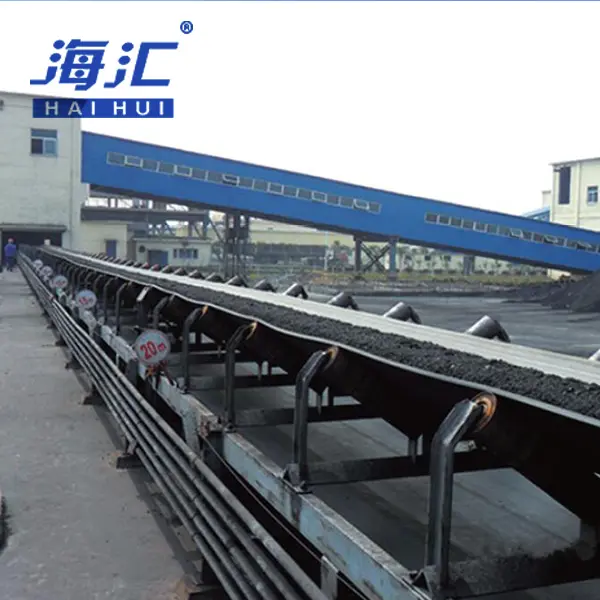
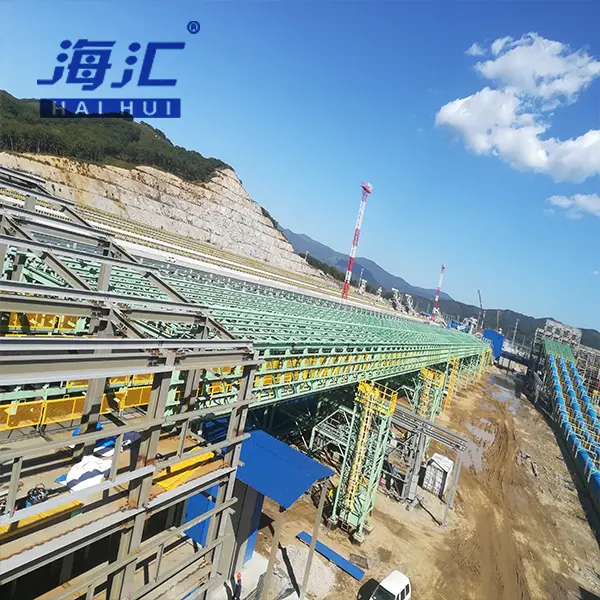
Drive pulleys are everywhere now—crusher feed belts, overland conveyors, stacker reclaimers—and drive pulley conveyor manufacturers are the quiet force behind that productivity. From safety rules to uptime, smart manufacturers keep mining brands compliant, productive, and consistent.
Ensuring CEMA Compliance for High-Tension Drives
For mining applications, drive pulley conveyor manufacturers must align every layer of production with CEMA standards.
Design requirements
- Shaft diameter sized to starting torque (not running torque)
- Shell thickness sufficient for belt tension and start/stop cycles
- Lagging bond peel strength ≥12 N/mm
Documentation trail
- Mill certificates for shell plate and shaft bar stock
- Hardness test reports (HRC 50-55 bearing seats)
- NDT weld inspection logs
System validation
- Dynamic balancing (G-16 minimum for >3 m/s)
- Concentricity check (≤0.5mm TIR face runout)
Field tracking
- Installation date logging
- Periodic bearing temperature monitoring
Trusted manufacturers like Haihui build these safeguards into daily operations, not just audits.
Lagging Selection for Maximum Traction
In wet or inclined conveyors, lagging sells. That’s why leading drive pulley conveyor manufacturers invest heavily in ceramic and grooved rubber designs.
Material advantages
- Ceramic tiles provide extreme grip in muddy conditions
- Herringbone grooves shed water and fines
- Vulcanized bond prevents detachment
Design elements
- Groove depth 6-10mm for water evacuation
- Tile coverage 60-80% for optimal grip
Brand impact
- Fewer belt slip events, lower belt cover wear
Top manufacturers understand that lagging is not fluff—it drives belt life and maintenance budgets.
NDT Weld Inspection for Shell Integrity
A shell weld failure kills production. That’s why experienced manufacturers prioritize strict NDT weld inspection.
Weld preparation
- Full-penetration joint design
- Pre-heat and interpass temperature control
Inspection operations
- Ultrasonic testing for internal porosity
- Magnetic particle inspection for surface cracks
Quality assurance
- 100% NDT on every load-bearing weld
- Documentation for audit trail
Reliable manufacturers don’t just make pulleys—they protect conveyor uptime. That steady performance is why many mining brands stick with Haihui when scaling operations.
FAQs
How do drive pulley conveyor manufacturers maintain consistent quality in large-scale production?
Consistency is built through layered control systems.
Certified production environment
- ISO 9001 guides daily operations.
- QA labs test hardness, balance, and NDT.
Automated precision
- Robotic welding ensures consistent weld quality.
- Automated NDT spots defects in real time.
Ongoing technical partnership
- Engineering teams review shaft sizing and lagging selection.
- R&D refines induction hardening for fatigue life.
Under pressure—literally—discipline keeps every pulley reliable, safe, and compliant with CEMA, MSHA, and ISO standards.
What materials and design practices define leading drive pulley manufacturers?
Quality now shapes material choice as much as price.
| Component | Common Choice | Performance Focus |
|---|---|---|
| Shaft | Forged 42CrMo4 | Fatigue life, bearing seat hardness |
| Shell | S355 steel | Impact strength, concentricity |
| Lagging | Ceramic or rubber (60-75 Shore A) | Traction, water shedding |
| Coating | Epoxy or polyurethane | Corrosion resistance |
Beyond materials, quality programs often include:
- Certified material traceability (mill certs per lot).
- NDT weld inspection (UT and MPI).
- Supply chain audits to cut variability.
For mines and quarries, buyers now expect performance without compromise.
Why do mines choose OEM manufacturing from drive pulley specialists?
Reliability, fit, and life-cycle cost drive the decision.
A mine operating aggregate or overland belts can gain:
- Custom shaft diameters and face widths.
- CEMA-compliant engineering for torque and fatigue.
- OEM warranties with full traceability.
Logistics adds another layer of advantage:
- Warehousing aligned with mine supply systems.
- Global shipping support with export documentation.
- JIT delivery compliant with mine production schedules.
The result is simple but powerful: longer pulley life, controlled costs, and confidence that every unit meets both performance and safety expectations.
References
- Global Conveyor Components Market Analysis – Grand View Research
- CEMA – Conveyor Equipment Manufacturers Association standards
- ISO 9001:2015 Quality Management Systems – ISO.org
- Smithers – Future of Conveyor Components report 2024
- ASTM E18 – Rockwell hardness testing
- ASTM E709 – Magnetic particle inspection
- MSHA – Mine Safety and Health Administration
- OSHA – Occupational Safety and Health Administration
- Haihui – Technical data sheets for drive pulley conveyor systems
 English
 العربية
 Português do Brasil
 Русский
 Español