Top Belt Conveyor Parts for Industrial Maintenance
- 6 Core Categories of Belt Conveyor Parts
- Conveyor Belt: The Core Carrying Component
- Conveyor Rollers & Idlers: Support & Stabilization Parts
- Drive & Driven Pulleys: Power Transmission Parts
- Drive System Assembly: Power Support Parts
- Tensioning & Correction Parts: Stability Adjustment Components
- Cleaning & Sealing Accessories: Anti-Wear Auxiliary Parts
- Key Parameter Comparison of Main Belt Conveyor Parts
- Vulnerable Belt Conveyor Parts & Maintenance Cycle
- Common Failures & Parts Matching Solutions
- FAQs about Belt Conveyor Parts
- Choose Haihui for Reliable Belt Conveyor Parts Solutions
- References
Selecting qualified belt conveyor parts directly defines overall system stability and operational efficiency. Substandard components cause belt deviation, material spillage, frequent shutdowns, and inflated maintenance costs. Professional procurement focuses on component material grade, dimensional tolerance, wear resistance, and structural compatibility. Standardized belt conveyor parts matching converts chaotic daily operation into stable, low-cost long-term production.
Key Points for Belt Conveyor Parts
➔ Core Component Classification: Essential belt conveyor parts include belts, rollers, pulleys, drive units, tensioners, and cleaning accessories for full-system operation.
➔ Material Grade Matching: Select rubber, PU, steel, and alloy materials based on load weight, abrasion degree, and working temperature.
➔ Dimensional Tolerance Control: Precise roller parallelism, pulley roundness, and belt thickness ensure stable conveying and reduced deviation.
➔ Wear & Corrosion Resistance: High-quality surface treatment extends part service life in dusty, humid, and high-load industrial environments.
➔ Systematic Maintenance Logic: Targeted inspection and replacement of vulnerable belt conveyor parts eliminate sudden line failures.
💡 Ready to optimize your conveyor system? With decades of industrial manufacturing expertise, Haihui provides a 1-day solution proposal (component matching, parameter customization, and bulk quotation) tailored to your exact operational needs.
6 Core Categories of Belt Conveyor Parts
A complete belt conveyor system relies on coordinated operation of multiple belt conveyor parts. Each component undertakes independent structural and functional responsibilities, and minor mismatches will trigger overall system failures. In industrial bulk material handling, standardized part configuration is the core premise of high-efficiency and low-consumption operation.
Conveyor Belt: The Core Carrying Component
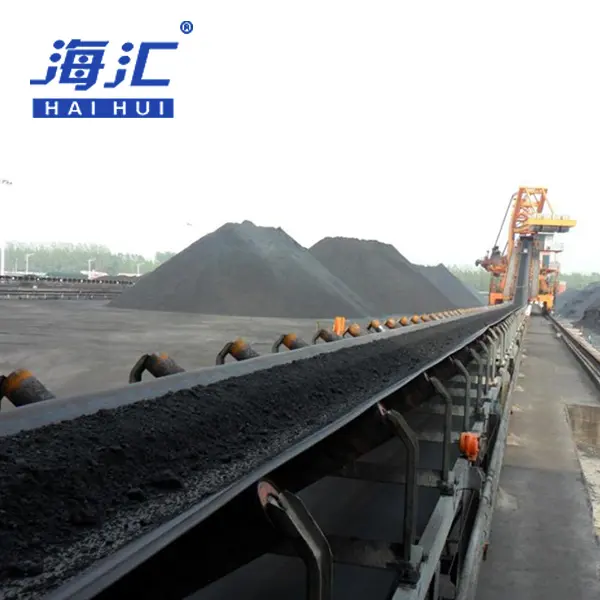
The conveyor belt is the most critical and consumable belt conveyor part, responsible for direct material bearing and linear transportation. Its material, thickness, and structural layer design determine load capacity, wear resistance, and service life.
Main Belt Types & Core Properties
Ordinary Rubber Belt
Adopts multi-layer canvas core with rubber covering on both sides, featuring moderate tensile strength and cost performance. Suitable for ordinary bulk materials such as grain, sand, and gravel under normal temperature conditions. It supports long-distance horizontal and low-inclination conveying, with stable daily operation and low replacement cost.
Heavy-Duty Anti-Tear Rubber Belt
Equipped with steel wire rope core or reinforced fiber layer, it greatly improves tensile resistance and anti-tear performance. It can withstand sharp material impact and heavy load pressure, suitable for high-intensity working conditions such as mining, cement plants, and quarry transportation.
PVC/PU Light-Duty Belt
Lightweight and environmentally friendly, with smooth surface and no material adhesion. Food-grade PU materials meet sanitary production standards, widely used in food processing, electronic assembly, and pharmaceutical conveying lines. It features low noise, oil resistance, and easy cleaning.
High-Temperature & Anti-Corrosion Special Belt
Added with special coating materials, resisting high temperature, acid and alkali corrosion, and viscous material adhesion. It adapts to harsh working conditions such as chemical factories and high-temperature processing workshops, effectively avoiding belt aging and failure.
Belt Parameter Performance Comparison
| Belt Type | Tensile Strength (N/mm) | Working Temperature (°C) | Wear Resistance | Applicable Scenarios |
|---|---|---|---|---|
| Ordinary Rubber Belt | 200–400 | -20 ~ 80 | Medium | General bulk materials |
| Steel Wire Rubber Belt | 800–2500 | -30 ~ 100 | Excellent | Mining, heavy industry |
| PVC/PU Belt | 150–300 | 0 ~ 60 | Good | Food, electronics, logistics |
| Special Anti-Corrosion Belt | 300–600 | -10 ~ 200 | Superior | Chemical, high-temperature workshops |
For industrial long-term operation, Haihui recommends matching belt performance with material abrasiveness and working temperature to avoid frequent replacement and reduce overall operational costs.
Conveyor Rollers & Idlers: Support & Stabilization Parts
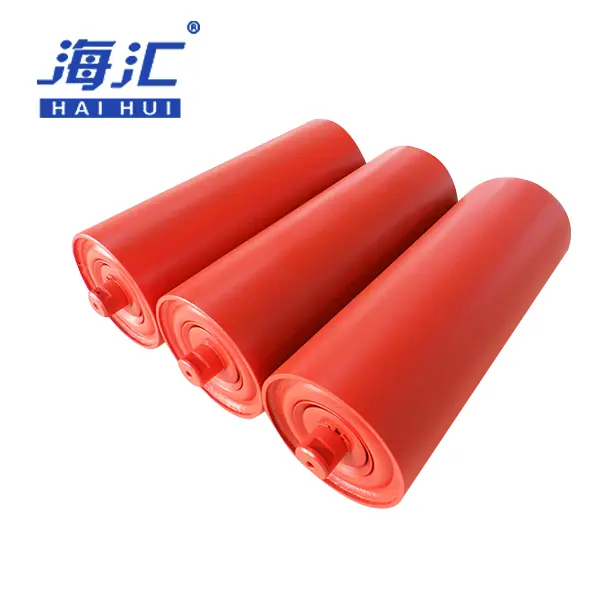
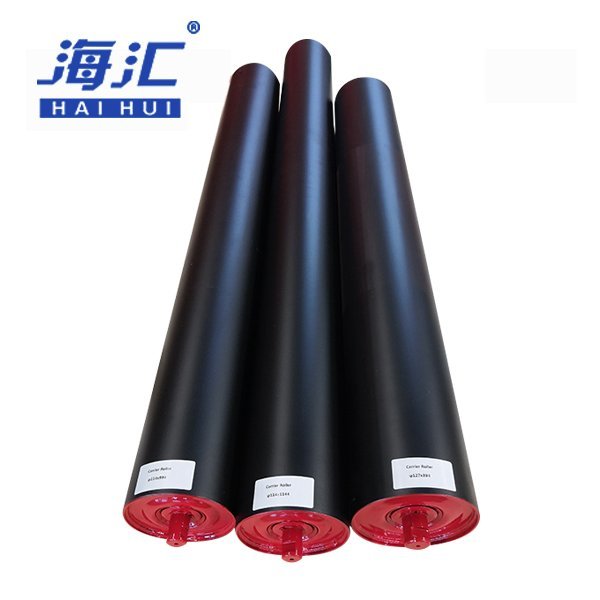
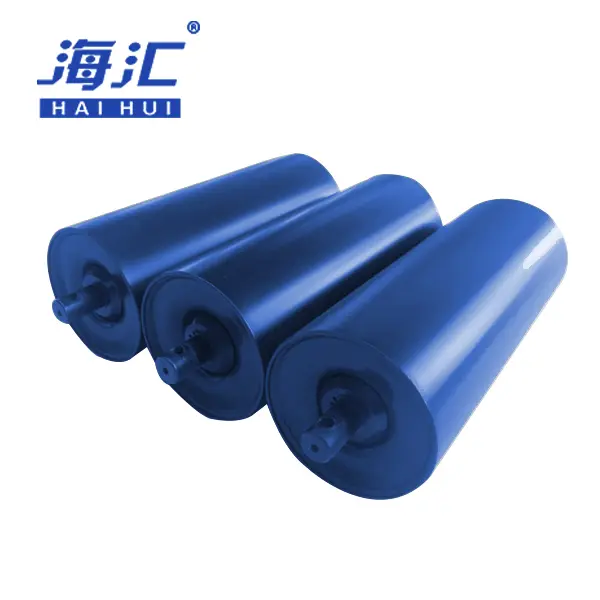
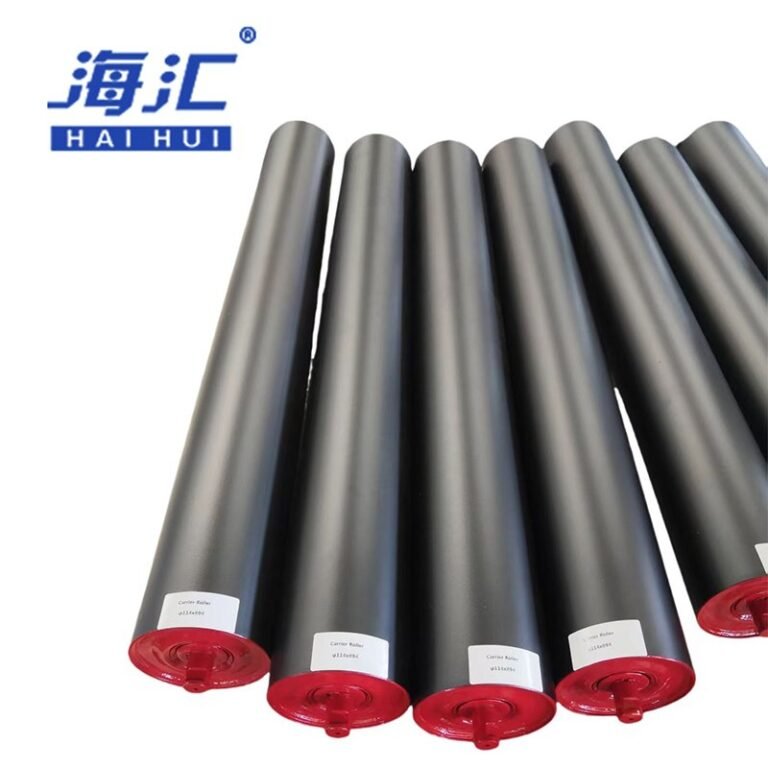
Rollers and idlers are the most numerous basic belt conveyor parts, undertaking the dual functions of supporting the belt and materials and reducing operating friction. Their operating flexibility directly affects belt stability and energy consumption.
Main Roller Classification & Functions
Flat Support Roller
Single cylindrical structure, mainly used for flat belt conveying lines. It provides uniform horizontal support, ensures smooth belt operation, and is suitable for packaged goods and small-batch bulk material transportation. Features simple structure, low failure rate, and convenient maintenance.
Trough Roller Group
Composed of 3 or 5 combined rollers, forming a U-shaped trough structure. It gathers bulk materials centrally, effectively preventing material spillage, and improves single-line conveying capacity by 30%–50%. It is the core matching part for heavy-duty trough belt conveyors.
Adopts rubber buffer structure, installed at the material feeding point. It buffers the impact force generated by material falling, protects the belt from piercing and abrasion, and greatly extends belt service life. It is an essential wear-resistant part for high-drop feeding scenarios.
Installed at the bottom return section of the belt, supporting the empty belt operation. It keeps the belt running flat and avoids sagging and deviation caused by excessive belt gravity.
Core Roller Performance Standards
Qualified industrial rollers adopt precision steel pipe processing, with strict roundness tolerance within ±0.1mm. The internal bearing is sealed and dust-proof, ensuring flexible rotation after 20,000+ hours of continuous operation. Haihui optimizes roller surface anti-rust treatment and bearing sealing structure, adapting to dusty and humid industrial environments.
Drive & Driven Pulleys: Power Transmission Parts
Pulleys are the key power transmission belt conveyor parts, divided into drive pulleys and driven pulleys. They convert motor power into belt circulating traction to realize continuous material conveying.
Drive Pulley
Connected with the drive motor and reducer, it is the power source of the entire conveyor system. The surface is treated with rubber coating or anti-slip texture to increase friction with the belt, preventing slipping during heavy-load operation. High-power pulleys adopt thickened steel plate welding, with strong pressure resistance and stable torque output.
Driven Pulley & Bend Pulley
The driven pulley follows the belt for passive operation, cooperating with the drive pulley to form a closed circulation loop. The bend pulley is used for belt direction conversion, adapting to complex line layout and turning conveying needs.
Pulley Matching Key Points
Pulley diameter must match belt thickness and tensile strength; too small a diameter will cause excessive belt bending and accelerated aging. Industrial standards show that standardized pulley matching can reduce belt fatigue wear by more than 35%.
Drive System Assembly: Power Support Parts
The drive system is the power core of belt conveyor parts, composed of motor, reducer, coupling, and brake device. It determines the conveying speed, load capacity, and operation safety of the equipment.
Motor & Reducer
The motor provides basic power, and the reducer adjusts torque and speed to match heavy-load conveying demands. Low-speed and high-torque configuration ensures stable start-up and no stall under full-load conditions.
Brake & Backstop Device
The brake device realizes emergency shutdown and fixed-point stop; the backstop device effectively prevents material backflow and belt sliding of inclined conveyors, eliminating safety hazards caused by power failure and sudden shutdown.
Tensioning & Correction Parts: Stability Adjustment Components
Tensioning and correction parts are auxiliary functional belt conveyor parts, used to adjust belt tension and correct running deviation, ensuring long-term stable operation of the system.
Tensioning Device
Divided into screw tensioning, heavy hammer tensioning, and electric tensioning. It compensates belt elongation caused by long-term operation, maintains constant belt tightness, and avoids slipping and deviation caused by insufficient tension.
Deviation Correction Device
Automatic and manual correction structures adjust roller and pulley angles in real time, correcting belt deviation during operation. It reduces belt edge wear and material scattering, greatly lowering failure rates.
Cleaning & Sealing Accessories: Anti-Wear Auxiliary Parts
Cleaning and sealing accessories are easily overlooked but essential belt conveyor parts, effectively reducing component wear and environmental pollution.
Belt Cleaner
Installed at the head and tail of the conveyor, including primary and secondary scrapers. It cleans residual materials on the belt surface to prevent hard particles from entering the roller and pulley gap, avoiding equipment jamming and belt abrasion.
Skirt Board & Sealing Strip
Installed on both sides of the feeding section, sealing gaps between the belt and the frame. It prevents material spillage and dust leakage, meeting environmental protection production standards while reducing material waste.
Key Parameter Comparison of Main Belt Conveyor Parts
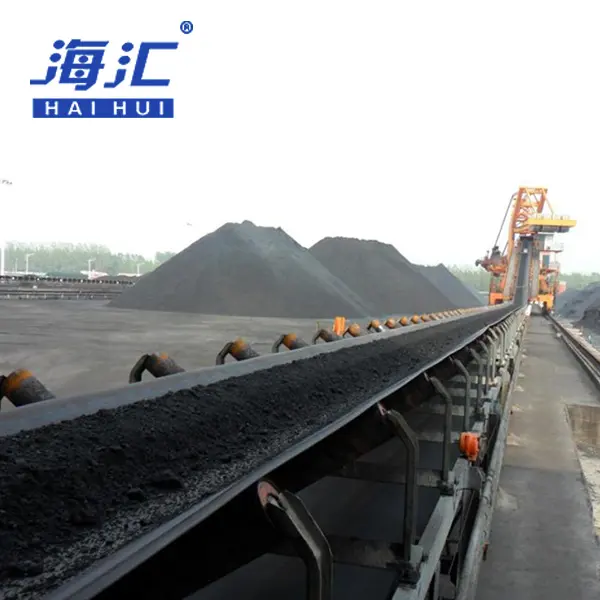
Reasonable selection of belt conveyor parts needs to comprehensively consider load capacity, environmental conditions, and operating intensity. The following comparison clarifies core parameters for rapid engineering selection and procurement.
| Component Name | Core Parameter | Ordinary Standard | Heavy-Duty Industrial Standard | Main Function |
|---|---|---|---|---|
| Conveyor Belt | Tensile Strength & Thickness | 200–400N/mm, 8–12mm | 800N/mm+, 15–20mm | Material bearing & conveying |
| Support Roller | Rotation Life & Tolerance | 10,000 hours, ±0.2mm | 20,000 hours+, ±0.1mm | Belt support & friction reduction |
| Drive Pulley | Diameter & Rubber Thickness | 200–400mm, 8mm | 500mm+, 12–15mm | Power transmission & anti-slip |
| Tensioning Device | Adjustment Stroke | 100–300mm | 500mm+ automatic adjustment | Belt tension stabilization |
| Cleaning Scraper | Wear Resistance Life | 3–6 months | 12 months+ | Residual material cleaning |
🚀 Optimize Your Conveyor System with Haihui
Haihui’s standardized production workshop strictly controls the dimensional tolerance and material quality of all belt conveyor parts. All core components pass multi-stage wear resistance, pressure resistance, and sealing tests. We support customized part parameter matching and bulk procurement services, with fast sample delivery and stable batch quality. Improve your line stability and reduce long-term maintenance costs starting with component upgrading!
Vulnerable Belt Conveyor Parts & Maintenance Cycle
Different belt conveyor parts have different wear rates and service lives. Scientific maintenance and regular replacement of vulnerable parts are key to extending the overall service life of conveyor equipment.
Daily Inspection Components
Cleaning scrapers, sealing strips, and belt surface status. Check for residual material accumulation, scraper wear, and aging deformation of sealing strips every day to avoid material leakage and belt abrasion.
Weekly Maintenance Components
Roller flexibility, pulley surface wear, and tensioning device status. Clean roller surface dust, check bearing jamming, and calibrate tension to ensure stable belt operation.
Monthly Replacement & Inspection
Worn rollers, aging gaskets, and deformed correction parts. Replace failed vulnerable parts in time to prevent small faults from evolving into line shutdown failures.
Annual Overhaul Components
Drive motor, reducer, and pulley wear. Conduct oil replacement, wear detection, and parameter calibration for core power parts to ensure long-term stable power output.
Common Failures & Parts Matching Solutions
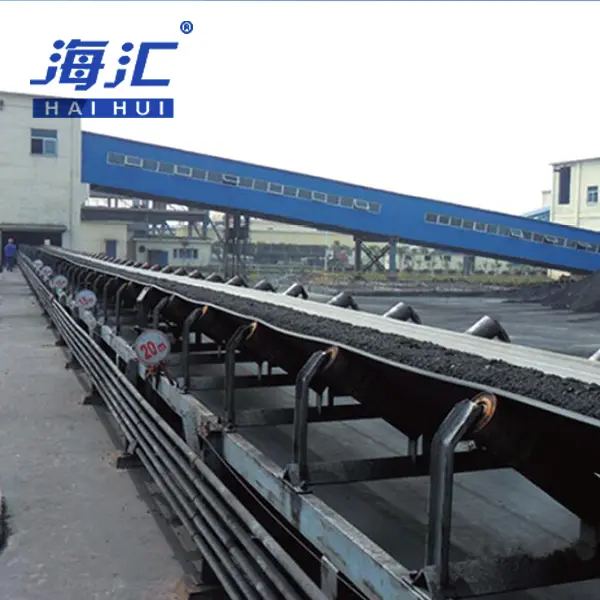
Belt Deviation Failure
Main causes: uneven roller parallelism, insufficient belt tension, and worn pulley surface. Solution: calibrate roller installation tolerance, adjust tensioning device, and replace worn pulleys.
Belt Slippage
Main causes: insufficient tension and worn pulley anti-slip rubber. Solution: tension the belt again and replace the pulley rubber coating to increase friction.
Severe Belt Wear
Main causes: failed cleaning scraper and stuck roller. Solution: replace the cleaning accessory and maintain roller flexibility to reduce particle friction.
Material Spillage & Dust Leakage
Main causes: aging and deformed sealing skirt boards. Solution: replace high-elasticity sealing accessories to restore overall sealing performance.
FAQs about Belt Conveyor Parts
What are the essential core belt conveyor parts for industrial production?
Complete industrial belt conveyor parts mainly include conveyor belts, support rollers, drive pulleys, drive assemblies, tensioning devices, and cleaning sealing accessories. The coordinated operation of these six major components ensures stable material conveying, and any missing or mismatched part will affect line efficiency.
Which belt conveyor parts are most prone to wear and need regular replacement?
Cleaning scrapers, sealing strips, conveyor belts, and ordinary support rollers are typical vulnerable parts. They are in direct contact with materials and air for a long time, prone to wear, aging, and deformation. Regular inspection and replacement can effectively reduce equipment failure rates.
How to match belt conveyor parts for heavy-duty mining working conditions?
For mining heavy-load and dusty environments, select steel wire anti-tear belts, thickened anti-wear rollers, rubber-coated drive pulleys, and enhanced sealing accessories. Equip impact rollers at the feeding end to buffer material impact, and configure automatic tensioning and deviation correction devices to adapt to high-intensity continuous operation.
Why do standard parts matching reduce overall operating costs?
High-quality and scenario-matched belt conveyor parts have lower wear rates and longer service life, reducing frequent replacement costs and downtime losses. Standardized parameter matching avoids abnormal wear and energy waste, realizing long-term cost reduction and efficiency improvement of the equipment.
What is the difference between ordinary and industrial-grade conveyor parts?
Industrial-grade belt conveyor parts adopt thicker materials, stricter dimensional tolerances, and enhanced sealing and wear-resistant treatments. They adapt to 24-hour continuous high-intensity operation, with lower failure rate and longer service life, suitable for large-scale industrial production lines; ordinary parts are only applicable to light-load and intermittent operation scenarios.
Choose Haihui for Reliable Belt Conveyor Parts Solutions
The quality of belt conveyor parts determines the stability and service life of the entire conveying system. Inferior parts will cause frequent failures, restrict production progress, and increase invisible operational costs. As a professional industrial conveyor equipment and component manufacturer, Haihui focuses on the R&D, production, and customization of full-series belt conveyor parts.
Our product line covers all core and vulnerable parts such as conveyor belts, rollers, pulleys, drive assemblies, tensioning devices, and cleaning accessories. All products comply with industrial mechanical standards, with strict quality inspection in each production process. We support scenario-based customized matching for mining, port, chemical, food, and logistics industries.
Haihui provides 1-day technical scheme response, free component matching guidance, and flexible bulk order services. Whether you need daily vulnerable part replacement, full-system component upgrading, or customized non-standard parts, we can deliver high-cost-performance professional solutions.
Contact Haihui’s engineering team now to select suitable belt conveyor parts and upgrade your conveying system stability!
References
2025 Industrial Conveyor Component Performance Standard – iso.org
Belt Conveyor Vulnerable Parts Maintenance Specification – astm.org
Mining Conveyor Component Selection Guide – unece.org
Conveyor Roller & Pulley Dimensional Tolerance Standard – matweb.com
Industrial Belt Wear Resistance Test Report – sciencedirect.com
Conveyor System Failure Analysis & Maintenance Manual – equipmenttest.com
2025 Global Bulk Handling Equipment Component Report – industryanalysis.com
 English
 العربية
 Português do Brasil
 Русский
 Español