输送机滚筒皮带轮:延长使用寿命,降低维护成本
Your conveyor drum pulley supplier can make or break your material handling line, plain and simple. When tonnage spikes and production deadlines loom, late deliveries and undersized shafts hit like a punch to the gut.
Haihui engineers note in their 2025 corporate materials that disciplined quality control and audited CEMA systems anchor every production batch.
That’s the difference between chaos and a partner built to scale with you, steadily.
Harmonious Key Points for a Conveyor Drum Pulley Supplier
➔ Verify CEMA Compliance: Ensure audited quality systems, torque testing, and batch traceability for consistent performance.
➔ Assess Material Specs: Confirm forged 42CrMo4 shafts, S355 shells, lagging compounds, and coatings meet tension and corrosion standards.
➔ Inspect Manufacturing Workflow: Review shell rolling, welding, shaft hardening, lagging vulcanization, and assembly for concentricity and reliable torque transfer.
➔ Review Surface Finishes: Evaluate lagging patterns, coatings, and groove designs for traction durability and belt protection.
➔ Gauge Production Scale: Verify high-volume automated lines, continuous-run capacity, and robust steel plate and shaft bar stock planning.
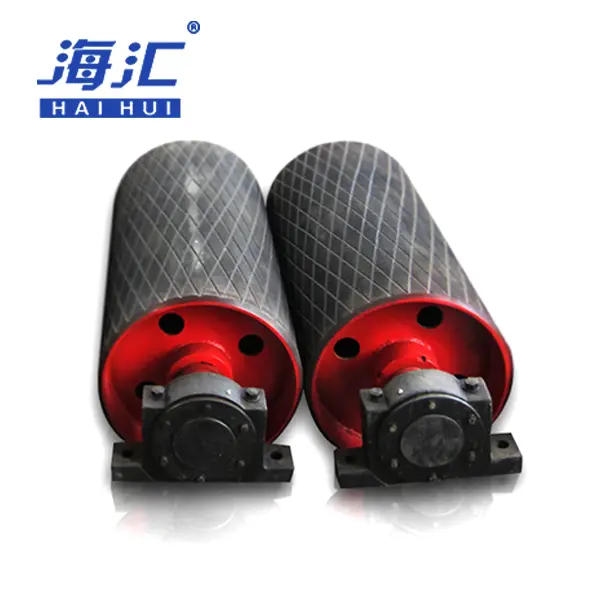
5 Steps To Vet A Reliable Conveyor Drum Pulley Supplier
Choosing the right drum pulley supplier isn’t just about price. It’s about safety, steady output, and long-term trust. If your belt conveyor depends on reliable torque transfer, your supplier has to show real proof, not just smooth talk.
Step 1: Verifying CEMA Compliance and Quality Control
When screening a drum pulley supplier, dig into CEMA compliance and daily quality control routines.
Core compliance checks
- CEMA classification validity (B, C, D, E)
- Certificate number and scope of approval
- Internal quality management system
- Documented SOPs
- Staff training logs
- Audit process records
- Internal audits
- Third-party inspections
A serious drum pulley supplier should also prove regulatory adherence across mining and aggregate standards. Ask about NDT weld inspection, hardness testing, and batch traceability. If a supplier hesitates here, that’s a red flag.
Step 2: Assessing Material Specs—Shaft, Shell, Lagging Options
Material choice defines durability. A reliable drum pulley supplier explains material specifications clearly:
- Shaft material (42CrMo4 forged steel)
- Shell steel grade (S355)
- Shaft hardness (HRC 50-55 bearing seats)
- Lagging type (rubber or ceramic)
- Verified material grade
- Proven fatigue resistance
Here’s a quick comparison:
| Material Type | Hardness (HRC) | Fatigue Life (cycles) | Corrosion Rating (hrs salt spray) |
|---|---|---|---|
| C45 Bar Stock (standard) | 15-25 (as-rolled) | 500,000 | 24-72 |
| 42CrMo4 (induction-hardened) | 50-55 | 1,500,000 | 240-500 |
| 42CrMo4 (premium) | 55-58 | 2,500,000 | 500-1000 |
A strong pulley fabricator like Haihui openly shares such data, helping buyers match pulleys with belt tension, tonnage, or environmental conditions.
Step 3: Inspecting Manufacturing Processes from Shell Rolling to Lagging
Not all drum pulley manufacturers run the same fabrication processes. Ask how the production line flows:
Forming stage
- Shell rolling precision
- Shaft machining accuracy
Body creation
- Shell welding (full penetration)
- Shaft hardening (induction)
Surface work
- Lagging application (vulcanized rubber/ceramic)
- Coating (epoxy or polyurethane)
- Curing temperature control
- Final assembly and inline quality assurance (NDT, dynamic balancing)
Consistent manufacturing techniques protect torque transfer. A dependable drum pulley supplier won’t hide factory audits. Haihui, for example, keeps automated inspection embedded into fabrication and assembly.
Step 4: Reviewing Surface Finishes—Lagging, Grooves, Coatings
Traction and protection matter. Your drum pulley supplier should offer varied lagging and coating options without cutting corners.
Lagging layer
- Rubber (60-75 Shore A) or ceramic
- Herringbone or plain groove patterns
- Advanced vulcanization techniques
Texture options
- Smooth finish for dry applications
- Grooved finish for water shedding
Added value
- Ceramic lagging for extreme grip
- Epoxy or polyurethane coatings for corrosion protection
- Abrasion-resistant finishes
Strong traction supports belt protection, but durability keeps slip low. A skilled conveyor component manufacturer balances both.
Step 5: Evaluating Production Scale and Automated Line Capacity
Capacity defines long-term partnership potential. Check production scale and true manufacturing capacity.
- Daily output volume targets
- Automation level across lines
- Downtime control and maintenance logs
Then go deeper:
Operational layer
- Real-time monitoring
- OEE tracking
Growth layer
- Expansion-ready space
- Workforce planning
- Scalability metrics
Capacity layer
- Monthly surge capacity
- Export handling capability
A serious drum pulley supplier like Haihui invests in automated fabrication lines to raise operational efficiency while keeping costs stable. When your tonnage spikes, your conveyor component supplier should already be ready—not scrambling.
Can Your Current Drum Pulley Supplier Meet Demand?
Picking the right drum pulley supplier is not just about price. It’s about scale, speed, safety, and trust. If your conveyor supply chain slips, production goes empty fast. Let’s break it down in plain terms.
High-Volume Output: Bulk Supply and Continuous Run Capability
A serious drum pulley supplier must prove real production capacity, not just promises.
Manufacturing Scale
- Facility Size
- Automated rolling and welding lines
- Multi-axis CNC machining
- Daily output volume – 50+ pulleys per shift
- 24/7 continuous operation
Automated Production
- Integrated systems
- Plate feeding
- Shell welding
- Hardness testing
- Dynamic balancing
- Result – Higher efficiency, stable manufacturing scale
Supply Chain Stability
- Secured steel plate sourcing
- Backup material vendors
- Forecast-driven supply chain planning
| Metric | Small Shop | Mid Plant | Large Plant | 海辉 |
|---|---|---|---|---|
| Daily Capacity (pulleys) | 5 | 20 | 50 | 80+ |
| Automation Level (%) | 30 | 55 | 75 | 90 |
| Continuous Run (hrs) | 8 | 16 | 20 | 24 |
| Scrap Rate (%) | 5.0 | 3.5 | 2.0 | 1.2 |
If your current drum pulley supplier can’t hit steady output volume, it’s time to rethink your conveyor component partner.
Lead Time Reliability: Automated Lines vs. Manual Assembly
Speed matters. A drum pulley supplier relying on heavy manual labor often struggles with tight delivery schedules.
Here’s what to check:
- Automated fabrication processes cut human error.
- Faster production speed improves turnaround time.
- Clear order tracking keeps supply transparent.
Order flow:
- Order confirmation
- Raw material staging (plate and bar stock)
- Automated shell rolling and welding
- Shaft hardening
- Lagging vulcanization
- Dynamic balancing
- Inline inspection
- Final packing and dispatch
With advanced fabrication methods and deep automation, Haihui keeps lead times predictable. No last-minute drama. Just consistent drum pulley supply from a trusted conveyor component supplier.
Compliance Check: NDT Testing, CEMA Standards, Batch Traceability
A dependable drum pulley supplier builds trust through quality assurance systems.
Product Testing
- NDT weld inspection (ultrasonic/MPI)
- Hardness verification (HRC 50-55)
- Dynamic balancing (G-16)
- Concentricity check (≤0.5mm TIR)
Regulatory Compliance
- CEMA documentation
- Certified safety standards
- Updated regulatory compliance files
Traceability Systems
- Digital batch identification
- QR-linked traceability systems
- Archived quality control records
If a mine faces a belt failure, batch-level data from a reliable drum pulley supplier protects both operation and reputation. A capable conveyor component manufacturer treats documentation as seriously as steel thickness.
Material Safety: Shaft Hardening and Lagging Assurance
Material safety is non-negotiable.
Material Specifications
- Verified forged 42CrMo4 shaft grade
- Controlled hardness (HRC 50-55)
- S355 steel shell grade
Protective Coatings
- Epoxy or polyurethane coating
- Corrosion-resistant lining
- Even surface treatment
Passivation
- Anti-corrosion passivation layer
- Long-term storage stability
Safety Assurance
- Hardness testing
- Weld integrity validation
- Full safety certification
A reliable drum pulley supplier doesn’t cut corners on shaft hardening or lagging. Haihui applies strict fabrication standards to ensure zero interaction between torque and failure. When your operation depends on reliable conveyors, your drum pulley supply partner must treat safety like a promise, not a checkbox.
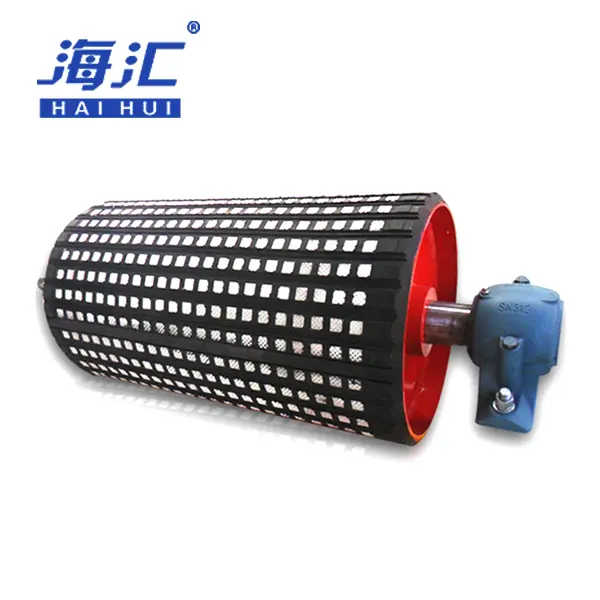
Mining Operations Scaling Conveyor Efficiency
Mining operations scaling up fast need more than just rotating drums. They need a steady drum pulley supplier, stable output, and airtight quality. From seamless shell fabrication to lagging details, the right pulley and supplier partnership keeps belts moving and production flowing. Here’s how smart operations make it work.
Choosing Engineered Pulleys for Torque Reliability
Working with a trusted drum pulley supplier starts at pulley design. For conveyors that must handle high tension and run long, fabricated shells with forged shafts are the go-to choice.
Core structure advantages
- Container integrity – No weak points in shell; reduces crack risk
- Better resistance to torque – Improves power transmission
- Hermetic sealing – Tight seals improve bearing protection
Performance outcomes
- Extended pulley life
- Improved torque transfer
- Lower failure rates in bulk distribution
When a mining operation partners with a professional drum pulley supplier, production lines can align shaft hardening, bearing fit, and lagging specs with pulley dimensions.
For high-tension or inclined conveyors:
- Confirm shaft hardness tolerances.
- Match bearing clearance to operating conditions.
- Validate lagging bond strength tests.
A capable pulley supplier like Haihui coordinates material sourcing, fabrication precision, and QA checkpoints so large-scale conveyor runs stay smooth, not stressful.
Ensuring Lagging and Coating Standards
Safety sits at the center of any serious drum pulley supplier relationship.
Surface protection layers
- Food-grade or industrial coatings
- Prevent slip and belt damage
- Reduce metal interaction
Passivation process
- Enhances corrosion resistance
- Stabilizes internal surfaces
Key compliance checkpoints:
- Verify CEMA material certification.
- Audit surface treatment records.
- Test lagging bond under load exposure.
A reliable pulley supplier provides documentation aligned with global regulatory compliance rules. Haihui keeps traceable batches and lab-tested coatings, helping operations protect belt life without slowing production.
Balancing Capacity Planning with Industrial-Scale Runs
Scaling means numbers matter. A serious drum pulley supplier must support industrial-scale output without chaos.
Planning layer
- Capacity planning software
- Forecasts monthly production volume
- Syncs with procurement cycles
Factory layer
- Automated fabrication processes
- Reduce downtime
- Improve production efficiency
Distribution layer
- Coordinated logistics
- Strengthen supply chain optimization
- Support operational scalability
When mining operations lock in long-term contracts with a dependable pulley supplier, they gain predictable lead times and steady steel stock. That’s how growth stays controlled instead of messy.
Customizing Lagging Patterns and Coatings for Brand Protection
Components still need to perform. A creative drum pulley supplier bridges engineering and field reliability.
Design enhancements
- Herringbone or plain lagging patterns
- Ceramic or rubber compounds
- Specialty coatings for sharp branding and identification
Brand results
- Stronger belt protection
- Improved operational confidence
- Premium reliability aesthetics
Execution flow:
- Share application data (belt speed, tension, environment).
- Approve lagging and coating samples.
- Run pilot bond tests.
- Lock final mass production specs.
With Haihui as your long-term drum pulley supplier, custom pulley solutions blend precision fabrication with bold traction options. The result? Conveyor components that keep belts moving and make maintenance crews stop, check, and trust what’s inside.
FAQs
How can a drum pulley supplier prove quality consistency for mining or aggregate conveyors?
Quality is proven in layers, not promises.
System control
- CEMA compliance certification
- Documented quality control checkpoints
- Clear batch traceability from steel plate to finished pulley
Product validation
- NDT weld inspection for shells
- Hardness testing for shafts (HRC 50-55)
- Dynamic balancing for smooth operation
- Material safety reports for forged 42CrMo4 and S355 steel
Process discipline
- Controlled shell rolling, welding, shaft hardening, and lagging
- Recorded data from automated lines during mass production
When a drum pulley supplier can show traceable data for every continuous run, trust becomes measurable.
What material specifications matter most when sourcing from a drum pulley supplier?
Material defines performance across mining, aggregate, cement, and heavy industrial sectors.
Key elements include:
- Base metal – Forged 42CrMo4 shaft, S355 steel shell
- Shaft hardness – HRC 50-55 at bearing seats
- Lagging – Vulcanized rubber (60-75 Shore A) or ceramic
- Coating – Epoxy or polyurethane for corrosion resistance
- Structure type – Fabricated shell with full-penetration welds
Why is automated production capacity critical in high-volume drum pulley supply?
In peak season, capacity is character.
- Automated fabrication lines support high volume and bulk supply without slowing delivery.
- Continuous run systems reduce handling errors during shell welding, shaft hardening, and lagging.
- Capacity planning protects deadlines across mining, aggregate, and cement operations.
Industrial scale output only works when shell rolling, shaft machining, and lagging stay synchronized. A delay at one stage can echo through the entire batch.
Can a drum pulley supplier customize lagging and coatings for stronger belt protection?
Yes—and detail creates traction on the belt.
Customization may include:
- Ceramic lagging for extreme grip in wet/muddy conditions
- Rubber lagging (60-75 Shore A) for general traction
- Herringbone grooves for water shedding
- Plain lagging for even wear
- Epoxy or polyurethane coatings for corrosion protection
For drum pulleys—head, tail, or snub—surface design must align with operating conditions and torque performance. Traction is powerful, but structure must still protect what’s inside.
References
- CEMA – Conveyor Equipment Manufacturers Association standards
- ISO 9001:2015 Quality management systems – iso.org
- ASTM E18 – Rockwell hardness testing
- ASTM E709 – Magnetic particle inspection
- NDT Weld Inspection Standards – asnt.org
- MSHA – Mine Safety and Health Administration
- OSHA – Occupational Safety and Health Administration
- UN Model Regulations for Dangerous Goods – unece.org
 English
 العربية
 简体中文
简体中文 Nederlands
 Français
 Deutsch
 Bahasa Indonesia
 Italiano
 日本語
日本語 한국어
한국어 Bahasa Melayu
 Polski
 Português do Brasil
 Русский
 Español
 Türkçe