
A aquisição em grande volume de roletes transportadores de aço é um ato de confiança cega
Buying steel conveyor rollers in bulk sounds straightforward—until one thin tube buckles, one bearing seizes, and suddenly your whole belt line is down while the maintenance crew scrambles with pry bars and spare parts that don‘t quite fit. For plant managers, that’s not a bad Tuesday—that‘s a lost shift, a shredded belt cover, and a purchase order that’s about to get a whole lot of uncomfortable questions.
The global steel conveyor roller market was valued at over $5.5 billion in 2024, according to industry sources—steady replacement demand, thin margins, and zero tolerance for rollers that can‘t handle daily abuse.
So before you sign off on a bulk roller order, check the tube thickness, the bearing seal, the shaft straightness, and the weld quality. Because in this business, cutting corners doesn’t save money—it turns a simple roller into a maintenance headache that keeps coming back.
Quick Answers: Steel Conveyor Rollers Essentials
➔ Tubo e material: Specify S235 or S355 steel, wall thickness 2.5–4 mm depending on duty, and certified material traceability.
➔ Rolamento e eixo: Choose deep groove bearings (P0 or P6 grade), cold‑drawn or turned shaft, verified straightness (≤0.2 mm/m).
➔ Vedação e proteção: Specify labyrinth or contact seals (IP54–IP65), lithium complex grease (NLGI 2), and documented fill volume.
➔ Fabricação e Equilíbrio: Garantir a soldagem concêntrica, o balanceamento dinâmico (ISO 1940 G-16) e o teste de rotação 100% antes do envio.
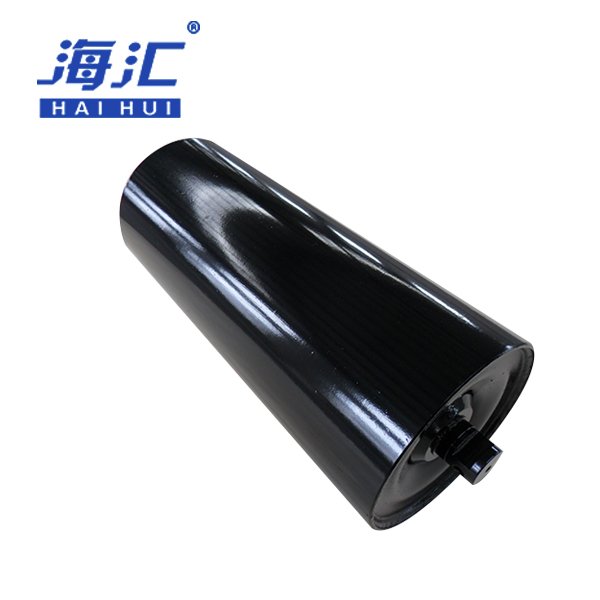
How Do Tubes, Bearings, and Seals Impact Steel Roller Life?
Service life is not just luck. It comes down to tube rigidity, bearing quality, seal design, and how well the roller handles everyday dust and impact. For teams sourcing steel rollers in bulk, these small details decide whether the conveyor runs for years or becomes a monthly parts-changing ritual.
“We bought cheap rollers once,” a maintenance manager told me. “Cheap tube, cheap bearings, cheap seals. Saved two bucks a roller. Spent twenty times that on labor replacing them. Smartest dumb decision we ever made.”
Tube Wall Thickness for Different Duty Levels
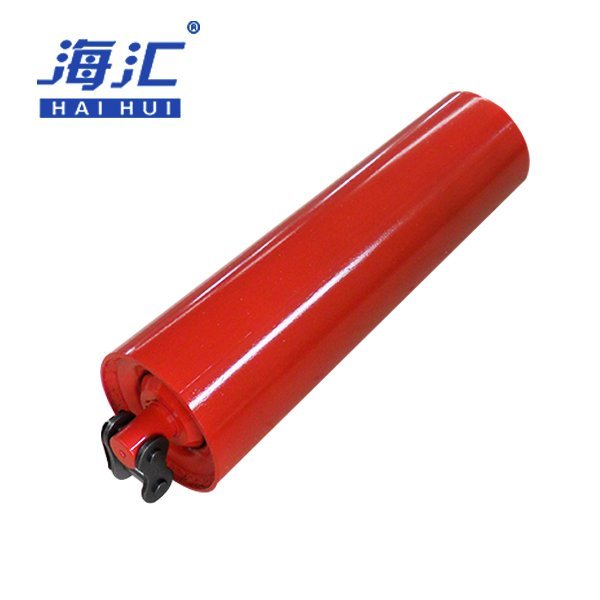
The roller tube is what actually supports the belt and carries the load. Thin tubes flex. Flexing tubes wear the belt unevenly. Uneven belt wear means premature replacement—and that gets expensive fast.
Tipos de aço e suas funções
- S235 (structural mild steel): Good for light duty, dry environments, low impact. Fine for distribution centers, not for heavy industry.
- S355 (maior resistência): Better yield strength, handles moderate impact, standard for most general industrial applications.
- Tubo temperado (indução superficial): Extreme wear resistance, longer life in abrasive environments like foundries or recycling.
Wall thickness recommendations by duty
| Diâmetro do rolo | Serviço leve (mm) | Serviço Geral (mm) | Carga pesada (mm) |
|---|---|---|---|
| 63 mm | 1.5 | 2.0 | 2.5 |
| 76 mm | 1.8 | 2.2 | 2.8 |
| 89 mm | 2.0 | 2.5 | 3.0 |
| 114 mm | 2.5 | 3.0 | 3.5 |
| 133 mm | 3.0 | 3.5 | 4.0 |
“I’ve seen 2.5mm wall rollers on a heavy aggregate conveyor,” a plant engineer told me. “They lasted about four months before they started looking like egg shapes. Switched to 3.5mm, haven‘t bent one in two years.”
Por que a espessura da parede é importante
- Thicker wall = more dent resistance and longer tube life
- Thinner wall = lighter, cheaper, but impact can oval the tube—bearing binds, roller locks up
- Uneven wall thickness (poor tube quality) = vibration, noise, premature bearing failure
Brands ordering steel rollers in bulk often request cut‑and‑measure samples before full production. Haihui will cut a sacrificial roller open for you on request. Their shop guys don‘t flinch—they’ve got a band saw and they know how to use it.
Bearing Grade and Shaft Quality
The bearing is the roller‘s heart. A cheap bearing might spin fine on the workbench, but put it under load with dust and vibration, and it fails fast.
Bearing options for steel rollers
| Grau do rolamento | Precisão | Aplicação típica | Custo |
|---|---|---|---|
| P0 (padrão) | Normal | Light duty, slow belts | Baixo |
| P6 | Mais apertado | Industrial geral, velocidade média | Médio |
| P5 | Alta precisão | Transportadores de alta velocidade (>2,5 m/s) e de grande extensão | Alto |
Requisitos do eixo
- Material: C45 ou 40Cr para a maioria das aplicações
- Retidão: ≤0.2 mm per meter—any more, and the roller vibrates
- Acabamento da superfície: ≤0,8 µm Ra para assentos de rolamentos
- Proteção contra a corrosão: Light oil or phosphate coating for indoor; zinc plating for outdoor
“A bent shaft destroys bearings from the inside out,” one Haihui engineer told me. “The bearing inner ring gets misaligned, the balls ride unevenly, and you get heat, noise, and eventual seizure. We check every shaft on a straightness gauge. No eyeballing.”
Graxa e lubrificação
- Padrão de graxa de complexo de lítio (NLGI 2)
- Operating temperature: –20°C to +120°C
- Fill volume: 25–40% of bearing cavity—enough to lubricate, not so much that it churns and overheats
- Relubricatable option for long conveyors or high-temperature environments
Seal Types for Different Environments
The seal is the roller‘s first defense against dust, dirt, and moisture. Get the seal wrong, and the bearing dies young.
Famílias de focas e onde elas trabalham
| Tipo de vedação | Classificação IP | Arrastar | Ideal para |
|---|---|---|---|
| Labirinto (sem contato) | IP54 | Baixo | Sequio, ambiente interno limpo, poeira leve |
| Lábio de contato único | IP55 | Baixa-média | Poeira comum em ambientes internos, ocasional |
| Lábio de contato duplo | IP65 | Médio | Ambiente externo, com poeira e umidade moderadas |
| Labirinto triplo | IP65 | Baixa-média | Manuseio de granéis secos, poeira fina |
“A dry indoor conveyor can get away with labyrinth seals,” said a Haihui applications guy. “But once you add moisture or fine dust, you need contact seals. We’ve seen plants spend good money on bearings then cheap out on seals—dust gets in, bearing grinds to a halt in months.”
Realização de testes de torque e rotação
- Low starting torque means less belt drag and lower power consumption
- Spin test: Roller should spin freely, no rough spots, coast for several seconds
- Acceptable starting torque varies by diameter and seal type—ask for the spec
Para pedidos de rolos em grandes quantidades, Haihui spin‑tests every roller before packing. Not a random sample—every single one. If it doesn‘t spin smoothly, it doesn’t ship. Simple.
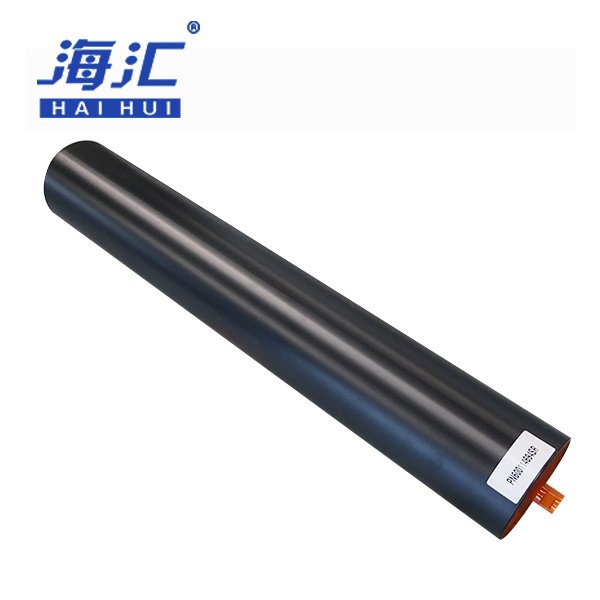
Steel Grade vs. Wall Thickness Trade‑offs
Choosing between steel grades and wall thickness isn‘t just about strength; it shapes weight, weldability, impact survival, and total cost of ownership.
| Grau do tubo | Limite de escoamento (MPa) | Qualidade da solda | Índice de Custos | Melhor uso |
|---|---|---|---|---|
| S235 (2.5 mm) | 235 | Ótimo | 1.0 | Trabalho leve, em ambiente interno, em condições secas |
| S235 (3.0 mm) | 235 | Ótimo | 1.2 | Uso geral, impacto leve |
| S355 (3.0 mm) | 355 | Muito bom | 1.4 | Uso pesado, impacto moderado |
| S355 (3,5 mm) | 355 | Muito bom | 1.7 | Uso extremo, alto impacto |
For most general industrial applications, S355 with 3–3.5 mm wall thickness is the sweet spot—good strength, reasonable cost, lasts for years.
OEM vs. Off‑The‑Shelf Steel Rollers: Pros & Cons
Rolos OEM
- Personalização: Comprimento exato, extremidades do eixo, espaçamento entre rolamentos, tipo de vedação.
- Controle de qualidade: Inspeção de soldas, verificação de concentricidade, teste de rotação 100%.
- Prazo de entrega: Amostragem → produção em lote (normalmente de 4 a 6 semanas).
- Ideal para: Transportadores personalizados, espaços apertados ou quando os tamanhos padrão não se adequam.
Rolos prontos para uso
- Disponibilidade: Tamanhos em estoque, prazos de entrega curtos (1 a 2 semanas).
- Custo: Preço unitário mais baixo, sem custo de ferramentas.
- Compromisso: Comprimentos fixos, apenas vedações padrão, sem modificações no eixo.
Haihui mantém estoque pronto para envio de roletes de aço nos tamanhos mais comuns (89, 114, 133 mm), com espessura de parede e rolamentos padrão. Já vi eles enviarem um palete com 300 roletes em uma semana.
4 Considerações sobre o transporte para pedidos de rolos de aço a granel
1. Estratégias de embalagem a granel
- Camada primária: Rust inhibitor or light oil—cheap insurance.
- Camada secundária: Mangas de papelão ou espuma entre as camadas para evitar arranhões.
- Camada terciária: Paletes com faixas e proteções nos cantos.
2. Remessas paletizadas
- Distribuição uniforme do peso — paletes desequilibradas tombam durante o transporte.
- Eixos dos roletes paralelos à direção do palete para garantir estabilidade.
- Cintas reforçadas (duas faixas em cada sentido).
3. Otimização do carregamento de contêineres
| Contêiner | Rolos típicos (89 mm x 1.000 mm) | Peso aproximado (kg) |
|---|---|---|
| 20 pés | 1,600–1,800 | 4,800–5,500 |
| 40 pés | 3,500–3,800 | 10,500–11,500 |
| 40 pés HC | 3,800–4,200 | 11,500–12,500 |
4. Prazo de entrega e remessa internacional
- Fabrication (cutting, welding, bearing pressing, spin testing) — typically 3–5 weeks.
- Inspeção final e embalagem (acrescente 1 semana).
- Sea freight + customs clearance buffer (10–15 days).
Haihui sends packing photos before sealing—you see exactly how your rollers are loaded. Small thing, saves big arguments.
Como verificar a credibilidade de um fornecedor de rolos de aço
1. Avaliar a certificação ISO 9001 e os certificados de materiais
- Request mill test reports for tube steel (S235, S355).
- Verifique a marca e a classe do rolamento (SKF, FAG, NSK ou equivalente).
- Check seal type specification in writing—not just “standard seal.”
2. Inspecionar a solda e a concentricidade do tubo
| Verificar | Indicador-chave | Intervalo aceitável |
|---|---|---|
| Soldagem de tubo | Penetração + visual | Penetração total, acabamento suave |
| Concentricidade | Desvio entre os assentos dos rolamentos | ≤0,3 mm |
| Soldagem da tampa da extremidade | Teste visual + teste de batida | Sem interrupções, som consistente |
3. Analisar os registros dos testes de rotação e de torque
- Teste de rotação: O rolo deve girar livremente, sem rangidos nem oscilações.
- Torque de funcionamento: Medido na fábrica, registrado por lote.
- Random sample cut‑up for wall thickness verification—ask for photos.
Haihui publica resumos trimestrais de qualidade — taxas de defeitos, motivos de devolução, ações corretivas. Você não precisa ficar implorando por dados.
Perguntas frequentes
1. What types of steel rollers suit different industrial applications?
- Distribution centers: S235 tube, 2.0–2.5 mm wall, labyrinth seals, P0 bearings.
- Agregados / manuseio de granéis: S355 tube, 3.0–3.5 mm wall, double contact seals, P6 bearings.
- Foundries / abrasive environments: Hardened tube, contact seals, P6 bearings, frequent replacement interval.
- Ao ar livre / molhado: S355 with zinc coating, double contact seals (IP65), relubricatable option.
2. How do bearings and seals affect steel roller durability?
- Bearings: P0 for light duty, P6 for general industrial, P5 for high speed.
- Seals: Labyrinth for dry indoor, contact seals for dust/moisture, double seals for harsh.
- Verificação: Teste de rotação + medição de torque + corte aleatório.
3. What should buyers check before signing a long‑term steel roller contract?
- Tube wall thickness and material certificate (S235 vs S355 in writing).
- Bearing brand and grade—no generic substitutes without approval.
- Tipo de vedação e classificação IP.
- Spin test acceptance criteria (e.g., “coast time ≥4 seconds, no audible grinding”).
- Quality hold points—in‑process inspection, final audit, random sample cut‑up.
When tube, bearing, and seal are spec‘ed right, steel rollers become boringly reliable. And on a production line, boring is beautiful—no surprises, no midnight calls, no belt tracking issues for no good reason.
Referências
- Manuseio Moderno de Cargas a Granel – Estimativa do Mercado de Rolos de Aço para 2024
- DIN 22107 – Rolos-guia para transportadores de correia
- ISO 1940 – Vibração mecânica – Requisitos de qualidade para o balanceamento
- Haihui – Fichas técnicas de roletes transportadores de aço
- SKF – Bearing selection for industrial applications
 English
 العربية
 Português do Brasil
 Русский
 Español