
Guia sobre a polia principal: Aumente a tração do transportador e reduza os custos com tempo de inatividade
A polia principal não é apenas um rolo — é o fator decisivo para o tempo de operação, a segurança e a vida útil da correia
As polias padrão mantêm o sistema em movimento, mas esse “movimento” acaba saindo caro quando o deslizamento da correia, os erros de alinhamento e as paradas não planejadas corroem a produtividade. À medida que as demandas de rendimento aumentam e as margens ficam mais apertadas, cada componente da linha de manuseio de materiais passa a ser analisado minuciosamente.
Os engenheiros da Haihui destacam em seus boletins técnicos de 2026 que o projeto da polia motriz — desde a espessura do tambor até o tipo de revestimento — determina a quantidade de potência de acionamento que realmente chega à correia e por quanto tempo todo o sistema funciona sem intervenção.
Pontos-chave para a eficiência da polia principal
- Potência e tração do motor: O revestimento e o diâmetro da polia principal determinam o atrito necessário para transmitir o torque do motor de maneira eficiente; uma tração inadequada resulta em desperdício de energia e desgaste da correia.
- Alinhamento da correia: Uma polia com coroa adequada ou face plana, com alinhamento preciso, controla o percurso da correia, evitando danos nas bordas e derramamento.
- Integridade estrutural: Projetada para ambientes de alta tensão, com eixo e carcaça de rolamento robustos, a polia deve suportar impactos constantes e cargas cíclicas.
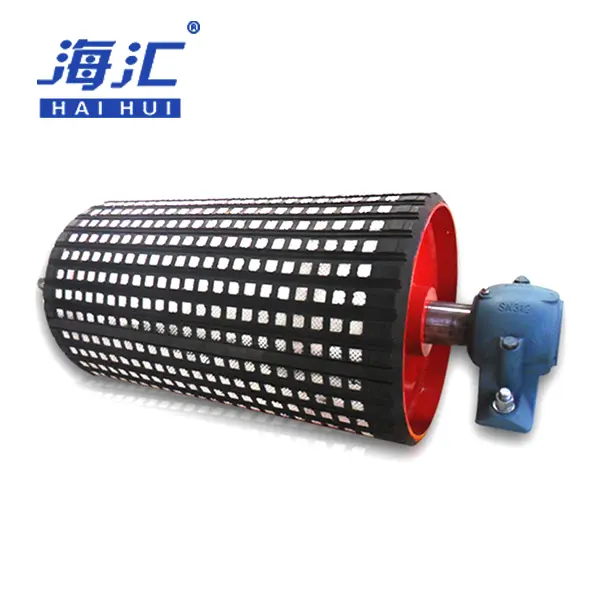
Polia principal x polia de retorno padrão
A escolha entre uma polia de cabeça robusta e uma polia de retorno padrão geralmente se resume à função, ao custo e às exigências físicas diárias do trabalho. Algumas operações precisam apenas de um rolo para guiar a correia. Outras exigem a tração, a durabilidade e o controle necessários para movimentar cargas pesadas com confiabilidade.
Polia principal (polia motriz)
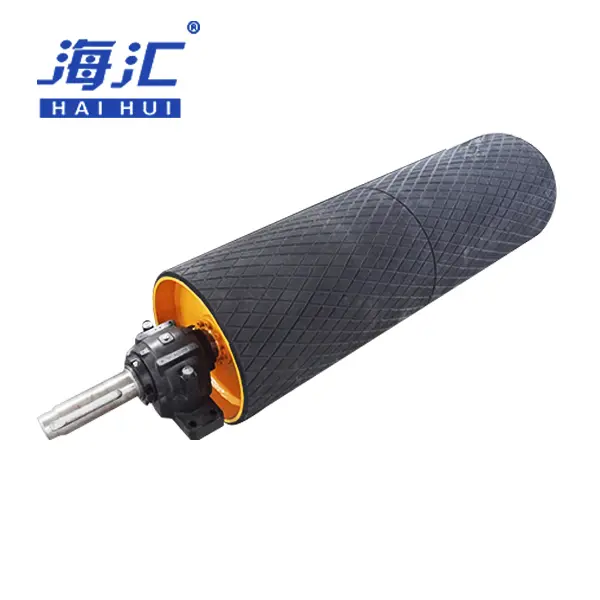
Uma polia motriz não é apenas um cilindro; é o motor que impulsiona uma esteira transportadora. Projetada para fornecer a tração necessária para mover a esteira e sua carga, a engenharia por trás de sua superfície e carcaça é fundamental para o bom funcionamento do sistema.
- Fabricados com carcaças de aço para serviços pesados e eixos de alta tolerância para suportar o torque.
- Equipado com revestimento especializado — cerâmico, de borracha ou com ranhuras — para maximizar a aderência em condições úmidas ou oleosas.
- Equilibrado com precisão para reduzir a vibração e a tensão nos rolamentos em velocidades operacionais.
- A própria polia gira para gerar movimento.
- A correia envolve sua superfície para gerar atrito de acionamento.
- O revestimento antiderrapante fixa a correia para evitar que ela escorregue.
- O material é descarregado sobre ela à medida que a correia gira.
O que está no cerne de um sistema eficiente de polias de cabeça:
Desempenho
- Coeficiente de atrito maximizado para arranques com carga pesada
- Fornecimento consistente de torque com deslizamento mínimo
- Impacto ambiental
- Redução do desperdício de energia causado pelo deslizamento
- Uma vida útil mais longa da correia significa menos desperdício de borracha
- Controle de custos
- Menores despesas com energia por tonelada transportada
- Intervalos de manutenção prolongados
No caso de uma polia de cabeça, o benefício prático é percebido na mineração de alta tonelagem, no processamento de agregados e no manuseio de materiais a granel. Com a seleção adequada do revestimento da correia e a limpeza regular, o desgaste da correia diminui e a produção se mantém consistente.
Para especialistas em componentes de transportadores, como a Haihui, o foco continua sendo a metalurgia, a usinagem de precisão e o fator de segurança. Uma polia de cabeça bem especificada reduz a tensão sobre outros componentes — a caixa de engrenagens, o tensor e até mesmo a própria correia.
Polia de retorno padrão
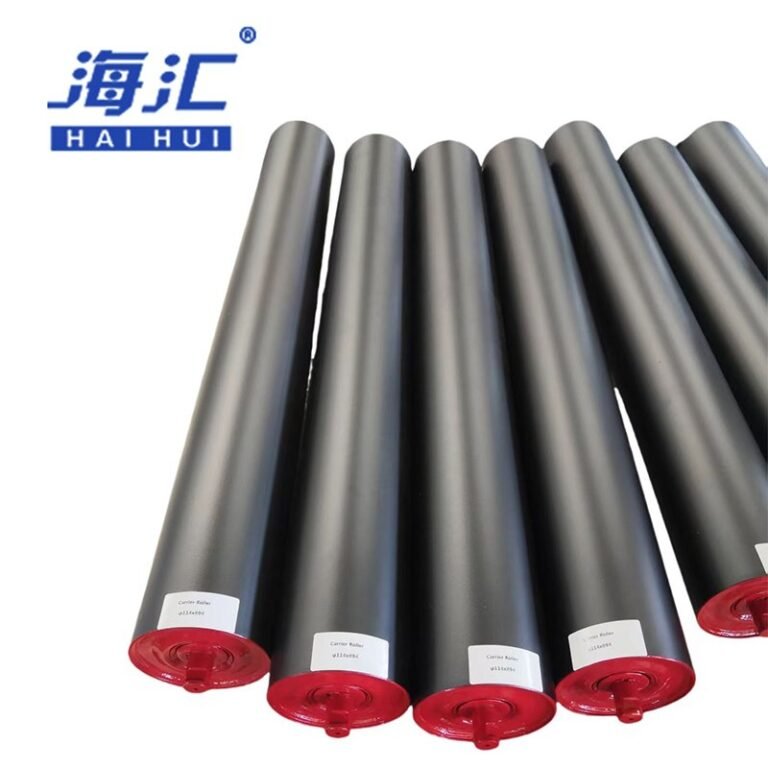
Uma polia de retorno padrão é simples, passiva e funcional. Ela oferece uma superfície lisa para o trajeto de retorno da correia.
- Carcaça de aço liso
- Rolamentos básicos
- Não há exigência de atraso
Funciona assim:
- A correia passa por cima disso.
- Conduz a correia vazia de volta.
- Suporta tensão.
O interior de uma polia de retorno típica:
Contêiner
- Estrutura de aço macio
- Montagem simples do eixo
- Função
- Baixo atrito
- Sem torque de acionamento
- Resultado
- Redirecionamento passivo
- Manutenção mínima
O custo e a simplicidade impulsionam a demanda. Para transportadores de carga leve ou de curta distância, uma polia simples parece ser suficiente. No entanto, em comparação com uma polia de cabeça, ela não oferece nenhuma vantagem em termos de tração ou acionamento. Se ocorrer deslizamento ou se o alinhamento da correia for fundamental, a polia de cabeça passa a ser o ponto de controle.
A Haihui reconhece ambas as aplicações, mas os engenheiros sempre recomendam que escolher uma polia motriz com especificações um pouco acima do necessário traz benefícios. Essa escolha determina não apenas a eficiência energética, mas também o nível de tempo de inatividade não programado que sua operação pode tolerar.
Por que optar por uma polia de cabeça projetada para sistemas de transporte de alta resistência?
Breve introdução: A troca da polia principal pode parecer um grande investimento, mas, na indústria pesada, ela muda o dia a dia das operações. Você obtém melhor aderência, menos paradas de emergência e uma manutenção mais previsível. Abaixo, explicamos de forma direta por que as operações optam pela polia principal Haihui e como ela lida com as cargas reais.
Por que optar por uma polia de cabeça projetada para sistemas de transporte de carga pesada?
Uma polia de cabeça projetada é adequada para operações de alta exigência, pois seus componentes são fabricados para um serviço contínuo com alto torque, e não apenas para rotação. Na prática, isso significa menos ajustes, menos paradas e melhor controle quando as metas de produção são inegociáveis.
Desempenho e tração
- O revestimento antideslizante (de cerâmica ou borracha) mantém o coeficiente de atrito elevado, mesmo em ambientes úmidos ou empoeirados, eliminando o deslizamento da correia que retarda a produção.
- Uma polia principal com coroa adequada centraliza ativamente a correia, reduzindo o atrito nas bordas e a tensão estrutural.
- Durabilidade em condições adversas
- Para as equipes de manutenção, é fundamental que a polia principal resista ao impacto de materiais pesados, às variações de temperatura e à vibração.
- Carcaças mais espessas e cubos reforçados aumentam a vida útil da polia sem a necessidade de inspeções constantes.
- Eficiência operacional
- A tração aprimorada reduz a corrente do motor necessária para acionar a correia, economizando energia e diminuindo a carga sobre as caixas de engrenagens.
- A Haihui utiliza soldagem de precisão e balanceamento dinâmico em seu processo de fabricação para garantir que cada polia funcione corretamente e reduzir a fadiga dos rolamentos.
Como o revestimento da polia afeta a vida útil e a tração da correia?
O atraso altera a dinâmica do sistema. Quanto maior for a aderência da polia principal, menor será a tensão que precisa ser aplicada à correia, o que reduz diretamente a tensão na emenda.
- Aumento do atrito: O revestimento multiplica o coeficiente de atrito em até 300% em comparação com um tambor de aço sem revestimento, permitindo que a correia transporte cargas mais pesadas sem deslizar.
- Tensão reduzida da correia: Uma alta aderência significa menores requisitos de tensão de tração, prolongando a vida útil das emendas da correia e do reforço de tecido.
- Proteção contra desgaste: A camada de revestimento sacrificial evita o desgaste abrasivo do próprio tambor de aço; assim, você substitui as placas de borracha ou cerâmica, em vez do caro corpo da polia.
| Tipo de atraso | Coeficiente de atrito (a seco) | Coeficiente de atrito (em piso molhado) | Aplicação típica |
|---|---|---|---|
| Aço bruto | 0.10 – 0.15 | 0.05 – 0.10 | Trabalho leve, em ambiente seco |
| Borracha lisa | 0.35 – 0.45 | 0.20 – 0.30 | Uso geral |
| Borracha com ranhuras | 0.50 – 0.65 | 0.35 – 0.50 | Condições de umidade em agregados |
| Ladrilhos de cerâmica | 0.65 – 0.80 | 0.50 – 0.65 | Alta tensão, mineração |
Notas rápidas que realmente importam para a equipe de operações:
- O revestimento cerâmico é uma inovação revolucionária em ambientes úmidos e lamacentos, onde a água reduz o atrito da borracha comum.
- Inspeções regulares do revestimento podem evitar deslizamentos catastróficos que danifiquem a correia.
A Haihui destaca seus revestimentos de alto atrito e resistentes à abrasão, incluindo os cerâmicos, como uma forma de alcançar “a mesma carga, menos tensão”, que é exatamente como os gerentes de manutenção se expressam.
Quais normas se aplicam às polias de transportadores?
As normas garantem que a polia principal não apenas gire, mas gire com segurança sob carga. O projeto deve atender a especificações rigorosas para suportar torque, fadiga e exposição ambiental.
Segurança e conformidade estrutural
- CEMA (Associação dos Fabricantes de Equipamentos de Transporte) As normas dos EUA determinam os requisitos relativos ao dimensionamento, à tensão no eixo e à conexão do cubo.
- Normas DIN e ISO abrangem as tolerâncias de fabricação internacionais e a qualidade dos materiais.
- AGMA As normas geralmente se aplicam às interfaces entre o eixo e os rolamentos.
Melhores práticas operacionais
- As capacidades de carga devem levar em conta o torque de partida instantâneo, e não apenas o torque de funcionamento.
- As ranhuras de chaveta e os conjuntos de travamento exigem um encaixe preciso para evitar desgaste por atrito e falhas por fadiga.
Conclusão prática
A atualização da polia principal deve ser tratada como um ativo essencial, e não como uma peça de desgaste. A Haihui destaca isso ao oferecer conjuntos integrados de eixo e cubo juntamente com suas polias revestidas, garantindo que os operadores tenham os componentes adequados para manter a segurança e o desempenho sem modificações onerosas.
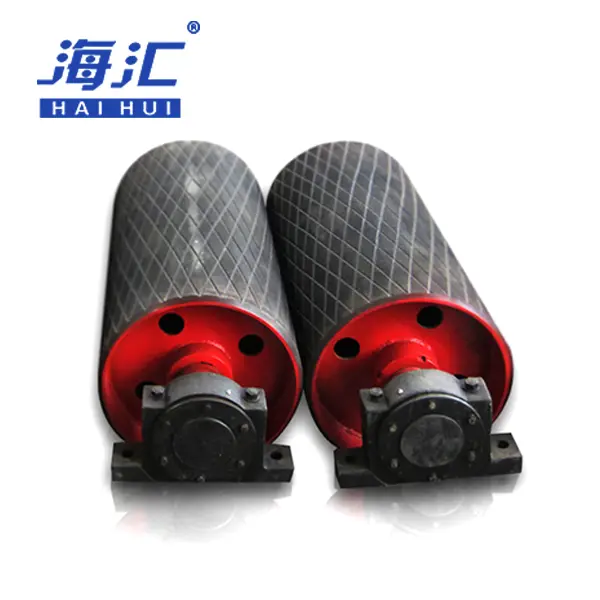
Como fazer a manutenção de uma polia de cabeça em um sistema transportador: um guia em 4 etapas
A manutenção de uma polia principal não é difícil, mas exige atenção. Desde a inspeção do revestimento até a verificação do alinhamento do eixo, cada etapa afeta a confiabilidade do sistema. Se você trabalha com uma polia acionada, seguir corretamente os princípios básicos garante que os materiais sejam movimentados com eficiência e segurança.
Etapa 1 – Inspeção visual do revestimento térmico e do invólucro
Uma inspeção visual minuciosa mantém a superfície da polia em boas condições e pronta para uso.
- Remova detritos e resíduos incrustados das ranhuras do revestimento térmico.
- Verifique se há áreas achatadas, rachaduras ou azulejos faltando (se for o caso).
- Inspecione as costuras de solda do invólucro em busca de sinais de fadiga.
Etapa 2 – Verificação do alinhamento do rolamento e do eixo
O alinhamento adequado evita a falha prematura dos rolamentos.
- Verifique a temperatura dos rolamentos; pontos quentes indicam atrito ou desalinhamento.
- Verifique a deflexão do eixo; um desvio excessivo na extremidade do eixo indica problemas estruturais.
Etapa 3 – Avaliação da tensão e do acionamento
A relação entre a polia principal e o sistema de tensão é fundamental para o atrito.
- Meça a folga da correia; uma folga excessiva indica baixa tensão, o que reduz a aderência na polia de cabeça.
- Certifique-se de que o mecanismo de tensionamento (por gravidade ou parafuso) tenha curso suficiente para compensar o alongamento da correia.
Etapa 4 – Limpeza e gerenciamento de resíduos
O acúmulo de material na superfície da polia é o maior inimigo da tração.
- Instale um raspador de correia ou um arado na saída da polia de cabeça para reter as partículas finas.
- Certifique-se de que os jatos de água (caso sejam utilizados para controle de poeira) não alaguem a interface da polia, o que pode reduzir o coeficiente de atrito.
Referências
- Normas da CEMA – cemanet.org
- DIN 22101 – Correias transportadoras para manuseio de materiais a granel
- Análise de falhas em rolamentos – skf.com
- Desempenho do revestimento cerâmico – flexco.com
- Boletim Técnico da Haihui (2026) – Considerações sobre o projeto de polias para serviços pesados
- Vibração e Equilíbrio – btol.com
- Transmissão de torque e potência – gates.com
- Manutenção de transportadores industriais – aggregate.com
- Diretrizes para emenda de correias – fennerdunlop.com


 English
 العربية
 Português do Brasil
 Русский
 Español