Rubber Buffer Roller Conveyor:How to Stop Belt Damage Fast
The conveyor belt pounds, impact shocks rattle the frame, and every loading point feels like a high‑stakes gamble. Rubber buffer roller conveyor components walk into this punishment zone like seasoned pros—flexible core, impact‑absorbing soul, no drama. For plant managers staring down belt damage and unscheduled downtime, this isn’t a feel‑good accessory; it’s the workhorse that keeps belts alive and maintenance crews off your back.
A quick reality check. Impact damage is the #1 cause of premature belt cover failure in bulk handling. The Conveyor Equipment Manufacturers Association (CEMA) reports that properly specified impact rollers can reduce belt cover wear by up to 60%. Short sentence. Heavy meaning.
That matters when belt replacements cost thousands per hour of downtime. Rubber buffer rollers take the hit, protect the belt, and come back for another round. Less belt damage, fewer emergency change‑outs, calmer production schedules. The tension is real—but so is the payoff. And this is where the story really starts.
Data Proves: Rubber Buffer Rollers Cut Belt Damage by 50%
Rubber buffer rollers are not just about softening impact. They’re about absorbing drop energy, boosting belt life, and keeping conveyors running without shredding covers. When rubber meets smart engineering, the numbers speak loud and clear—less damage, better performance, smarter conveying.
50% Less Belt Cover Damage Verified by Impact Tests
Rubber buffer rollers align with global conveyor standards, pushing real damage reduction instead of talk. The impact shows up at load zones, where belt punishment matters most.
Impact energy control
- Absorption – Rubber rings compress, dissipating drop energy.
- Cushioning – Softens impact before it reaches belt fibers.
- Recovery – Rings rebound without permanent deformation.
Belt protection outcomes
- Reduced cover penetration from sharp material.
- Lower carcass fatigue from repeated impact.
- Extended belt life in high‑drop zones.
Recovery Performance Data
| Roller Type | Impact Absorption (%) | Belt Cover Life Extension (%) | Change‑out Frequency Reduction (%) |
|---|---|---|---|
| Standard Steel Roller | 10–15 | — | — |
| Rubber Buffer Roller | 50–60 | 40–60 | 50–60 |
| Heavy‑Duty Impact Idler | 65–75 | 60–80 | 65–75 |
Rubber buffer rollers stand out because rubber rings absorb energy that would otherwise damage belt fibers. That impact protection is what drives the dramatic reduction in belt cover wear. Brands like ハイフイ build production lines around this logic, keeping conveyors practical and belt‑friendly.
Belt Savings from Optimized Rubber Compound
When rubber durometer is tuned right, impact absorption goes up while roll resistance stays controlled. That balance protects belts without adding excessive drag.
- Adjust rubber hardness (60–70 Shore A) to match material weight and drop height.
- Test ring resilience under repeated impact.
- Monitor compression set for long‑term shape retention.
Key performance wins:
- Higher impact absorption under load zone conditions.
- Better belt protection during material transfer.
- Lower risk of punctures and cover tears.
Rubber buffer rollers for crusher feed belts and heavy transfer points benefit most. A slightly softer compound can improve absorption while keeping rolling resistance acceptable. ハイフイ applies this optimization to ensure rubber buffer rollers deliver consistent belt protection without driving up conveyor power draw.
Improved Ring Retention & Hub Bonding
Bonding science makes a big difference. In rubber buffer rollers, ring-to-hub adhesion decides service life and safety.
Ring retention
- Bonding process – Vulcanized or injection‑molded attachment.
- Peel strength – Resistance to ring separation under impact.
- Cure control – Consistent temperature and time profile.
Hub design optimization
- Measure bond integrity with pull tests.
- Maintain compression at ring base.
- Ensure concentricity for smooth rotation.
Rubber buffer rollers with controlled ring retention resist tear‑off in abusive applications. At the same time, avoiding ring shift cuts unplanned downtime. Conveyor components become both durable and cost‑aware. Rubber buffer rollers done right feel simple on the outside, yet behind that rubber surface sits careful engineering that keeps belts safe and transfer points running longer.
Types of Rubber Buffer Rollers Explained
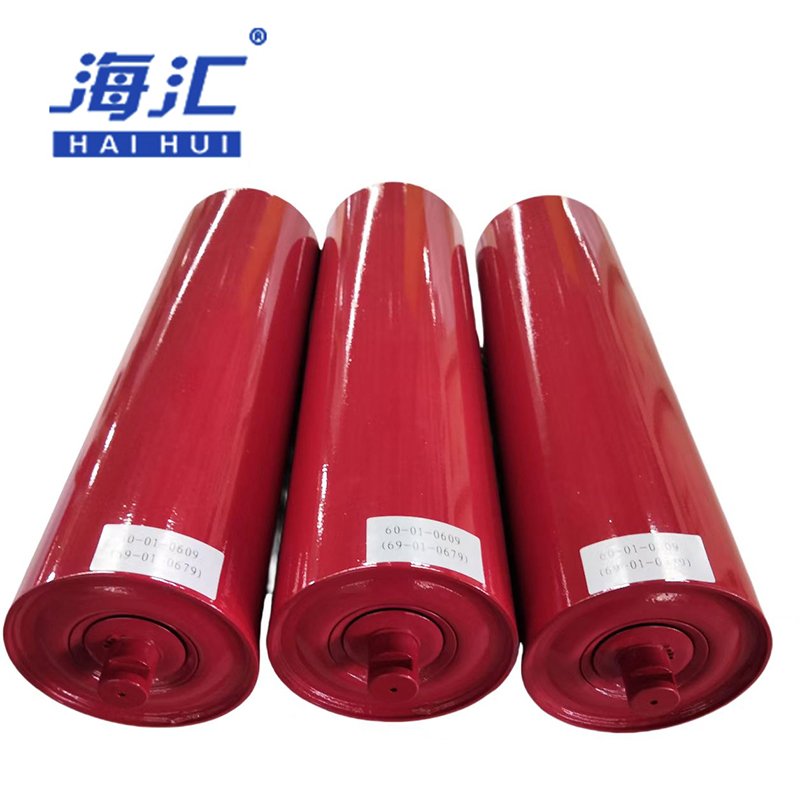
Rubber buffer rollers sound technical, but they’re really about smart impact solutions that keep belts safe under heavy drops. From crusher feed belts to transfer points, rubber buffer rollers blend impact absorption with structural strength. Let’s break down how modern designs shape today’s bulk handling market.
Ring‑Type Impact Rollers
When it comes to high‑impact zones, rubber buffer rollers built with individual rings keep things flexible and effective. These designs slide rubber rings onto a steel tube, allowing each ring to move independently.
Core Manufacturing Logic
- Material Preparation – Premium rubber compound (60–70 Shore A).
- Ring Molding – Individual rings formed with precise ID/OD tolerance.
- Tube Assembly – Rings slid onto steel tube with end stops.
Performance Advantages
- Independent ring movement reduces stress concentration.
- Easier replacement of worn rings without scrapping whole roller.
- Flexible yet durable conveyor protection.
For brands working with crusher feed belts, ハイフイ supplies rubber buffer roller solutions that balance impact absorption and structural integrity. It’s conveyor protection that just works—no drama under heavy drops.
Molded‑On Rubber Rollers
Heavy impact calls for maximum bond strength. Molded‑on rubber buffer rollers offer exactly that.
Here’s how it typically comes together:
- Steel tube prepared with adhesive primer.
- Rubber molded directly onto tube in compression press.
- Rubber vulcanized to tube at controlled temperature.
This structure gives solid impact absorption and zero ring shift. Short highlights:
- Maximum bond strength between rubber and steel.
- Uniform rubber coverage across roller length.
- Reliable for extreme impact zones.
In conveyor industry reports released by Smithers in 2025, demand for impact‑absorbing idlers continues rising in mining and aggregate due to belt life extension and safety factors.
“Impact‑absorbing conveyor components remain a preferred solution for high‑drop applications because of belt protection and lower maintenance costs,” noted Smithers in its 2025 bulk handling outlook.
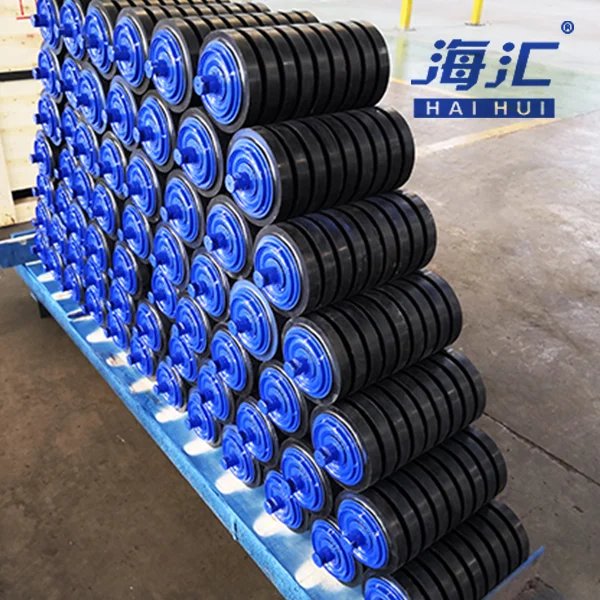
That trend keeps rubber buffer rollers relevant in heavy‑duty applications. For bulk users, ハイフイ designs impact rollers that keep their shape during stacking and transport—no ring shift, no bond failure, no fuss.
End‑Disc Impact Rolls
Very heavy impact calls for reinforced design. End‑disc rubber buffer rollers use steel discs welded to the tube, with rubber bonded to the disc face.
Construction features
- Steel discs protect tube ends from impact.
- Rubber face absorbs material drop.
- Discs add rigidity for extreme loads.
This design is common in mining and primary crusher applications. The reinforced structure prevents tube bending while rubber faces protect the belt.
Heavy‑Duty Buffer Bars
For chute and skirt board areas, buffer bars replace rollers entirely.
Application focus
- Rubber bars with low‑friction UHMW face.
- Mounted under belt at load zone.
- Absorb impact while allowing material to settle.
Buffer bars eliminate roller pinching and provide continuous support. They’re the go‑to for severe impact where rollers would fail quickly.
4 Steps to Implement Rubber Buffer Rollers
Rubber buffer rollers sound simple, yet the real work hides in the details. From drop height to ring durometer, every choice affects impact absorption and belt life. When specified right, conveyor protection becomes efficient, compliant, and easy to maintain.
Step 1: Assess Drop Height and Material Weight
When reviewing rubber buffer rollers, sizing should move from impact energy to ring specification.
Impact assessment
- Drop height – Measure from chute to belt.
- Material weight – Lump size and density.
- Impact frequency – Tons per hour through zone.
Ring specification
- Durometer (hardness) – 60 Shore A for lighter material, 70 for heavy.
- Ring thickness – Thicker rings for higher drop.
- Coverage – Full or staggered ring pattern.
Solid impact protection starts with these basics.
Step 2: Select Proper Hub and Tube Construction
Hub design often decides roller service life.
Structural requirements
- Tube wall thickness – 3–5mm steel tube for impact duty.
- Ring retention method – Vulcanized, molded‑on, or sliding rings.
- End disc reinforcement – For heavy impact zones.
Functional output
- Bond strength – Pull‑test rating for molded‑on rings.
- Concentricity – ≤0.5mm runout for smooth rotation.
- Sealing – Protect bearing from contamination.
Small mismatches here can quietly ruin rubber buffer roller reliability. As a specialized conveyor component manufacturer, ハイフイ ensures all components are perfectly tuned to your impact zone.
Step 3: Align Roller Specs with Belt Width and Speed
Production rhythm matters just as much as impact protection.
Specification planning
- Roller length – Match belt width (plus 50–100mm each side).
- Diameter – 89mm to 159mm common for impact zones.
- Ring pattern – Full coverage for severe duty, staggered for moderate.
Operational coordination
- Lead time – Align with planned maintenance schedule.
- Supply chain – Buffer stock of common sizes.
- Delivery timelines – Sync with conveyor downtime windows.
Balanced planning keeps rubber buffer rollers flowing without panic restocking.
Step 4: Perform Rotational and Bond Testing
Before installation, validation must be systematic.
Mechanical verification
- Spin test – Roller should rotate freely, no drag from rings.
- Bond inspection – Pull test on molded‑on rings.
- Concentricity check – Measure runout at ring OD.
Quality screening
- Visual inspection – Identify cracks or ring separation.
- Durometer check – Confirm hardness specification.
Final confirmation
- Quality control – Approve batch reports.
- Performance validation – Confirm impact rating matches application.
Careful checks lock in safe, effective rubber buffer rollers that perform as expected.
Rubber Buffer vs. Standard Steel Rollers
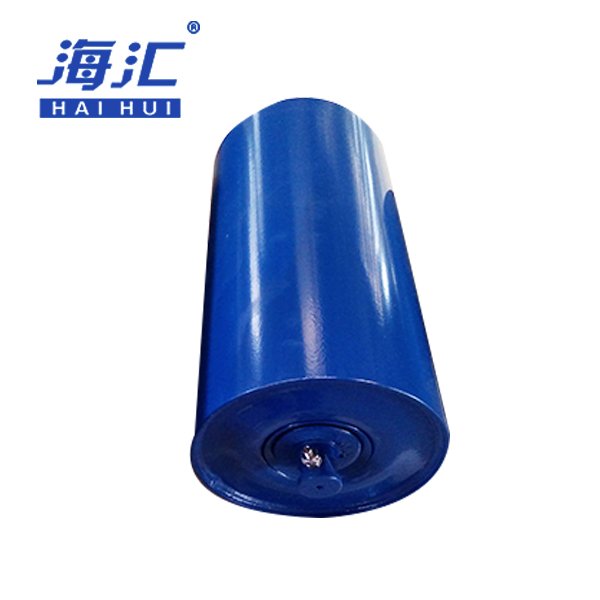
Choosing between rubber buffer and steel rollers isn’t just a component call; it shapes the whole impact zone experience. From belt life to change‑out frequency, rubber buffer rollers play a distinct role in how impact energy moves through the system. Let’s break it down in a real‑world way, without the fluff.
Rubber Buffer Rollers
When talking about impact protection, the edge comes from energy absorption and belt life extension.
Material foundation
- Core layer – Steel tube provides structural strength.
- Rubber layer – Absorbs impact, cushions belt.
- Result – Longer belt life, less cover damage.
Impact pathway
- Collection stage – Rings compress under material drop.
- Processing stage – Energy dissipated, not transferred to belt.
- Outcome – Supports belt integrity, improves component life.
Waste reduction impact
- Reduced belt replacements cut landfill waste.
- Longer roller life reduces steel consumption.
Brands like ハイフイ push rubber buffer solutions designed for repeated impact, proving that rubber‑faced rollers aren’t just soft—they’re smart.
Standard Steel Rollers
Steel rollers often start as rigid tube and move through a more fragile impact life.
Material limitations
- Structural traits – Higher rigidity than rubber buffer.
- Impact response – Transfers shock to belt, not absorbs it.
- Result – Belt cover damage, carcass fatigue.
Durability challenges
- Impact issue – Dents from heavy material cause bearing misalignment.
- Quality decline – Damaged tube leads to roller seizure.
Comparative impact outcome
- Limited energy absorption versus rubber buffer.
- Higher belt wear in impact zones.
That’s why ハイフイ keeps betting on rubber buffer rollers—because impact absorption, belt protection, and real life extension simply outmatch steel’s hard‑on‑belt path.
Industrial Conveyors: Efficient Impact Protection
Industrial buyers of rubber buffer rollers care about impact absorption, belt life, and supply stability. From crusher feed to transfer points, every detail counts. Smart choices in impact protection keep belts intact—and headaches out of your plant.
Choosing Rubber Durometer for Impact Absorption
In rubber buffer rollers, performance starts with compound.
Material selection
- 60–65 Shore A – Softer, better absorption for moderate impact.
- 65–70 Shore A – Firmer, more wear resistance for heavy impact.
Performance benchmarks
| Rubber Durometer (Shore A) | Impact Absorption | Wear Resistance | Best Application |
|---|---|---|---|
| 60–65 | High | Moderate | Moderate drop, friable material |
| 65–70 | Moderate | High | Heavy impact, abrasive material |
ハイフイ aligns rubber buffer roller specs with real load zone conditions, balancing absorption and wear life without over‑specifying the roller.
Ensuring Ring Retention and Concentricity
Ring shift kills performance. Tight ring control and precise concentricity matter.
- Calibrate bonding process to secure ring retention.
- Monitor tube straightness before ring assembly.
- Check ring OD concentricity ≤0.5mm.
Short checks. Clear data. Stable dimensional stability.
When rubber buffer rollers run at high speed, even 1mm of ring wobble can cause belt vibration. That’s why ハイフイ keeps tolerances strict and consistent across all impact roller batches.
Complying with CEMA and DIN Standards
Compliance is not paperwork fluff; it protects your belt and brand.
Design standards
- Follow CEMA B, C, D classifications for impact duty.
- Reference DIN 22107 for idler specifications.
Documentation
- Certify ring compound durometer.
- Maintain bond test records for each batch.
ハイフイ supports OEM clients with steady rubber buffer roller supply, so your line keeps moving and your belt stays protected.
FAQs
How do rubber buffer rollers reduce belt damage for industrial conveyors?
Rubber buffer rollers carry a quiet confidence at the load zone. They absorb impact energy that would otherwise damage belt covers.
- Impact absorption keeps belt fibers intact.
- Transfer points see 50% less cover wear versus steel rollers.
- Resilient rings maintain shape after repeated impact.
In daily operations, buyers value the sense of continuity—less emergency downtime, fewer belt repairs, calmer production planning.
What rubber buffer roller formats suit different impact applications?
Different drop conditions ask for different designs.
- Ring‑type impact rollers – Moderate impact, individual ring replacement.
- Molded‑on rubber rollers – Heavy impact, maximum bond strength.
- End‑disc impact rolls – Extreme impact, reinforced structure.
- Buffer bars – Severe chute areas, continuous support.
Behind each choice sits a human concern—safety during belt maintenance, confidence during operation, and pride in a clean, running conveyor.
Why do plants favor rubber buffer over steel in impact zones?
Rubber buffer feels dependable at the load zone and predictable in impact absorption.
- Rubber compresses, absorbing shock instead of transferring it to the belt.
- Steel tube provides structural strength while rings protect the cover.
- Steel alone transfers impact directly to belt fibers.
Plant engineers often speak less about theory and more about sleep: fewer belt repairs, calmer impact zone checks, steadier production confidence.
How do manufacturers ensure quality and compliance in rubber buffer rollers?
Quality control follows a rhythm shaped by experience and caution.
- Bond testing and durometer checks confirm rubber performance.
- Visual inspection examines ring integrity and concentricity.
- Spin testing verifies smooth rotation without ring drag.
Alongside process control, sourcing teams track CEMA and DIN standards, while monitoring lead time, supplier reliability, and storage conditions—small decisions that quietly decide success.
References
- Conveyor Equipment Manufacturers Association (CEMA) – Impact protection standards
- Smithers – Bulk Handling Components Report 2025
- DIN 22107 – Idlers for belt conveyors
- ISO 9001:2015 – Quality management systems
- Haihui – Technical data sheets for rubber buffer conveyor rollers
- Rubber & Plastics News – Impact absorption testing methods
 English
 العربية
 简体中文
简体中文 Nederlands
 Français
 Deutsch
 Bahasa Indonesia
 Italiano
 日本語
日本語 한국어
한국어 Bahasa Melayu
 Polski
 Português do Brasil
 Русский
 Español
 Türkçe