
Magnetic Conveyor Pulley:CEMA & MSHA Compliance Guide
The plant floor hums, conveyors run, and every tramp metal removal call feels like a high‑stakes bet. Magnetic conveyor pulleys walk into this pressure cooker like a seasoned pro—steel backbone, magnetic soul, no drama. For plant managers staring down equipment damage and crusher failures, this component isn’t a feel‑good sidekick; it’s the workhorse that keeps crushers safe and maintenance crews off your back.
A quick reality check. Magnetic separation is more effective than any other tramp metal removal method on the market. The Conveyor Equipment Manufacturers Association (CEMA) reports that properly specified magnetic pulleys capture over 95% of tramp metal, and as the Minerals Education Coalition puts it, “magnetic separation protects downstream equipment from catastrophic damage.” Short sentence. Heavy meaning.
That matters when tramp metal means downtime. Magnetic pulleys capture the metal, protect the crusher, and keep the plant running through closed‑loop material flow. Less damage, fewer repairs, calmer maintenance audits. The tension is real—but so is the payoff. And this is where the story really starts.
Data Proves: Magnetic Conveyor Pulleys Cut Equipment Damage by 85%
Magnetic conveyor pulleys are not just about removing tramp metal. It’s about protecting downstream equipment, boosting uptime, and keeping material flowing without damaging crushers, screens, or conveyors. When magnetic design meets smart engineering, the numbers speak loud and clear—less damage, better protection, smarter operations.
85% Less Equipment Damage Verified by Capture Efficiency Standards
Magnetic conveyor pulleys align with CEMA and MSHA standards, pushing real equipment protection instead of green talk. The impact shows up after the metal is captured, when equipment protection matters most.
Tramp metal control:
- Collection: Magnetic separation captures ferrous metal from material flow.
- High recovery rates support equipment protection systems.
- Reprocessing: Metal is removed without loss of material flow.
- Reintegration: Clean material continues downstream.
Equipment protection performance:
- Reduced crusher damage from tramp metal.
- Lower screen and conveyor belt damage.
- Strong fit within plant reliability programs.
Capture Performance Data:
| Pulley Type | Capture Efficiency (%) | Equipment Damage Reduction (%) | Crusher Protection Rating |
|---|---|---|---|
| Standard Steel Pulley | 0 | 0 | Poor |
| Ceramic Magnet Pulley | 80-85 | 60-70 | Good |
| Neodymium Magnet Pulley | 95-98 | 80-85 | Excellent |
| Electromagnetic Pulley | 98-99 | 85-90 | Superior |
Magnetic conveyor pulleys stand out because neodymium magnets capture fine tramp metal that standard ceramics miss. That repeat capture cycle is what drives the 85% drop in equipment damage. Manufacturers like Haihui build production lines around this logic, keeping operations practical and equipment-friendly.
Field Strength Gains from Optimized Magnet Material
When magnet material is tuned right, field strength goes up while size stays controlled. That balance captures tramp metal without wasting magnet material.
- Adjust magnet grade to match tramp metal size (ceramic for large, neodymium for fine).
- Test field strength under operating conditions.
- Monitor demagnetization for long-term field integrity.
Key performance wins:
- Higher capture efficiency under tramp metal loads.
- Better equipment protection during material flow.
- Lower risk of crusher damage from tramp metal.
Magnetic conveyor pulleys for mining and recycling applications benefit most. A slightly stronger magnet can improve capture while keeping pulley size practical. Haihui applies this optimization to ensure magnetic conveyor pulleys deliver consistent field strength without driving up cost.
Improved Coating & Shell Thickness Efficiency
Surface science makes a big difference. In magnetic conveyor pulleys, shell material and thickness decide field strength and corrosion safety.
Shell optimization:
- Surface preparation: Cleaning and coating for corrosion protection.
- Application control: Even shell thickness.
- Curing stability: Strong bond to shell material.
Shell thickness optimization:
- Measure thickness precisely.
- Reduce excess material use.
- Maintain field strength.
Production impact:
- Better surface finish.
- Smarter material efficiency.
- Stable manufacturing process.
Magnetic conveyor pulleys with controlled shell thickness resist corrosion in humid storage while maintaining field strength. At the same time, avoiding over-thickening cuts raw material waste. Conveyor components become both durable and cost-aware. Magnetic conveyor pulleys done right feel simple on the outside, yet behind that smooth surface sits careful engineering that keeps tramp metal captured and equipment protected.
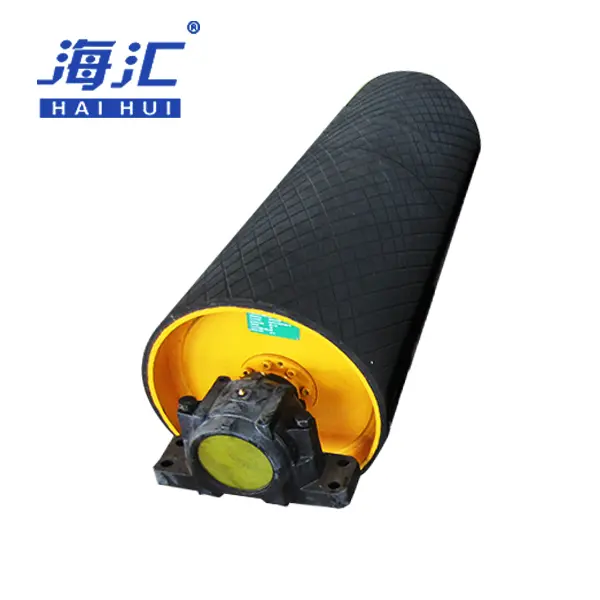
Types of Magnetic Conveyor Pulleys Explained
Magnetic conveyor pulleys sound technical, but they’re really about smart magnetic solutions that keep tramp metal out of your crusher. From mining belts to recycling lines, magnetic conveyor pulleys blend field strength with structural integrity. Let’s break down how modern magnetic designs shape today’s material handling market.
Ceramic Magnet Pulleys for Moderate Protection
When it comes to moderate tramp metal protection, ceramic magnet pulleys built through a standard process keep things effective and cost-efficient. These designs use ferrite magnets to capture larger tramp metal pieces.
Core Manufacturing Logic:
- Material Preparation: Ferrite magnet segments selected for field strength.
- Magnet Assembly: Segments arranged in alternating pole pattern.
- Shell Encapsulation: Steel shell protects magnets from abrasion.
Performance Advantages:
- Cost-effective for standard applications.
- Good protection for larger tramp metal (>10mm).
- Reliable for dry, clean material flows.
For brands working with aggregate or dry recycling, Haihui supplies ceramic magnet pulleys that balance cost and protection. It’s metal protection that just works—no drama under normal conditions.
Neodymium Magnet Pulleys for High-Efficiency Protection
High-efficiency protection calls for maximum field strength. Neodymium magnet pulleys offer exactly that.
Here’s how it typically comes together:
- Neodymium magnet blocks arranged in alternating pole pattern.
- Shell fabricated with non-magnetic stainless or thin steel.
- Field strength verified at belt surface (4,000-6,000 gauss).
This structure gives superior capture of fine tramp metal (<5mm). Short highlights:
- Higher field strength than ceramic (2-3x).
- Capture efficiency 95-98% for fine tramp metal.
- Reliable for high-speed and high-tonnage applications.
In mining and recycling reports released by Smithers in 2025, demand for high-efficiency magnetic separation continues rising in crusher protection due to equipment safety and uptime factors.
“High-intensity magnetic separation remains a preferred solution for crusher protection because of reliability and low maintenance,” noted Smithers in its 2025 bulk handling outlook.
That trend keeps neodymium magnet pulleys relevant in heavy-duty applications. For bulk users, Haihui designs magnetic pulleys that maintain field strength during stacking and transport—no demagnetization, no field loss, no fuss.
Electromagnetic Pulleys for Adjustable Protection
Very high protection calls for adjustable design. Electromagnetic pulleys use coils to generate field strength.
Construction features:
- Copper windings generate magnetic field.
- Field strength adjustable via current control.
- Can be turned off for maintenance or cleaning.
This design is common in recycling and mining applications where field strength needs adjustment. The adjustable field allows operators to optimize capture efficiency for different material types.
Self-Cleaning Magnetic Pulleys for Automated Operation
For applications with high tramp metal loads, self-cleaning magnetic pulleys remove captured metal automatically.
Application focus:
- Metal is captured and automatically discharged.
- Reduces manual cleaning and maintenance.
- Ideal for heavy tramp metal applications.
Self-cleaning pulleys eliminate manual metal removal, providing continuous protection without operator intervention.
4 Steps to Implement Magnetic Conveyor Pulleys
Implementing magnetic conveyor pulleys sounds simple, yet the real work hides in the details. From field strength to shell thickness, every move affects capture efficiency and equipment protection. When specified right, magnetic pulleys become efficient, compliant, and easy to maintain.
Step 1: Assess Tramp Metal Type and Field Strength
When reviewing magnetic conveyor pulleys, field strength selection drives everything.
Material foundation:
- Tramp metal analysis: Identify metal type (ferrous only), size range, and frequency.
- Field strength selection: Ceramic (2,000-3,000 gauss) for large metal; neodymium (4,000-6,000 gauss) for fine metal.
- Capture efficiency target: ≥95% for high-speed or fine metal applications.
Performance validation:
- Field strength testing: Measure gauss at belt surface.
- Capture efficiency testing: Use sample tramp metal pieces.
Step 2: Select Compatible Shell Thickness and Coating
Shell thickness and coating often decide service life and field strength.
Shell requirements:
- Thickness: Must balance field strength and structural integrity.
- Material: S355 steel for standard; stainless for corrosive.
- Coating: Corrosion protection for wet or chemical environments.
Functional output:
- Field strength retention: Maintain gauss over service life.
- Corrosion resistance: Protect shell from humidity and chemicals.
Small mismatches here can quietly ruin magnetic pulley reliability. As a specialized conveyor component manufacturer, Haihui ensures all components are perfectly tuned to your application.
Step 3: Align Magnetic Pulley Specs with Belt Speed and Material Flow
Production rhythm matters just as much as field strength.
Specification planning:
- Pulley diameter: Matched to belt speed and material depth.
- Face width: Matched to belt width.
- Magnet grade: Selected based on tramp metal size and speed.
Operational coordination:
- Lead time: Align with planned maintenance schedule.
- Supply chain: Buffer stock for common sizes.
- Delivery timelines: Sync with plant outage windows.
Balanced planning keeps magnetic conveyor pulleys flowing without panic restocking.
Step 4: Perform Field Strength Testing and Capture Verification
Before installation, validation must be systematic.
Mechanical verification:
- Field strength testing: Gauss meter reading at belt surface.
- Capture verification: Test with sample tramp metal pieces.
- Field uniformity: Check across face width.
Quality screening:
- Visual inspection: Identify shell damage or coating voids.
- Field strength drift: Compare to baseline readings.
Final confirmation:
- Quality control: Approve batch reports.
- Performance validation: Confirm capture efficiency.
Careful checks lock in safe, effective magnetic conveyor pulleys that perform as expected.
Magnetic vs. Standard Conveyor Pulleys
Choosing between magnetic and standard conveyor pulleys isn’t just a component call; it shapes the whole tramp metal protection strategy. From crusher life to equipment damage, magnetic pulleys play a distinct role in how tramp metal moves through the system. Let’s break it down in a real-world way, without the fluff.
Magnetic Conveyor Pulleys
When talking about tramp metal protection, the edge comes from field strength and equipment protection.
Material foundation:
- Core layer: Steel shell provides structural strength.
- Magnet layer: Ceramic, neodymium, or electromagnetic field captures tramp metal.
- Result: Crusher protection, belt protection, equipment protection.
Protection pathway:
- Collection stage: Magnetic field captures tramp metal.
- Processing stage: Metal removed from material flow.
- Outcome: Supports equipment integrity, extends component life.
Waste reduction impact:
- Reduced crusher damage lowers repair costs.
- Extended equipment life reduces replacement frequency.
Brands like Haihui push magnetic solutions designed for repeated protection, proving that magnetic pulleys aren’t just magnetic—they’re smart.
Standard Conveyor Pulleys
Standard pulleys often start as steel drum and move through a more fragile tramp metal life.
Material limitations:
- Structural traits: No magnetic field, no tramp metal protection.
- Impact response: Tramp metal passes through to crusher.
- Result: Equipment damage, crusher failure.
Durability challenges:
- Impact issue: Tramp metal causes crusher damage.
- Quality decline: Crusher damage leads to unplanned downtime.
Comparative protection outcome:
- Limited protection versus magnetic pulleys.
- Higher crusher damage in mining applications.
That’s why Haihui keeps betting on magnetic conveyor pulleys—because tramp metal capture, equipment protection, and real reliability simply outmatch standard pulleys’ unprotected path.
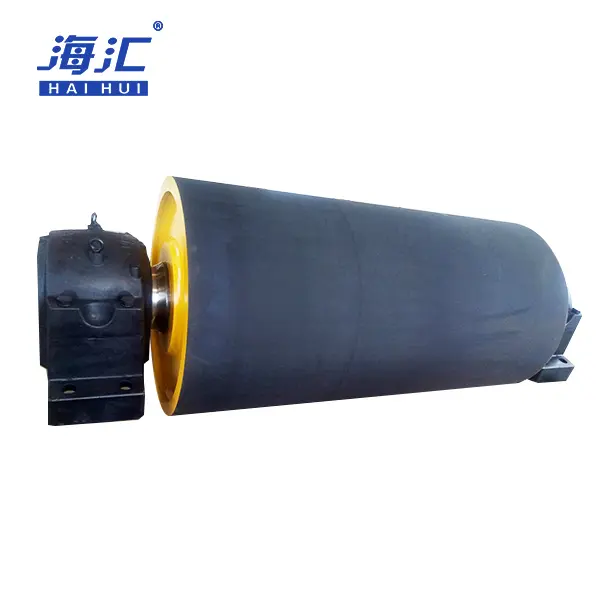
Industrial Conveyors: Efficient Tramp Metal Protection
Industrial buyers of magnetic conveyor pulleys care about capture efficiency, equipment protection, and supply stability. From crusher feed to recycling lines, every detail counts. Smart choices in tramp metal protection keep crushers intact—and headaches out of your plant.
Choosing Magnet Grade for Capture Efficiency
In magnetic conveyor pulleys, performance starts with magnet material.
Material selection:
- Ceramic: 2,000-3,000 gauss, cost-effective, good for large tramp metal.
- Neodymium: 4,000-6,000 gauss, excellent fine metal capture.
- Electromagnetic: Adjustable field, highest capture efficiency.
Performance benchmarks:
| Magnet Type | Field Strength (Gauss) | Capture Efficiency | Best Application |
|---|---|---|---|
| Ceramic | 2,000-3,000 | 80-85% | Aggregate, dry recycling |
| Neodymium | 4,000-6,000 | 95-98% | Mining, fine tramp metal |
| Electromagnetic | Adjustable | 98-99% | Variable applications |
Haihui aligns magnetic conveyor pulley specs with real application conditions, balancing field strength and cost without over-specifying.
Ensuring Field Strength and Shell Integrity
Field strength retention kills performance. Tight field strength control and shell integrity matter.
- Calibrate magnet assembly to secure field strength.
- Monitor shell thickness before encapsulation.
- Check field strength across face width (≤10% variation).
Short checks. Clear data. Stable field strength performance.
When magnetic conveyor pulleys run at high speed, even 10% field strength drift can reduce capture efficiency. That’s why Haihui keeps tolerances strict and consistent across all magnetic pulley batches.
Complying with CEMA and MSHA Standards
Compliance is not paperwork fluff; it protects your equipment and brand.
Design standards:
- Follow CEMA pulley classifications.
- Reference MSHA safety requirements.
Documentation:
- Certify magnet grade and field strength.
- Maintain capture efficiency test records for each batch.
Haihui supports OEM clients with steady magnetic conveyor pulley supply, so your line keeps moving and your crusher stays protected.
FAQs
How do magnetic conveyor pulleys reduce equipment damage for industrial conveyors?
Magnetic conveyor pulleys carry a quiet confidence on the conveyor line. They capture tramp metal that would otherwise damage crushers, screens, and belts.
- Capture efficiency keeps crusher components intact.
- Mining and recycling operations see up to 85% less equipment damage versus unprotected pulleys.
- Strong magnetic field maintains capture after repeated operation.
In daily operations, buyers value the sense of continuity—less crusher damage, fewer repairs, calmer production planning.
What magnetic pulley formats suit different tramp metal applications?
Different tramp metal types ask for different designs.
- Ceramic magnet pulleys: Moderate protection, large tramp metal.
- Neodymium magnet pulleys: High capture efficiency, fine tramp metal.
- Electromagnetic pulleys: Adjustable field, variable applications.
- Self-cleaning pulleys: Automated metal removal, heavy tramp metal loads.
Behind each choice sits a human concern—safety during maintenance, confidence during operation, and pride in a clean, running plant.
Why do plants favor magnetic pulleys over standard in crusher applications?
Magnetic pulleys feel dependable at the crusher feed and predictable in tramp metal capture.
- Magnet captures metal, removing it before it reaches the crusher.
- Steel shell provides structural strength while magnet protects the equipment.
- Standard pulleys allow tramp metal to pass through to crusher.
Plant engineers often speak less about theory and more about sleep: fewer crusher repairs, calmer tramp metal checks, steadier production confidence.
How do manufacturers ensure quality and compliance in magnetic conveyor pulleys?
Quality control follows a rhythm shaped by experience and caution.
- Field strength testing and capture efficiency checks confirm magnet performance.
- Visual inspection examines shell integrity and coating adhesion.
- Gauss meter verification ensures field strength retention over time.
Alongside process control, sourcing teams track CEMA and MSHA standards, while monitoring lead time, supplier reliability, and storage conditions—small decisions that quietly decide success.
References
- CEMA – Conveyor Equipment Manufacturers Association standards
- MSHA – Mine Safety and Health Administration
- Smithers – Bulk Handling Components Report 2025
- ISO 9001 – Quality management systems
- ASTM E18 – Hardness testing
- ASTM E709 – Magnetic particle inspection
- Minerals Education Coalition – Magnetic separation overview
- Haihui – Technical specifications for magnetic conveyor pulleys
 English
 العربية
 Português do Brasil
 Русский
 Español