
Heavy Duty Industrial Rollers:The $30 Part That Costs $30,000
- Why Most Heavy Duty Industrial Rollers Fail Too Soon
- The True Cost of Cheap Industrial Rollers
- One Spec Doesn’t Fit All — Match the Roller to the Zone
- OEM vs. Aftermarket Heavy Duty Industrial Rollers
- 5 Things Buyers Miss When Sourcing Industrial Rollers
- How to Verify Industrial Roller Supplier Credibility
- FAQs
Buying heavy duty industrial rollers sounds like the kind of procurement decision you make once and forget about. Wrong. One roller with a soft shaft, one bearing that wasn’t sealed right, one heat treatment that got rushed on a Friday—and suddenly your whole conveyor line is down, your maintenance crew is pulling metal splinters out of the frame, and your plant manager is asking why the same roller keeps failing every six months.
“We saved twenty-eight bucks a roller on a hundred rollers,” a maintenance supervisor told me, staring at a bin full of failed parts. “Saved $2,800 total. Then we had a line down for two days. Lost about forty grand in production. Smartest dumb decision I ever made.”
The global market for heavy duty industrial rollers was valued at over $6.5 billion in 2024, according to industry sources tracked by Modern Bulk Handling and Power Transmission Engineering. A huge chunk of that spend is replacement of rollers that failed early—not from wear, but from being built wrong from the start.
So before you sign off on a bulk industrial roller order, check the shaft hardness, the bearing clearance, the seal type, the tube wall, and the weld integrity. Because in this business, cutting corners on rollers doesn‘t save money—it stops the line.
Quick Answers: Heavy Duty Industrial Rollers Essentials
➔ Shaft & Hardness: Specify 40Cr or 42CrMo4 steel, induction‑hardened to HRC 52–56 at bearing journals, with certified case depth ≥2.5 mm.
➔ Bearing & Clearance: Choose C3 or C4 internal clearance bearings (tapered roller or deep groove), P6 grade minimum, documented radial play.
➔ Sealing & Protection: Specify double contact or triple labyrinth seals (IP65 minimum), high‑temperature lithium or polyurea grease, verified fill volume.
➔ Tube & Shell: S355 steel, wall thickness 4–10 mm depending on duty, full penetration welds with MPI or dye pen inspection.
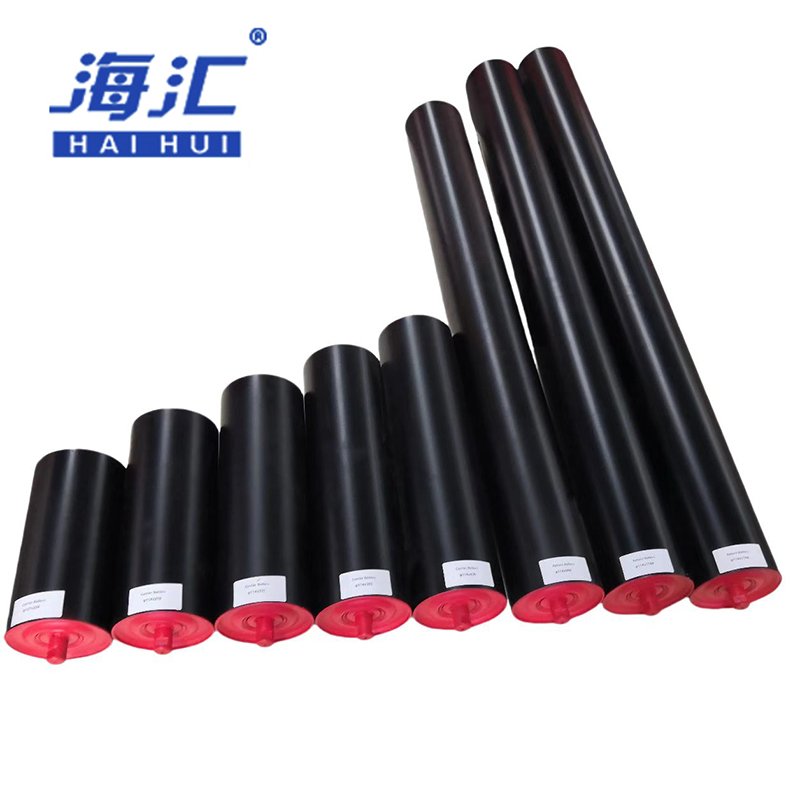
Why Most Heavy Duty Industrial Rollers Fail Too Soon
Heavy duty industrial rollers don‘t fail from old age. They fail from the three killers: contamination, inadequate hardness, and wrong bearing clearance. A roller that would run for ten years on a clean, dry conveyor in a warehouse might die in six months on a crusher discharge, a wet aggregate plant, or a foundry sand line.
I’ve walked through plants where roller replacement was a weekly ritual. A cart full of failed rollers, a stack of bearing housings chewed up, a maintenance crew that had given up on preventive anything and just waited for the next failure.
“We blamed the environment,” a plant engineer told me, wiping dust off a failed roller. “Heavy loads, abrasive dust, water from the washdown. Then we cut one open and saw the shaft had no case hardening. At all. It wasn‘t the environment. It was the part.”
Shaft Hardness — The Backbone
The shaft is what the bearing actually rides on. A soft shaft wears where the bearing seats. Then the fit gets loose. Then the bearing spins on the shaft. Then the shaft gets scored. Then the roller wobbles. Then everything fails.
| Roller Type | Shaft Diameter (mm) | Hardness (HRC) | Case Depth (mm) |
|---|---|---|---|
| Light duty conveyor | 20–35 | 48–52 | 1.5–2.5 |
| Standard industrial | 35–50 | 52–55 | 2.5–3.5 |
| Heavy duty / impact | 50–70 | 54–58 | 3.5–5.0 |
“I’ve sectioned shafts that were soft all the way through,” a 海辉 metallurgist told me. “The bearing inner ring was spinning on the shaft like a loose socket. Those rollers were doomed from the first revolution.”
Shaft steel grades that work
- 40Cr: Good balance of strength and toughness, cost‑effective
- 42CrMo4: Higher strength, better fatigue resistance, preferred for heavy duty
- Induction hardening: Creates a hard wear surface while keeping a tough core
Bearing Clearance — The Detail Everyone Misses
Most people spec bearings by size and brand and stop there. Internal clearance is just as important. Get it wrong, and the bearing runs hot, seizes, or fails early.
| Bearing Clearance | Code | Best For | Risk If Wrong |
|---|---|---|---|
| Normal | CN | Light duty, constant temperature | May run hot under heavy load |
| C3 | C3 | Heavy duty, moderate temperature | Standard for most industrial |
| C4 | C4 | High load, high temperature, impact | Looser fit, handles misalignment |
“We had a line where bearings kept failing every summer,” a reliability engineer told me. “Switched from C3 to C4 clearance. Failures stopped. The extra clearance let the bearings handle thermal expansion without binding.”
Bearing grade matters too
| Grade | Accuracy | Best For |
|---|---|---|
| P0 (normal) | Standard | Light duty, slow speeds, short conveyors |
| P6 | Tighter | Heavy duty, most industrial applications |
| P5 | High precision | High speed (>2.5 m/s), long conveyors |
Seal Types — Keeping Contamination Out
The seal is the roller‘s first line of defense. Dust, water, and fine material kill bearings fast.
| Seal Type | IP Rating | Contamination Resistance | Best For |
|---|---|---|---|
| Single lip contact | IP55 | Moderate | Clean indoor, occasional dust |
| Double lip contact | IP65 | Good | General industrial, moderate dust |
| Triple lip / labyrinth | IP66 | Very good | Heavy dust, wet conditions |
| V‑ring with flinger | IP66+ | Excellent | Extreme contamination, washdown |
“I’ve seen fine abrasive dust pack a bearing solid in three months with a single lip seal,” a quarry maintenance manager told me. “Switched to triple lip. Three years later, same bearings, still running.”
Grease selection — Not all grease is the same
| Grease Type | Base Oil Viscosity | Temp Range | Best For |
|---|---|---|---|
| Lithium complex (NLGI 2) | 150–220 cSt | –20 to +120°C | General industrial |
| Polyurea (NLGI 2) | 150–220 cSt | –20 to +150°C | High temperature, long life |
| Synthetic (PAO) | Variable | –40 to +180°C | Extreme cold or hot |
Fill volume matters
- Too little: Bearing runs dry, fails early
- Too much: Grease churns, overheats, leaks past seals
- Just right: 25–40% of bearing cavity for most applications; 40–60% for heavy duty
Tube and Shell Construction
The tube carries the load and houses the bearing. Bad steel or bad welds mean cracked tubes and failed rollers.
| Duty Level | Tube Grade | Wall Thickness (mm) | Weld Requirement |
|---|---|---|---|
| Light | S235 | 3–5 | Standard fillet |
| Medium | S355 | 5–8 | Full penetration |
| Heavy | S355 or hardened | 8–12 | Full penetration + MPI |
“We had a supplier whose end cap welds looked fine on the outside,” a maintenance manager told me. “Cut one open and the penetration was maybe 20%. Those welds were going to fail. Just a matter of time.”
Weld inspection is non‑negotiable
- Magnetic particle inspection (MPI) for end cap and flange welds
- No cracks, no porosity
- Full penetration on load‑bearing welds
- Documented for every batch
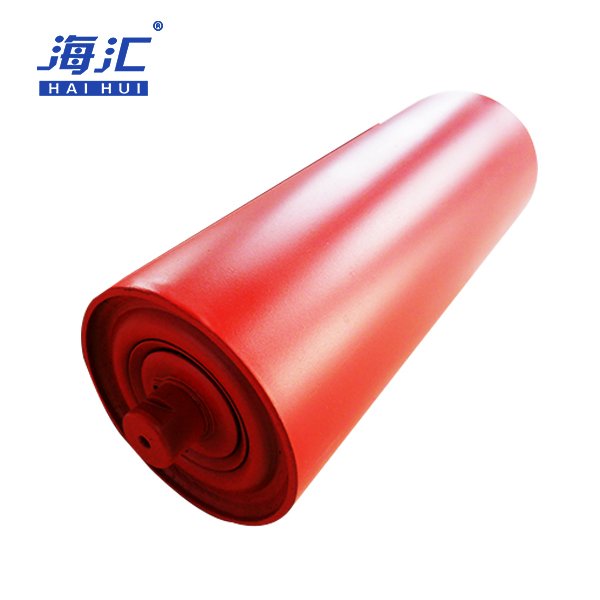
The True Cost of Cheap Industrial Rollers
| Cost Factor | Quality Roller | Cheap Roller |
|---|---|---|
| Unit price | $75 | $45 |
| Bearing brand | SKF / Timken / NSK | No‑name |
| Shaft hardness | HRC 52–55, documented | Unknown |
| Seal type | Double or triple lip | Single lip |
| Expected life | 10,000–15,000 hours | 2,000–3,000 hours |
| Labor to replace | Same | 4–5x more often |
| Housing damage | None | Egg‑shaped, scored |
| Total cost of ownership | Lower | 4–6x higher |
“We did a five‑year TCO on industrial rollers for a whole plant,” a plant superintendent told me. “The cheap ones cost half as much upfront. Over five years, they cost us five times more in labor, downtime, and damaged housings. That math is simple.”
One Spec Doesn’t Fit All — Match the Roller to the Zone
| Application | Shaft Hardness | Bearing Clearance | Seal Type | Tube Wall |
|---|---|---|---|---|
| Dry conveyor, light load | HRC 48–52 | CN or C3 | Single lip | 4–6 mm |
| Wet / dusty, moderate load | HRC 52–55 | C3 | Double lip | 6–8 mm |
| Impact zone, crusher feed | HRC 54–58 | C3 or C4 | Triple lip | 8–12 mm |
| High speed (>2 m/s) | HRC 52–56 | C3, P5 bearing | Low‑drag | 6–8 mm |
“Using the same spec everywhere is lazy and expensive,” a 海辉 applications engineer told me. “A roller that’s overbuilt for a light‑duty zone costs more than it needs to. A roller that‘s underbuilt for an impact zone fails fast. Spec per zone, not per plant.”
OEM vs. Aftermarket Heavy Duty Industrial Rollers
OEM Rollers
- Pros: Exact fit, known quality, full documentation, warranty alignment
- Cons: High price, long lead times, limited flexibility
- Best for: New equipment, warranty‑sensitive applications, captive parts
Aftermarket (Quality) Rollers
- Pros: Lower price, often in stock, can be upgraded (better seals, tighter tolerances, higher hardness)
- Cons: Variable quality between suppliers—need to vet
- Best for: Older machines, cost‑sensitive fleets, performance upgrades
海辉 supplies aftermarket industrial rollers that meet or exceed OEM specs—hardened shafts, quality bearings (SKF/Timken/NSK), proper seals, full traceability, and documented testing.
5 Things Buyers Miss When Sourcing Industrial Rollers
1. Hardness Certification
Ask for HRC test reports with case depth. “Hardened” without a number doesn‘t mean anything.
2. Bearing Clearance Spec
Get it in writing: C3, C4, or CN. Don’t assume. Don‘t let them say “standard.”
3. Seal Type — By Name
“Heavy duty seal” is meaningless. Get “double lip contact, IP65” or “triple labyrinth, IP66.”
4. Grease Fill Verification
Ask how they control fill volume. Overfilled rollers leak. Underfilled rollers fail. Both are avoidable.
5. Weld Inspection Records
MPI or dye penetrant reports for every batch. Not just “we check them.” Show me the paperwork.
How to Verify Industrial Roller Supplier Credibility
| Check | Key Indicator | Acceptable Range |
|---|---|---|
| Shaft hardness | HRC at bearing journal | 48–58 depending on duty |
| Bearing brand | SKF, Timken, NSK, or equivalent | No no‑name brands |
| Bearing clearance | C3 or C4 in writing | Matches application |
| Seal type | Double lip / triple lip / V‑ring | IP65 minimum |
| Tube weld | MPI or dye pen inspection | No cracks, full penetration |
| Spin test | Free spin, no grinding | Smooth rotation, quiet |
海辉 provides full documentation with every industrial roller order—hardness reports, bearing certs, seal specs, weld inspection records, and photos of finished rollers. You don‘t have to chase paperwork. It comes with the order.
FAQs
1. What bearing clearance should I use for heavy duty industrial rollers?
- C3: General heavy duty, most common, good for moderate temperatures.
- C4: High load, high temperature, impact zones, or when thermal expansion is a concern.
- CN (normal): Light duty only. Avoid for heavy industrial.
2. How do I know if my industrial rollers are failing?
- Visual: Grease leakage around seals, shaft scoring, housing cracks, flat spots on tube
- Audible: Squeaking, grinding, thumping, or rumbling during rotation
- Temperature: Hot housings (>80°C) indicate bearing trouble
- Vibration: Increased vibration on the conveyor frame
3. What should I check before a bulk industrial roller order?
- Shaft hardness certification (HRC 50+ minimum with case depth)
- Bearing brand, grade, and clearance in writing
- Seal type and IP rating (IP65 minimum for most industrial)
- Tube wall thickness and material certificate
- Weld inspection records (MPI or dye pen)
- Grease type and fill volume spec
- Sample cut‑up from first batch for a new supplier
4. Can I upgrade from OEM bearings to better ones?
Yes. Many aftermarket suppliers offer upgraded seals, higher hardness, or better bearing clearances than OEM. Just make sure dimensions and fit are identical. Upgrading seals alone can double roller life in dusty environments.
References
- Modern Bulk Handling – Industrial Roller Market Estimate 2024
- Power Transmission Engineering – Bearing Selection Guide
- ISO 683‑17 – Heat‑treated steels for bearings
- SKF – Bearing clearance and internal fitment guide
- ASTM E18 – Rockwell hardness test methods
- Haihui – Technical data sheets for heavy duty industrial rollers


 English
 العربية
 简体中文
简体中文 Nederlands
 Français
 Deutsch
 Bahasa Indonesia
 Italiano
 日本語
日本語 한국어
한국어 Bahasa Melayu
 Polski
 Português do Brasil
 Русский
 Español
 Türkçe