
Rodillos de cinta transportadora de alta resistencia: cómo reducir el tiempo de inactividad y prolongar la vida útil
Heavy duty conveyor idlers aren’t just metal rollers — they’re the make-or-break component when belt tracking, load support, and uptime are on the line. If your idlers underperform, belts wander, frames shake, and maintenance costs creep up fast.
Buyers don’t want mystery batches or squeaky bearings. You need true running, dust-tight seals, and stock that behaves in storage and on the line without surprises.
Recent analyses from Grand View Research and Smithers highlight steady demand driven by bulk material handling and safety compliance, with procurement decisions increasingly tied to seal reliability, roller concentricity, and regulatory alignment across regions.
Key Points: Heavy Duty Conveyor Idlers Unveiled
→ Composición: Steel tube, bearing, shaft, and labyrinth or contact seals ensure true tracking, impact resistance, and long service life.
→ Mechanism: Grease, seal labyrinth, and bearing clearance work in harmony for smooth rotation; shaft and housing tolerances deliver consistent alignment.
→ Componentes principales: Tube integrity, bearing precision, seal control, grease choice, and full-length shaft maximize performance and minimize downtime.
→ Service Life Tips: Store under cover, follow FIFO, use corrosion-resistant coatings, and choose ISO/DIN-compliant suppliers to maintain running torque and safety.
What Are Heavy Duty Conveyor Idlers?
Heavy duty conveyor idlers pack serious robustness into a rotating assembly. From quarry belts to underground mining systems, this load‑bearing solution blends mechanical engineering with field reliability. Fans of heavy duty idlers like how belts stay centered and bearings stay quiet shift after shift.
Defining the Heavy Duty Idler: Tube, Bearing, and Seal Basics
- Tubo sits at the core — thick‑walled steel pipe adds rigidity, impact resistance, and controlled runout.
- Rodamiento handles the load, with C3 or C4 clearance for heat and impact.
- Sello keeps dust out and grease in; labyrinth for dry, contact for wet.
This mix lets heavy duty idlers take punishment without falling apart. That’s why top conveyor brands rely on expertly manufactured idlers from Haihui to maintain alignment, protect the belt, and deliver reliable results across bulk handling applications.
Inside the Idler: Bearing, Grease & Seal Integration
- Rodamiento – the rotating heart; too tight, and it overheats; too loose, and it wobbles.
- Grasa – keeps the bearing cool; wrong grade, and it purges or hardens.
- Sellos – the quiet gatekeepers; labyrinth for fine dust, contact lips for moisture.
Heavy duty idlers feel simple, yet the balance is tight. Too much seal drag, and running torque spikes. Too little, and contamination creeps in. High‑quality idlers from manufacturers like Haihui keep this rotating environment steady so heavy duty idlers behave the same, job after job.
Why Bearing Clearance and Grease Type Matter for Long Life
Short bursts of overload or high ambient heat can wreck an under‑spec’ed bearing. That’s where Holgura C4 and high‑temp lithium complex grease earn their keep.
Protection steps:
- Shield the bearing raceways from shock loads.
- Slow molecular breakdown of the grease.
- Preserve lubricant film under heavy duty cycles.
Idlers without proper clearance and grease fail fast. With them, heavy duty idlers hold running torque, keep their seal, and stay usable in hot, dusty, or wet environments. That reliability is why heavy duty idlers remain a go‑to for conveyors in mining, cement, and aggregate applications that need to last.
How Heavy Duty Conveyor Idlers Work
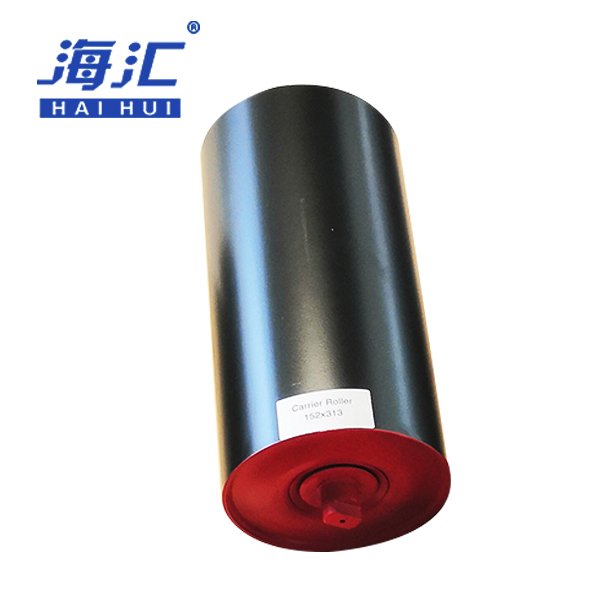
Heavy duty idlers look simple, but inside it’s a tight routine of mechanical engineering and field conditions working together. When Haihui builds idlers for heavy duty applications, the goal is the same every time: true rotation, dust‑tight seals, and fewer headaches. While belt and load engineers handle the conveyor layout, the precise idler hardware makes it work. This walk‑through keeps it real — tube forming, bearing pressing, sealing, greasing, and quality control.
From Tube Cutting to Bearing Pressing: Preparing the Idler Shell
- Heavy duty idlers start at the tube mill, where steel strip is formed, welded, and cut to length.
- Wall thickness and straightness are checked — out‑of‑round tubes ruin bearing alignment.
- Then the assembly line locks in consistency for heavy duty idlers.
- Bearings are pressed onto shafts, seals are fitted, and grease is metered.
- Housing end cups are welded or pressed, and the idler is spun to verify running torque.
Shaft and Bearing Action: Delivering Smooth Rotation
- The shaft is precision‑ground at bearing seats; surface finish matters.
- The bearing inner ring fits tight (h7 or h6) so it doesn’t spin on the shaft.
- The outer ring fits the housing bore (H7) for controlled expansion.
- Quick rotation control comes down to basics: straight shaft, correct clearance, and the right grease fill.
If you’ve run heavy duty idlers and felt a “rough spot,” that’s usually bearing or seal drag, not the belt.
Seal and Grease Retention: Ensuring Contamination Control
- Heavy duty idlers rely on labyrinth or contact seals to keep fines from creeping in.
- Material pairing matters: fine, dry dust needs long labyrinth paths; wet mud needs rubber contact lips.
- Testing isn’t guesswork:
- Seal drag checks confirm running torque isn’t excessive.
- Grease retention tests ensure no leakage during operation.
- Haihui treats this stage like a gate — because a tiny contamination path turns great idlers into “meh” ones fast.
Bearing Fit and Running Torque: Controlling Friction and Life
- The bearing fit is the “steering wheel” on heavy duty idlers, controlling friction and alignment.
- Too tight, and the bearing runs hot; too loose, and the shaft spins inside the inner ring.
- Daily operator habits still count:
- Listen for squeaking or grinding during walk‑downs.
- Feel the housing temperature — hot means trouble.
- If you want that clean, quiet idler performance, spec the right clearance and let the grease stabilize.
5 Key Components of Heavy Duty Idlers
Idlers look simple, yet every part works overtime. For heavy duty applications, the balance between load, tracking, and seal life matters. Here’s how each component keeps heavy duty idlers running smooth, quiet, and reliable.
Tube: Material Strength and Straightness
- High‑frequency welded steel (S235 or S355) handles load without drama.
- Straightness within 0.2mm/m prevents belt wander.
- Wall thickness supports material longevity.
Nested details that matter:
- Structural role – resists bending under heavy load.
- Dimensional control – OD tolerance so bearings fit right.
- Protección contra la corrosión – paint or zinc coating for wet/outdoor duty.
Bearing: Regulating Friction and Load
- Intake seals lock tight, grease stays in.
- C3 or C4 clearance opens on demand under heat/load.
- Raceways stabilize for smooth rotation.
Notas rápidas:
- Consistent running torque protects belt cover wear.
- Reduces “lumpiness” common in low‑grade idlers.
“Bearing precision directly impacts rolling resistance and belt tracking,” noted in a 2024 Conveyor Equipment Manufacturers Association (CEMA) update.
Seal: Fine‑Tuning Contamination Defense
- Labyrinth (non‑contact) for clean, dry applications.
- Double lip contact for dusty, moderate moisture.
- Triple labyrinth plus flinger for extreme dust or wet mud.
Short runs, clean release. That’s how heavy duty idlers stay sharp. Haihui seals are tuned for the environments where heavy duty idlers actually work — from dry cement plants to muddy pits.
Grease: Lubrication Type and Fill Volume
- Lithium complex (NLGI 2) for standard duty.
- Synthetic high‑temp for extreme heat.
- Fill volume: 30–50% of bearing cavity — too much churns, too little dries out.
This balance protects running torque and bearing life.
Shaft: Straightness and Surface Finish
- Step‑by‑step shaft prep:
- Turn to exact diameter.
- Grind bearing seats (Ra ≤0.8µm).
- Straighten to ≤0.2mm/m.
- Protect with oil or zinc.
Grouped efficiency perks:
- Lower rolling resistance.
- Better inventory commonality.
- Stable alignment, reliable high load capacity.
For consistent results, Haihui designs shafts specifically for heavy duty idlers, ensuring long life in mining, quarry, and industrial applications.
Heavy Duty Idler Service Life and Maintenance
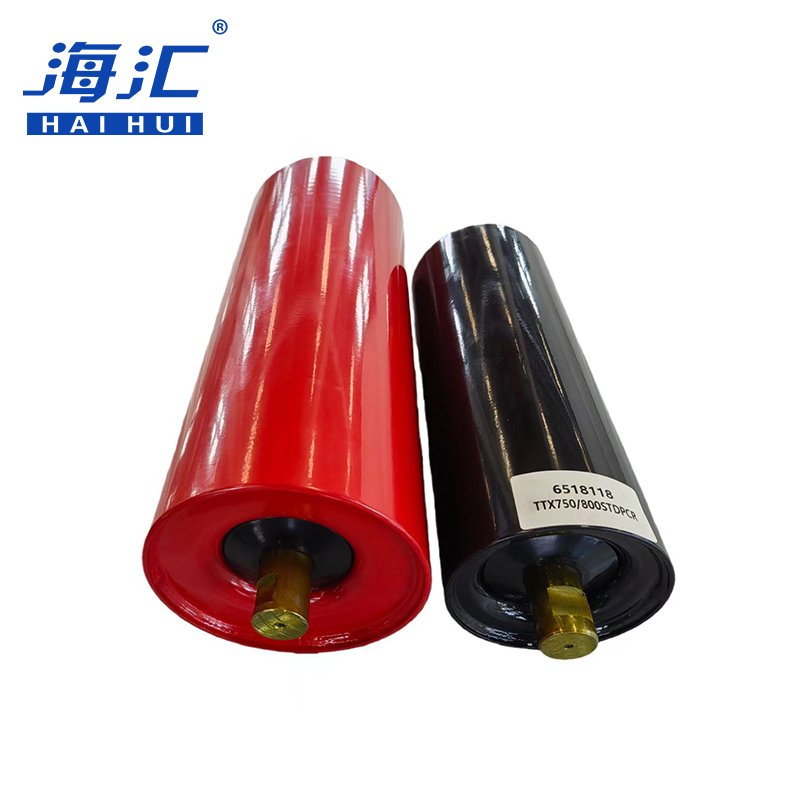
Heavy duty idlers live under extreme conditions. This guide keeps them rolling, covering storage practices, rotation habits, packaging smarts, and vendor trust. It’s written for people who want heavy duty idlers to run smooth today, not seize tomorrow.
Storage Conditions: Temperature’s Impact on Grease and Seals
- Keeping heavy duty idlers comfortable hinges on temperature control.
- Small swings mess with grease viscosity and seal flexibility.
Cool zones:
- Stable rooms slow grease oxidation.
- Idlers stay ready for installation.
Heat stress:
- Grease bleeds; seals harden.
- Running torque rises unexpectedly.
Aim for steady, moderate storage, not outdoor extremes. Let cold idlers warm up before installation. Short truth bursts: thick grease spits, thin grease runs, balanced grease bonds. That balance protects seals and keeps heavy duty idlers reliable for quarry belts, overland conveyors, and fast plant lines.
Inventory Management: FIFO Practices for Optimal Seal Life
FIFO keeps seals flexible and grease fresh. It’s more habit than math.
Simple flow:
- Older idlers go out early.
- New stock waits its turn.
Nested checks:
- Labels – batch codes, manufacture dates.
- Shelves – front‑loaded access, clean dividers.
The American Bearing Manufacturers Association (ABMA) noted in a 2024 storage bulletin that rotation discipline directly supports grease stability and seal elasticity in long‑stored idlers.
Packaging and Labeling: Protecting Idlers from Corrosion
- Packaging guards heavy duty idlers from moisture, dust, and rough handling.
- GHS labels (for grease) signal care.
- Sealed poly bags block air creep.
- Pallet covers slow condensation.
Multi‑layer logic works best:
- Outer box – crush resistance.
- Inner wrap – moisture control.
- Idler surface – rust inhibitor.
Short notes help crews move fast. Clear labels beat fancy print. Heavy duty idlers last longer when the storage message is obvious.
Vendor Selection: Sourcing Idlers that Meet ISO and DIN Standards
- Trust starts upstream. Vendors must meet ISO 9001, DIN 22107, and MSDS rules without excuses.
Compliance stack:
- Materials – certified steel, verified bearings.
- Transport – palletized, protected.
- Ongoing proof – updated test reports, lot traceability.
A clean vendor chain protects users and belts alike. Haihui works with partners who treat heavy duty idlers as engineered components, not commodities. Consistency here keeps idlers tracking true, seal tight, and ready for work.
Referencias (selección)
- Global Conveyor Idler Market Analysis – Grand View Research
- Smithers – Bulk Handling Component Outlook 2025
- DIN 22107 – Rodillos de apoyo para cintas transportadoras
- CEMA – Conveyor Equipment Manufacturers Association updates
- ISO 9001:2015 – Sistemas de gestión de la calidad
- ABMA – Bearing storage and handling guidelines
- Haihui – Internal test specifications for heavy duty idlers

 English
 العربية
 Português do Brasil
 Русский
 Español