
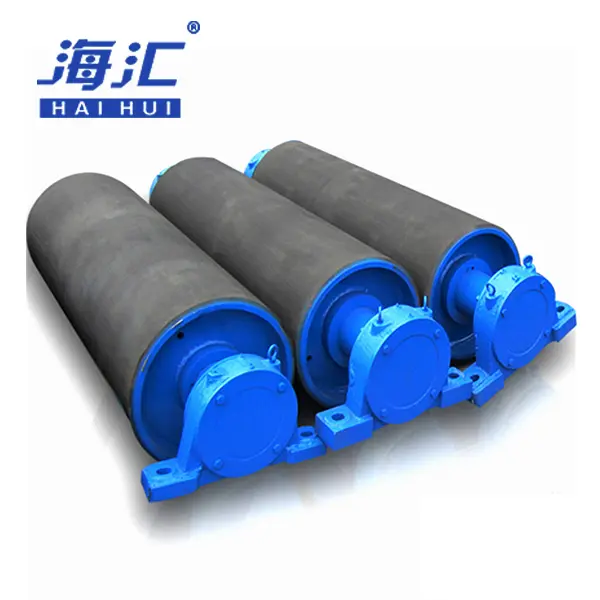
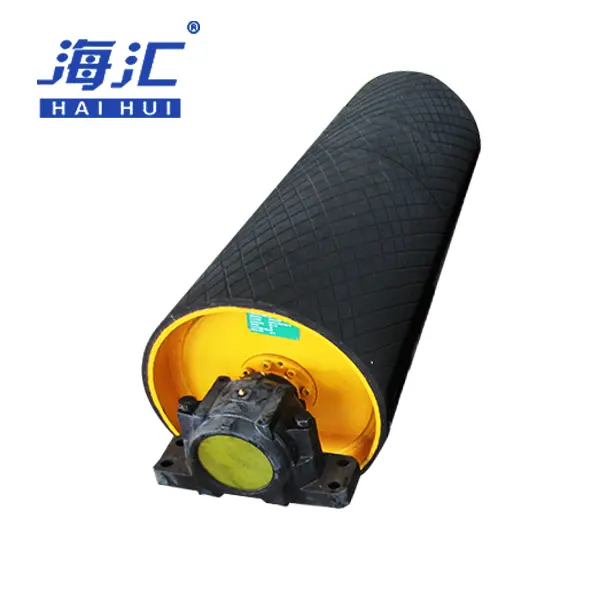
用于采矿和骨料输送机的输送机头滚筒
A conveyor head drum looks harmless—just steel and bearings. But when one shipment stalls at port or specs don’t line up, your whole conveyor line coughs and sputters like an engine running on fumes. In mining, aggregate, even cement plants, one bad batch can snowball into missed deadlines and awkward calls with the plant manager.
As CEMA noted in its 2025 Conveyor Equipment Outlook, supply chain visibility now ranks among the top concerns for U.S. mine operators. A Haihui senior engineer put it bluntly: “If you can’t trace the drum, you can’t protect the belt.”
This isn’t about pennies per unit. It’s about staying in stock, in spec, and out of trouble.
Key Notes for Conveyor Head Drum Optimization
➔ Standardize specs across shaft, shell, and lagging to ensure belt compatibility and production consistency.
➔ Employ bulk packaging and optimized palletization to reduce damage and streamline logistics.
➔ Coordinate conveyor speed with drum diameter for precise belt tracking and tension.
➔ Integrate automated NDT inspection and hardness testing for batch consistency and ISO-compliant QC.
➔ Sync inventory management with lead times and delivery schedules to prevent line stoppages.
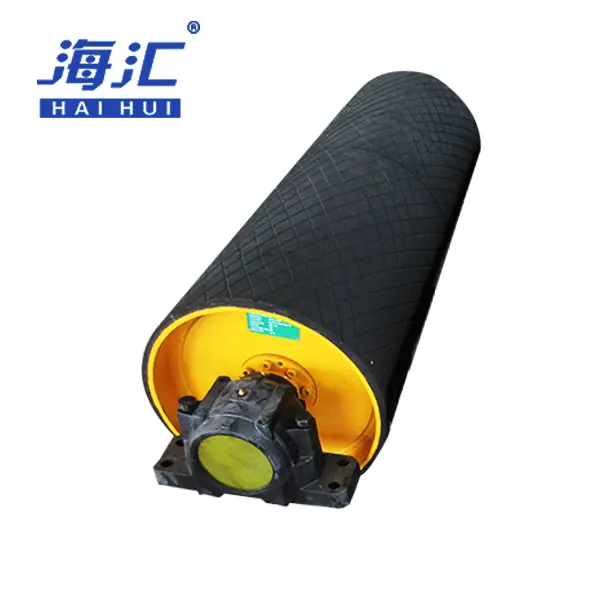
5 Steps To Streamline Conveyor Head Drum Sourcing
Sourcing a conveyor head drum sounds simple, but once production speeds up, tiny mismatches can slow everything down. From shaft diameter to lagging type, details matter. If your head drum isn’t aligned with your conveyor line, you’ll feel it fast. Here’s how smart teams keep head drum supply tight and stress-free.
Step 1: Standardize Shaft, Shell, and Lagging Specs
Locking specs early keeps every conveyor head drum consistent.
Material Control
- Shaft steel: Forged 42CrMo4 or C45 bar stock
- Hardness tolerance: HRC 50-55 at bearing seats
- Straightness: ≤0.2mm/m
Structural Geometry
- Shell diameter: 500-1600mm depending on application
- Face width: Matched to belt width
- Concentricity: ≤0.5mm TIR
Lagging Options
- Rubber: 60-75 Shore A for general traction
- Ceramic: Extreme grip in wet/muddy conditions
- Groove pattern: Herringbone for water shedding
| Component | Typical Spec Range | Key Impact Area |
|---|---|---|
| Shaft Diameter | 80-180mm | Torque capacity |
| Shell Thickness | 10-25mm | Structural integrity |
| Face Width | 500-2000mm | Belt support |
| Lagging Type | Rubber or ceramic | Traction performance |
When 海辉 standardizes these specs, every head drum runs smoother on automated conveyors, and field failure rates drop.
Step 2: Leverage Bulk Packaging and Palletization Best Practices
Shipping conveyor head drums isn’t just logistics—it’s risk control.
Inner Protection
- Shaft support cradles prevent bending
- Lagging protection covers prevent damage
Pallet Pattern Design
- Cross-stack method for weight balance
- Stretch wrap tension control
- Corner board reinforcement
Container Optimization
- Maximize crate density
- Reduce void space
A well-packed head drum shipment cuts warehouse handling time. With 海辉, pallet layouts are tested under ASTM D4169 vibration conditions, keeping every head drum round and ready for installation.
Step 3: Sync Conveyor Speed and Drum Diameter for Efficiency
When conveyor speed and drum diameter fall out of sync, trouble starts. Belts slip. Tracking fails. Output drops.
Match:
- Conveyor belt speed (m/s) to drum RPM
- Drum diameter to belt tension requirements
- Lagging traction to operating conditions
Then test the head drum under real load conditions. A tight match between drum specs and conveyor demand keeps cycle times steady. 海辉 engineers often run joint calibration trials so customers avoid awkward mid-shift shutdowns.
Step 4: Embed NDT Inspection and Hardness Testing into QC
Quality control should feel routine, not dramatic.
Inline Testing
- NDT weld inspection (ultrasonic/MPI)
- Hardness verification (HRC 50-55)
Mechanical Validation
- Dynamic balancing (G-16 minimum)
- Concentricity check (≤0.5mm TIR)
Documentation
- ISO-certified traceability
- Batch coding alignment
Every conveyor head drum must pass dimensional checks before shipping. Even small shaft runout affects belt tracking. Reliable head drum sourcing means batch data is easy to track and compare across production runs.
Step 5: Align Inventory Management with Delivery Schedule
Inventory gaps hurt more than most teams expect. One delayed head drum can freeze a whole conveyor line. Supply chain risk management suggests proactive buffer stock.
Keep it simple:
- Set safety stock based on average weekly usage
- Match supplier lead time with production forecasts
- Review turnover monthly
A steady flow of conveyor head drums keeps working capital healthy. With coordinated planning and support from 海辉, businesses avoid panic orders and keep every head drum arriving right on cue.
Single Vs. Multiple Head Drum Suppliers
Choosing between one or several partners for your conveyor head drum supply shapes cost, speed, and risk exposure. From sourcing a simple head drum to scaling custom diameters, strategy matters more than hype.
Single Suppliers
Relying on one head drum manufacturer can feel clean and easy. Fewer calls. Fewer specs. Less chaos around your head drum program.
Specification Control
- Dimensional consistency: shaft diameter, shell thickness
- Material standardization: 42CrMo4 shaft, S355 shell
- Lagging alignment: groove patterns, durometer
Traceability & Quality
- Unified batch coding for every head drum
- Centralized defect analysis
- Faster corrective action loops
Commercial Alignment
- Long-term pricing framework
- Volume rebate tiers
- Forecast-based capacity reservation
Here’s a simplified cost-risk snapshot for a yearly 50-unit head drum volume:
| Factor | Single Supplier | Risk Level | Cost Impact (%) |
|---|---|---|---|
| Unit Price Stability | High | Low | -3% to -5% |
| Supply Disruption | Medium | High | +8% |
| Quality Variance | Low | Low | -2% |
| Negotiation Flexibility | Medium | Medium | ±3% |
The catch? Dependency. If logistics freeze or capacity tightens, your conveyor line slows down fast. That’s why operations working with 海辉 often lock in sustainability and safety stock agreements and dual-tooling backups, even under a single-source model.
Multiple Suppliers
Using multiple suppliers spreads risk. It also adds moving parts, so things can get messy if not managed right.
- Competitive bidding keeps the head drum price sharp
- Regional sourcing cuts freight time
- Backup suppliers reduce shutdown panic
Still, compatibility is king. A 5mm shaft diameter gap between two head drums can jam high-speed conveyors. So teams usually:
- Align technical drawings
- Run cross-line validation tests
- Freeze shared tolerances
- Audit lagging compatibility
Then comes ongoing control:
- Shared QA checklist
- Monthly dimensional reports
- Unified torque testing
Operations scaling fast often split supply 70/30. Core volume stays stable; overflow shifts flexibly. With 海辉, buyers can maintain multi-source security while keeping one technical benchmark for every head drum in circulation.
At the end of the day, it’s not about one vs. many. It’s about control. If your conveyor head drum fits perfectly, tracks true, and runs reliably, you’re already ahead.
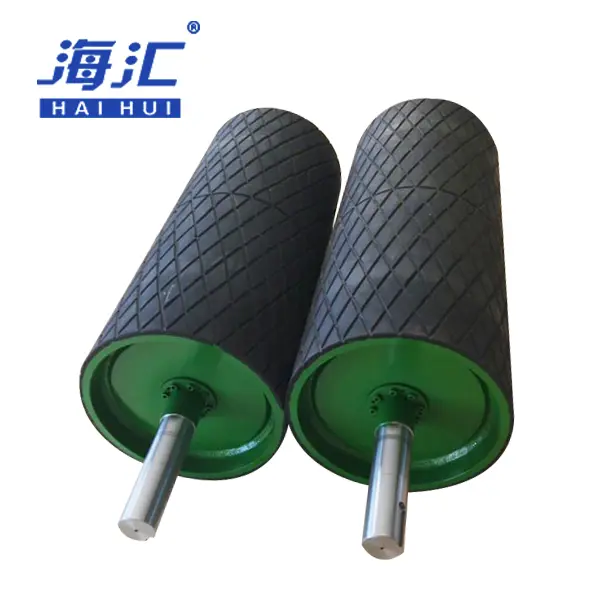
Conveyor Head Drum Traceability In 6 Stages
A conveyor head drum may look simple, yet every unit carries layers of data. From steel plate to final belt drive, tracking a head drum keeps quality steady and risks low. Here’s how smart traceability works in real life.
Stage 1: Tracking Raw Materials from Steel Plate to Forged Shaft
A conveyor head drum starts long before fabrication.
Raw Material Sourcing
- Steel plate: S355 grade
- Plate thickness tolerance (±mm)
- Supplier batch code verification
Shaft Material
- Forged 42CrMo4 or C45 bar stock
- Hardness testing records
- Chemical composition certs
Lagging Material
- Rubber compound: SBR or natural
- Ceramic tile grade
- Bonding adhesive certification
At 海辉, each coil ID links directly to the final head drum body, keeping the unit traceable down to the steel mill.
Stage 2: Monitoring Fabrication, Welding, and Assembly Steps
Even a head drum used for standard conveyors must be production-ready.
- Shell rolling and forming
- Full-penetration welding
- Shaft machining and hardening
- Bearing fitment and sealing
- Lagging vulcanization
Key checkpoints include:
- Weld NDT (ultrasonic/MPI)
- Hardness verification (HRC 50-55)
- Concentricity measurement (≤0.5mm TIR)
Small numbers matter. A 0.1mm runout can affect how a conveyor head drum performs once under load.
Stage 3: Documenting Shaft, Bearing, and Lagging Assembly
Conveyor performance depends on tight control.
Shaft System
- Diameter: matched to torque requirements
- Hardness: HRC 50-55 bearing seats
- Straightness: ≤0.2mm/m
Bearing System
- Fit: h7/h6
- Clearance: C3 or C4
- Sealing: labyrinth or contact
Lagging System
- Material: rubber or ceramic
- Groove pattern: herringbone or plain
- Bond peel strength: ≥12 N/mm
Each conveyor head drum is paired with compatible drive specs, ensuring the unit performs smoothly after installation.
Stage 4: Recording QC Metrics—Hardness Testing to Dynamic Balancing
Testing is data-driven, not guesswork.
Mechanical Validation
- Hardness testing (HRC 50-55)
- NDT weld inspection
- Concentricity check (≤0.5mm TIR)
Performance Validation
- Dynamic balancing (G-16 minimum)
- Torque transfer verification
| Test Item | Standard Range | Sample Size | Failure Limit |
|---|---|---|---|
| Shaft Hardness (HRC) | 50-55 | 5 units | ≥1 fail |
| Concentricity (mm TIR) | ≤0.5 | 100% | 0 fail |
| Dynamic Balancing | G-16 | 100% | 0 fail |
| NDT Weld Inspection | 100% | 100% | 0 fail |
Every conveyor head drum leaving 海辉 passes recorded ISO 9001 metrics.
Stage 5: Logging Logistics Events from Warehousing to Container Shipping
Traceability continues after production.
Warehousing
- Humidity control records
- Stacking height limits
- FIFO batch coding
Container Shipping
- Container ID
- Loading date
- Shaft support placement
- Port of discharge
For a conveyor head drum, shaft bending can start from poor storage. That’s why head drum logistics data stays attached to each shipment.
Stage 6: Verifying End-Use in Mining, Aggregate, and Cement Plants
Final use shapes compliance.
- Mining: overland conveyors, longwall
- Aggregate: quarry belts, crusher feed
- Cement: kiln feed, clinker conveyors
Each conveyor head drum is reviewed for:
- Torque compatibility per CEMA standards
- Lagging durability
- MSHA compliance (underground)
From steel plate to finished application, the conveyor head drum journey stays transparent. And that’s how a simple head drum earns trust in markets worldwide.
FAQs
What specifications should buyers confirm before ordering a conveyor head drum?
A small mismatch can stop an entire conveyor line. Before placing volume orders, confirm:
Material & strength
- Shaft material and hardness (HRC 50-55)
- Shell thickness and concentricity (≤0.5mm TIR)
- Lagging type and bond strength
Critical components fit
- Shaft diameter for bearing fit
- Face width for belt support
- Lagging traction for operating conditions
Quality documentation
- NDT weld inspection records
- Hardness test reports
- Batch traceability
Dimensional accuracy is not a detail—it protects torque transfer, belt tracking, and daily production rhythm.
How does quality control protect conveyor head drum performance under load?
When torque meets belt tension, there is no room for doubt. Reliable manufacturers combine process discipline with measurable proof:
Manufacturing checkpoints: shell rolling, welding, shaft hardening, lagging application
Performance validation: torque testing, NDT inspection, dynamic balancing
Documentation: ISO certification records and batch consistency tracking
Each shaft, shell, and lagging layer must withstand design torque without distortion. A single weak component can ripple across mining, aggregate, or cement operations. Strong QC keeps risk contained and reputation intact.
Why are palletization and supply planning critical for bulk conveyor head drum orders?
Large orders move through a chain that is as sensitive as the drum itself.
Protection during movement
- Shaft support cradles shield bearings
- Bulk packaging reduces impact during container shipping
- Moisture control preserves lagging and shell coating
Operational continuity
- Coordinated delivery schedule with installation timeline
- Smart inventory management aligned with conveyor demand
- Backup suppliers to secure critical operations
In high-volume mining or aggregate plants, supply gaps echo loudly. Careful customization and logistics planning keeps shafts, shells, and lagging flowing in step.
References
- CEMA – Conveyor Equipment Manufacturers Association standards
- ISO 9001 Quality Management – iso.org
- ASTM D4169 Standard Practice for Performance Testing of Shipping Containers – ASTM
- PMMI – 2025 State of the Industry: Packaging Machinery
- McKinsey & Company – Supply Chain Risk Management
- Smithers – Packaging Market Reports & Analysis
- The Aluminum Association – Aluminum Can Industry Standards
- ScienceDirect – Propellants for Aerosol Delivery Systems
- Harvard Business Review – A New Approach to Supply Chain Risk
- DOT PHMSA – Shipping Hazardous Materials: Aerosols
- EPA – Technical Overview of Volatile Organic Compounds
- United Nations – The Globally Harmonized System of Classification and Labelling (GHS)
- Haihui – Technical specifications for conveyor head drum
 English
 العربية
 简体中文
简体中文 Nederlands
 Français
 Deutsch
 Bahasa Indonesia
 Italiano
 日本語
日本語 한국어
한국어 Bahasa Melayu
 Polski
 Português do Brasil
 Русский
 Español
 Türkçe