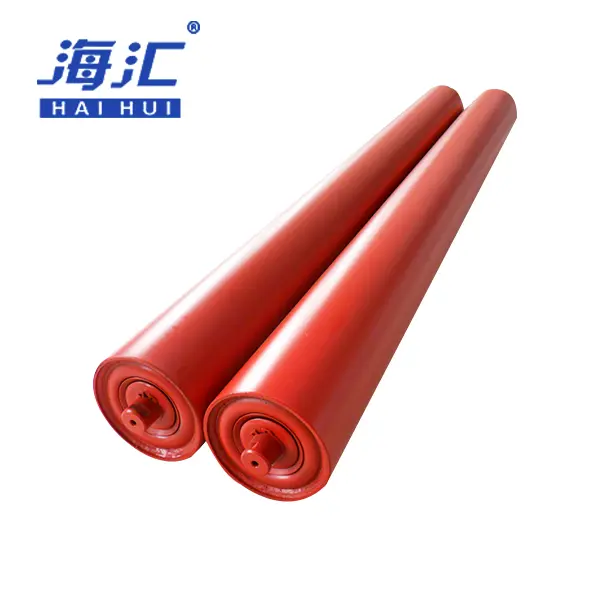
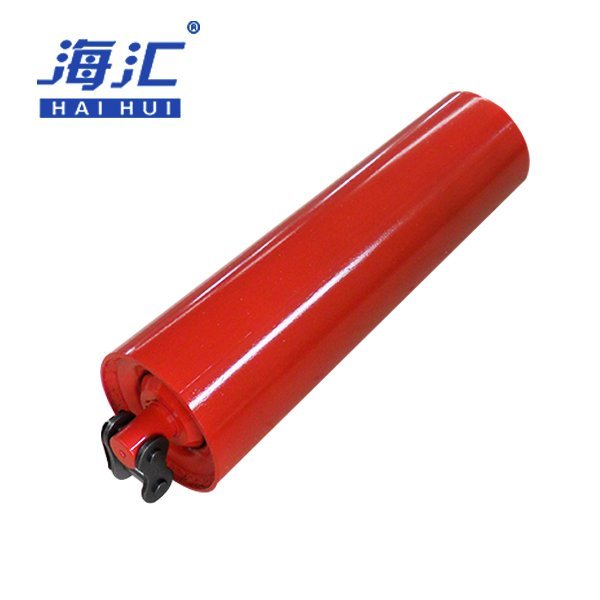
Durable Idler Conveyor Roller for Industrial Conveying
The idler conveyor roller isn’t just a basic conveyor part—it’s the difference between steady, profitable material handling and costly unplanned downtime when belts and loads behave unpredictably on production lines.
Fixed conveyor brackets cut initial costs and simplify installation, yet struggle with friction buildup and long-term stability, while premium idler conveyor roller systems prioritize smooth operation but demand precise structural matching and quality craftsmanship.
Haihui engineering teams note that roller quality, assembly precision, and sealing design directly dictate belt wear rates, energy consumption, and overall conveyor service life across all industrial conveying lines.
Key Notes in the Idler Conveyor Roller Crescendo
➔ Prioritize structural roundness: Keep strict roller roundness and wall thickness uniformity to eliminate belt jitter and uneven load stress.
➔ Optimize sealing protection: Adopt multi-layer composite sealing structures to block dust, moisture, and slurry intrusion for harsh industrial environments.
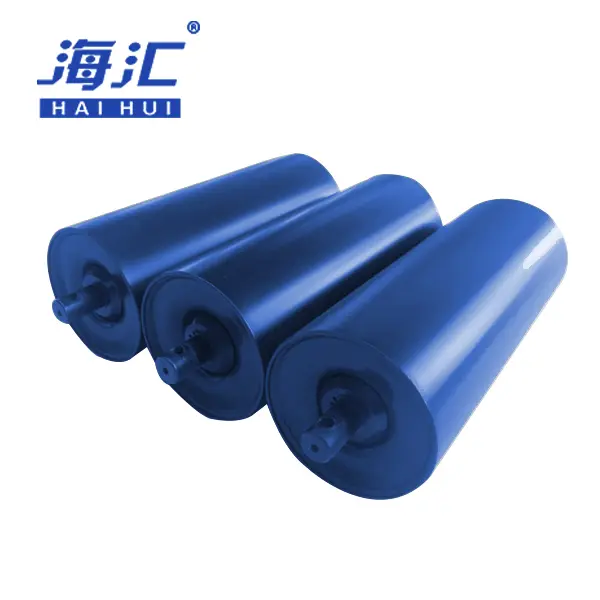
➔ Match roller type to scenarios: Choose flat rollers for packaged goods, trough rollers for bulk materials, and impact rollers for heavy feeding positions.
➔ Standardize material configuration: Pair high-strength steel shells with high-precision sealed bearings and anti-aging gaskets for lasting durability and low friction.
Roller Vs. Fixed Bracket: Conveyor Support Performance
Conveyor system failures rarely stem from poor frame design; most stem from inferior support components and neglected friction control. This practical breakdown clarifies the core differences between idler conveyor roller systems and traditional fixed brackets, helping industrial users avoid frequent maintenance and belt damage. You’ll learn structural advantages, scenario adaptation, and selection logic, so every Haihui idler conveyor roller delivers stable long-term performance.
Fixed Bracket Support Conveyor Limits
Fixed brackets are the most basic conveyor support solution, relying on rigid static contact to hold the conveyor belt in place. This low-cost setup works for light-load, intermittent conveying tasks but exposes obvious flaws in continuous industrial production.
Hidden operational flaws
Static friction between rigid brackets and the belt generates persistent abrasion, gradually thinning the belt surface and accelerating aging. Fixed support points create concentrated stress, leading to local belt sagging, deformation, and even tearing under heavy loads. Without flexible buffering, material impact force directly acts on the belt, triggering frequent deviation and emergency shutdowns.
Scenario adaptation boundaries
Unsuitable for long-distance, high-speed, and heavy-duty conveying lines. Poor resistance to dust, humidity, and chemical corrosion, resulting in extremely high later maintenance and replacement costs.
Idler Conveyor Roller Operational Advantages
An idler conveyor roller adopts flexible rotating structure support, converting harmful sliding friction into low-loss rolling friction. This mature industrial design solves the core pain points of fixed brackets and has become the mainstream configuration for modern bulk handling systems. Users who upgrade to Haihui idler conveyor roller sets obviously see lower wear and smoother line operation.
Core structural optimization
Free-rotating rollers reduce belt friction loss and motor operating load, effectively cutting long-term energy consumption. Evenly distributed roller groups disperse material pressure, maintaining belt flatness and stable conveying tracks. Modular single-roller replacement avoids full-line shutdown maintenance, greatly improving operational efficiency.
Scenario Matching & Pre-Selection Reference Table
| Conveyor Scenario | Support Type | Roller Configuration Recommendation | Core Purpose |
|---|---|---|---|
| Light-load workshop conveying | Idler roller support | Light-duty flat idler | Low noise, stable sorting, low energy consumption |
| Mine/port bulk conveying | Idler roller support | Thickened trough + impact idler | Impact resistance, anti-scattering, 24h continuous operation |
| Chemical humid/corrosive environment | Idler roller support | Galvanized anti-corrosion idler | Anti-rust, anti-fouling, extended service life |
| Intermittent light-duty handling | Fixed bracket support | No roller required | Cost control for low-frequency use |
If you’re chasing stable belt operation and low maintenance costs, choosing a matched idler conveyor roller configuration is far more effective than blindly upgrading conveyor frames. All Haihui idler conveyor rollers are manufactured with strict roundness calibration and sealing testing to adapt to diverse complex working conditions.
Need durable, scenario-matched components for your conveyor upgrade? Haihui provides standardized and customized idler conveyor roller solutions with full quality testing. Contact us today for a 1-day technical proposal and quotation.
3 Common Conveyor Pain Points Solved by Quality Idler Conveyor Roller
Most conveyor operational troubles are not caused by frame failure, but by inferior or mismatched support rollers. Upgrading to high-precision Haihui idler conveyor rollers easily fixes three universal industrial conveying pain points, stabilizing line efficiency and reducing unnecessary losses.
Frequent Belt Deviation? Optimize Roller Roundness & Spacing
Belt deviation is rarely caused by improper operation alone; it mainly stems from unqualified roller roundness, uneven spacing, and inconsistent horizontal installation. Slight roller jitter will be amplified during high-speed operation, resulting in wandering belts and material scattering.
Optimization solutions
Product selection: Choose precision-machined idler conveyor rollers with roundness error controlled within industrial standards to avoid single-side stress.
On-site layout: Follow scientific roller spacing standards, adjust horizontal height uniformly, and install self-aligning rollers at key positions.
Daily maintenance: Regularly check for stuck or deformed rollers and replace faulty parts in time to prevent long-term deviation wear.
Quick judgment: If your belt always deviates to a fixed side, it’s usually roller installation error or partial wear, not belt tension problems.
Excessive Energy Consumption? Adopt Low-Resistance Bearing Configuration
High energy consumption is a hidden long-term loss for conveying lines. Ordinary inferior rollers use low-precision bearings with large rotational resistance, forcing the motor to run with overload and causing continuous power waste.
Practical improvement methods
Select sealed high-precision bearings with low friction coefficient to ensure flexible roller rotation and reduce no-load power consumption.
Adopt polished roller shell technology to minimize friction with the belt and reduce operating load.
Match roller models reasonably according to load weight to avoid resistance surge caused by small rollers bearing heavy loads.
Haihui’s low-resistance idler conveyor roller configuration can effectively reduce overall line energy consumption, forming stable energy-saving benefits for long-term continuous production.
Short Roller Service Life? Upgrade Multi-Layer Sealing & Materials
Most rollers fail early due to poor sealing and inferior materials. Dust, moisture, and slurry invade the bearing interior, causing lubricant failure, rust, and jamming, which greatly shortens service life and increases replacement frequency.
Key upgrade measures
Material upgrade: Use high-strength seamless steel pipe shells and anti-corrosion galvanized layers to resist impact and oxidation.
Sealing upgrade: Adopt labyrinth + rubber double-layer composite sealing structure to completely isolate external pollutants.
Lubrication optimization: Fill with high-temperature and wear-resistant grease to ensure stable lubrication in high-speed and high-temperature environments.
For key dusty and humid positions, targeted upgrade of Haihui enhanced sealed idler conveyor rollers can reduce replacement frequency by more than half.
Looking for customized conveyor component solutions that match your working conditions? Whether you need standard flat rollers, trough rollers, or impact-resistant customized models, Haihui’s one-stop customization service meets diverse industrial needs with strict quality control.
Pros And Cons: Idler Roller Support Vs. Fixed Bracket Support
Simply put, both support structures can complete material conveying, but their stability, cost performance, and scenario adaptability differ hugely. When choosing between idler conveyor roller systems and fixed brackets, focus on production continuity, load weight, and maintenance budget. Haihui supports both configuration schemes to match different project demands.
Idler Conveyor Roller Support
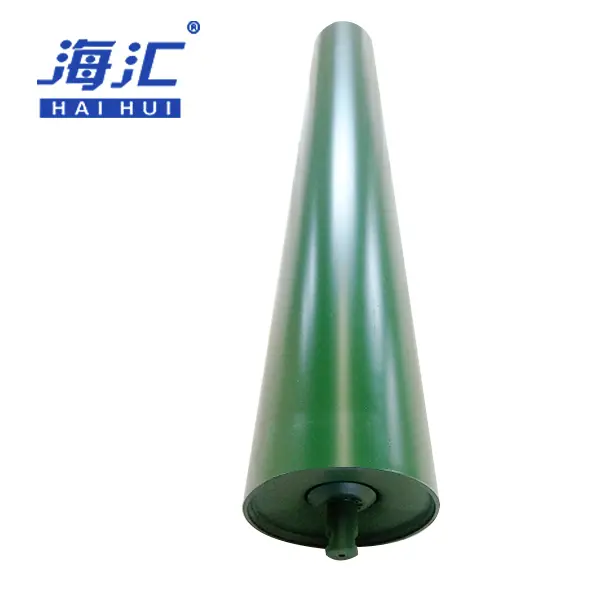
A qualified idler conveyor roller system makes industrial conveying effortless. Uniform rolling support, low friction operation, and modular replacement advantages keep the line stable with minimal manual intervention, ideal for long-term continuous production scenarios.
Core trade-offs
Operation performance
Pros: Low rolling friction reduces belt wear and energy consumption; uniform support avoids belt sagging and deviation.
Cons: Higher initial procurement cost than fixed brackets, requiring standardized installation calibration.
Maintenance & service life
Pros: Single-point replacement reduces maintenance difficulty and downtime loss; sealed structure ensures long service life.
Cons: Poorly sealed rollers still fail easily in extremely harsh environments without targeted upgrading.
Scenario adaptability
Pros: Adapt to heavy load, high speed, long distance, and various harsh complex environments.
Cons: Over-configured and cost-wasting for ultra-light intermittent conveying tasks.
| Evaluation Dimension (1–5 Score) | Idler Conveyor Roller | Fixed Bracket | Practical Notes |
|---|---|---|---|
| Operating stability | 5 | 2 | Roller support eliminates jitter and deviation |
| Energy-saving performance | 5 | 1 | Rolling friction greatly reduces power loss |
| Initial cost | 2 | 5 | Fixed brackets save upfront investment |
| Later maintenance cost | 5 | 2 | Roller system reduces belt replacement frequency |
| Harsh environment adaptability | 5 | 1 | Sealed rollers resist dust and moisture erosion |
Fixed Bracket Support
Fixed bracket support is simple and cost-effective, with low installation requirements. It is suitable for temporary conveying, light-load sorting, and low-frequency use scenarios where stability and continuous operation are not strictly required.
Core advantages
Ultra-low initial cost, simple installation, no complex debugging required, and zero threshold for temporary line construction.
Obvious defects
Long-term static friction causes serious belt wear and high energy consumption; prone to deviation and material scattering during continuous operation; frequent belt replacement and maintenance increase hidden costs.
For long-term industrial production lines, the comprehensive cost performance of idler conveyor roller systems is far higher than fixed brackets. Haihui recommends matching configurations according to actual working conditions to avoid initial cost savings offsetting later production losses.
Ready to optimize your conveyor system configuration? With years of industrial manufacturing experience, Haihui customizes high-performance idler conveyor roller products for global industrial clients, supporting full-process design, production, and after-sales guidance. Reach out to us for professional solutions today.
References
Conveyor Idler Roller Manufacturing & Tolerance Standards – ISO 9001 Industrial Guidelines
Belt Conveyor Friction Loss & Energy Saving Optimization Research – Mechanical Engineering Journals
Harsh Environment Conveyor Component Sealing Technology Analysis – Industrial Equipment Manual
Conveyor Belt Deviation Causes and Corrective Measures – Automation Industry Reports
Idler Roller Structure Design and Service Life Improvement Scheme – 2025 Industrial Technology Outlook
 English
 العربية
 简体中文
简体中文 Nederlands
 Français
 Deutsch
 Bahasa Indonesia
 Italiano
 日本語
日本語 한국어
한국어 Bahasa Melayu
 Polski
 Português do Brasil
 Русский
 Español
 Türkçe