
Port Terminal Conveyor Pulley:Stop Corrosion & Costly Downtime
Port terminal conveyor pulleys offer superior reliability for bulk material handling compared to fragile, under-engineered alternatives.
According to 2026 Port Technology International data, global port throughput now exceeds 12 billion tons annually, driving an massive shift toward high-uptime, corrosion-resistant terminal equipment.
By upgrading to heavy-duty engineered pulleys, port operators drastically reduce unplanned downtime while ensuring maximum belt tracking stability under peak loads.
🚀 Ready to upgrade your port terminal conveyors? With over 15 years of heavy industrial expertise and successful installations in 30+ port facilities worldwide, 海辉 delivers premium engineered pulleys. Get a 1-day solution proposal tailored to your terminal’s throughput. Contact us today.
Why Switch To Engineered Port Terminal Pulleys?
Transitioning to high-spec pulleys requires precise engineering, but Haihui’s solutions deliver immediate ROI through optimized belt tracking, eliminated unplanned downtime, and validated fatigue life. For iron ore, coal, or grain terminals, engineered pulleys guarantee operational stability. Critical drive components—shafts, bearings, and lagging—benefit from rigid, non-deforming construction.
Corrosion-Resistant & Durable: The Core Benefits of Port Pulleys
Compared to standard carbon steel pulleys, Haihui’s port terminal pulleys are engineered to survive marine environments—salt spray, humidity, and abrasive dust—reducing maintenance frequency by up to 50%.
Corrosion-resistant engineering
- Heavy-duty coatings (epoxy, polyurethane, or stainless steel) provide superior marine corrosion protection.
- Sealed bearing housings prevent salt and dust ingress, extending service life.
Durable protection
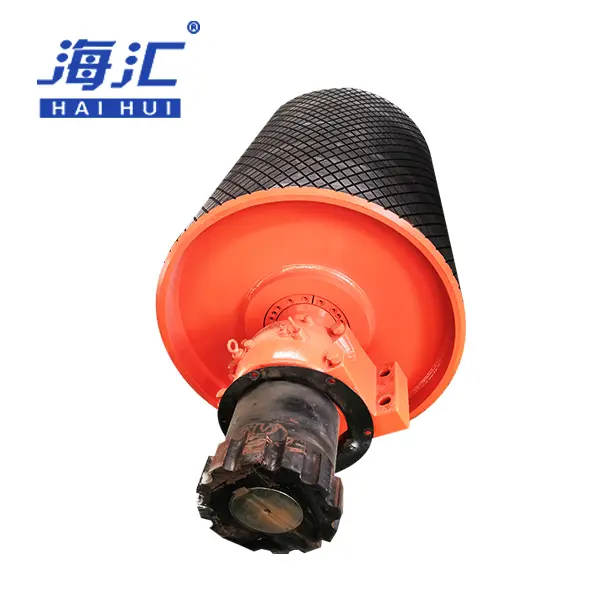
- Forged 42CrMo4 shafts or heavy-wall fabricated shells mitigate denting and bending under high belt tension.
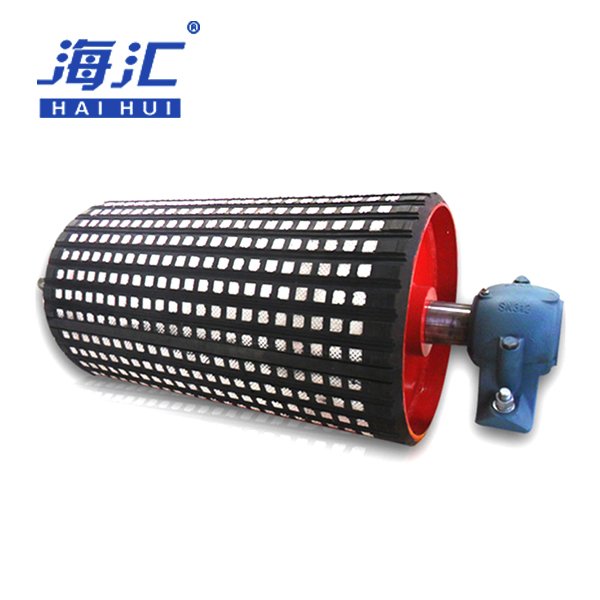
- Lagging (ceramic or vulcanized rubber) ensures positive traction even in wet or dusty conditions.
Port pulley performance basics
- Exceptional strength-to-weight ratio ensures safety during high-start-torque cycles.
- Rigid shaft and shell design protects bearings and seals from impact damage.
Quick buying checklist for port terminal pulleys
- Define corrosion protection requirements (salt spray hours ≥500, coating type).
- Verify pulley geometry for seamless belt tracking and lagging integration.
When sourcing through 海辉, utilizing these specifications prevents operational friction and expensive downtime reworks.
Corrosion Resistance for Marine Environments
The cylindrical shape of a pulley shell strategically distributes belt tension—crucial for long overland port conveyors. Consequently, port pulleys with robust shell designs maintain structural integrity under extreme load and salt-spray exposure.
- Leverage optimal forms: Round bodies eliminate high-stress corners.
- Apply protection: Heavy-duty coatings prevent chemical reactions (from salt, fertilizer, or bulk chemicals) and corrosion transfer.
- Mitigate baseline threats—rust and oxidation—especially during prolonged storage at coastal terminals.
- Validate under extreme parameters: Thermal cycling, transit vibration, and extended load testing.
For aggressive bulk materials (salt, fertilizer, sulphur), properly coated or stainless steel eliminates pitting risks. Haihui port terminal pulleys ensure predictable, long-term operational reliability.
Superior Reliability Compared to Under-Engineered Pulleys
Port terminal pulleys circumvent the complexities of premature failure. Fatigue resistance is steel’s paramount advantage, as properly specified forged shafts provide up to 10x the service life of under-engineered alternatives.
What improves reliability
- Certified materials (forged 42CrMo4 or heavy-wall S355) accelerate the reliability loop.
- Immediate operator recognition of robust construction.
Where standard pulleys stumble
- Undersized shafts and soft bearing seats inevitably fail under high-start-torque cycles.
- Poor sealing leaves bearings vulnerable to dust and moisture.
How reliability helps compliance
- Streamlines environmental reporting for corporate ESG targets (less waste, fewer change-outs).
- Eliminates unplanned downtime liabilities associated with under-engineered components.
Ultimately, sustainable port operations succeed when equipment is natively reliable. Consequently, engineered port pulleys dominate modern terminal maintenance strategies.
Durability and Material Specifications You Can Trust
Procuring port terminal pulleys requires rigid adherence to material specifications. Strict tolerance controls ensure seamless high-speed belt line integration, establishing baseline trust.
Key spec points to ask for
- Shaft material certs (42CrMo4 chemistry and mechanicals), hardness test reports (HRC 50-55), and NDT weld inspection records.
- Comprehensive incoming quality assays, exceeding basic visual inspection.
What it protects in real life
- Consistent durability preventing shaft bending or shell deformation during high-torque starts.
- Flawless integration with bearings, seals, and lagging.
A practical manufacturing loop
- Approve engineering drawings and strict tolerances prior to fabrication.
- Validate lagging bond strength (≥12 N/mm) against belt traction requirements.
- Execute sample runs to finalize performance baselines.
海辉 integrates these critical checkpoints directly into their sourcing matrix, ensuring port terminal pulleys meet exact engineering parameters.
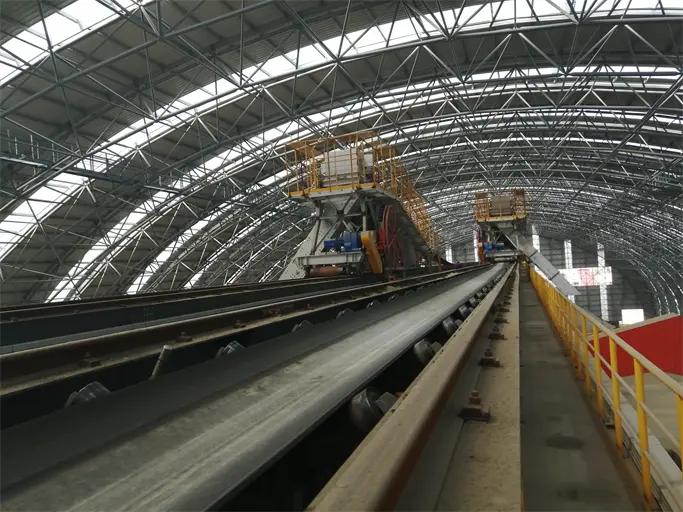
3 Reasons Port Terminal Pulleys Outperform Standard Designs
Facility managers and port engineers favor engineered pulleys because they withstand brutal marine environments, high start-stop torque, and 24/7 operation. Below are three empirical reasons port pulleys outperform standard designs in severe duty cycles.
Reason 1 – Enhanced Corrosion Resistance for Marine Use
In port environments, corrosion is inevitable without proper barriers. Port terminal pulleys provide uncompromising defense mechanisms against salt, moisture, and airborne chemicals.
Material setup that keeps corrosion in check
- Substrates engineered for chemical stability against salt spray and industrial fallout.
- Advanced coating systems (epoxy, polyurethane, or stainless) preserving material integrity against marine corrosion.
Coating strategy that boosts resistance
- Tailored protective layers for heavy port applications.
- Salt spray resistance exceeding 500-1000 hours, ensuring maximum durability.
Practical purchasing notes (straight talk)
- Specify the coating type prior to installation for aggressive environments.
- 海辉 port pulleys offer customizable coating systems, allowing the component to neutralize corrosive exposure.
While compatibility testing remains mandatory, engineered port pulleys provide a superior baseline defense against constant marine exposure.
Reason 2 – Extended Service Life Cuts Environmental Footprint
Engineered port pulleys bypass the “replace-every-year” cycle associated with under-specified components. Extended service life here directly drives waste reduction and resource conservation, saving significant steel consumption over the equipment lifecycle.
Quick reality check on sustainability and the circular economy
- Collection: Steel is infinitely recyclable; properly specified pulleys defer replacement for decades.
- Processing: Legacy steel recycling infrastructure handles end-of-life pulleys efficiently.
- Reporting: Closed-loop metrics directly satisfy environmental impact and carbon footprint accounting.
Standard engineering-style baseline comparison:
| Component type | Typical service life (years) | Replacement cycles (over 20 years) |
|---|---|---|
| Standard carbon steel pulley (uncoated) | 3-5 | 4-6 |
| Heavy-duty coated carbon steel | 8-12 | 1-2 |
| Stainless steel 304 pulley | 15-20 | 0-1 |
| Forged 42CrMo4 with ceramic lagging | 20+ | 0 |
For rigorous compliance teams, engineered port pulleys provide measurable, irrefutable sustainability data.
Reason 3 – Reliable Operation Reduces Downtime Costs
Unplanned downtime drains port operating budgets. Engineered port pulleys significantly reduce failure rates, and their robust design maximizes operational reliability.
How reliability translates into real savings
- Reducing unplanned downtime cuts labor and demurrage costs by 50% or more on extended operations.
- Structural integrity prevents catastrophic failure, maintaining supply chain stability for high-throughput terminals.
Logistics fit that operators actually like
- Optimized reliability slashes maintenance overhead.
- Standardized pulley dimensions streamline spare parts logistics and warehousing.
A quick ops checklist to keep your port operation running
- Specify shaft hardness (HRC 50-55) and coating type for marine environment.
- Enforce regular bearing temperature and vibration monitoring.
海辉 port terminal pulleys are engineered for high-density, high-reliability transit, eliminating downtime waste. Engineered port pulleys achieve superior operational intelligence through material science and geometric precision.
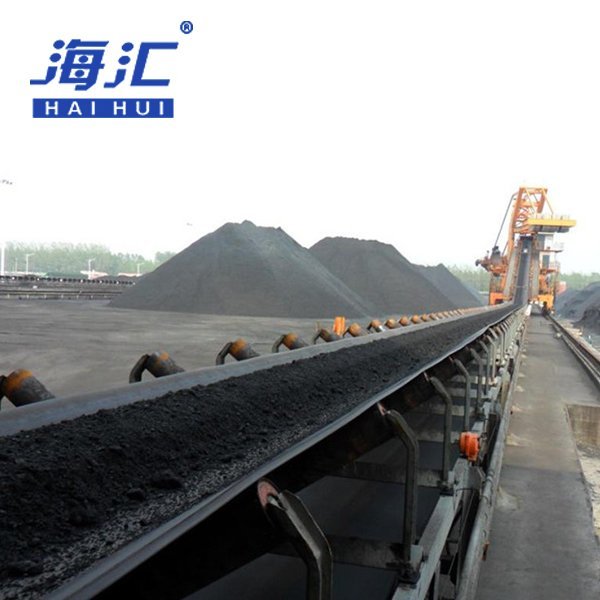
OEM Production: Streamlined With Engineered Pulleys
High-volume OEM port terminal runs fail when dimensions drift or coatings degrade. Port pulleys must be manufactured, coated, tested, and distributed with flawless repeatability. Haihui bridges the gap from prototype to bulk supply, keeping port conveyors running without costly interruptions.
🏭 Need high-volume reliability for a port expansion? Haihui’s heavy industrial facility features robotic welding cells, induction hardening stations, and 100% NDT inspection. We guarantee ISO-certified quality and offer flexible MOQs. Explore our OEM customization options.
Forging & Fabrication for High-Volume Runs
Procuring port terminal pulleys at scale demands a highly controlled manufacturing process yielding identical units.
Metal forming choices for high volume
- Forged shaft (42CrMo4) – Creates high-strength shafts with exact hardness tolerances (HRC 50-55), guaranteeing secure bearing fit and torque transfer. Eliminates fatigue failure pathways.
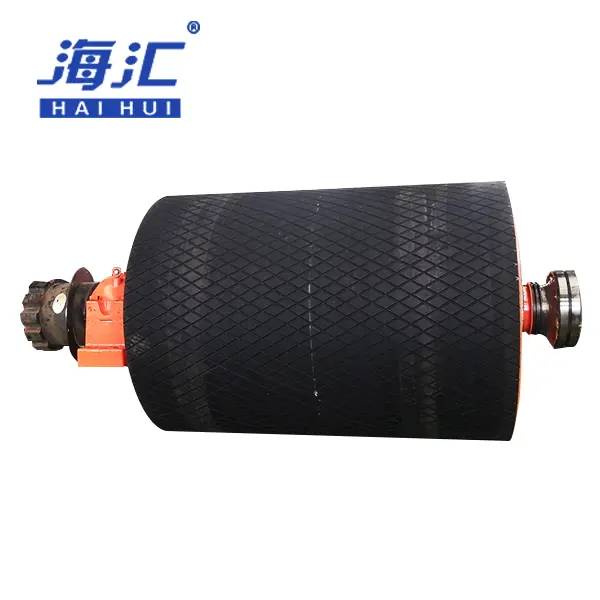
- Fabricated shell (S355) – Ideal for staged welding of shell and end plates. Maximizes tool life and cycle speeds for sustainable high-volume output.
What “production efficiency” really means on the floor
- Dimensional stability: Shell roundness and shaft straightness prevent belt tracking jams.
- Fabrication rhythm: Predictable welding cycles allow for exact supply forecasting.
Fit checks that save you from drama later
- Lock shaft OD tolerance and end plate alignment before initiating the high-volume run.
Customization Options: Coatings, Lagging, and Shaft Ends
Port terminal pulleys require premium, corrosion-resistant protection and uncompromising traction.
A quick, practical menu
- Corrosion protection: Epoxy or polyurethane coatings (150-250µm dry film thickness); stainless steel 304/316 option.
- Lagging choices: Ceramic for extreme grip in wet or dusty conditions; vulcanized rubber (60-75 Shore A) for general service; herringbone groove for self-cleaning.
- Shaft ends: Standard CEMA keyed ends; custom taper-lock or QD bushes.
Establish design rules: Mandate safe margins near keyways and strict hardness tolerances. Select coatings engineered to survive the abrasive port environment. Mandate pilot approvals prior to mass production.
海辉 insists on integrated “fabricate, coat, and balance” validations to prevent reliability failures during high-speed port operation.
Quality Assurance: ISO Certification and NDT Compliance
Aesthetic perfection is irrelevant without structural safety. Rigorous quality assurance is mandatory for engineered port pulleys.
The compliance stack that buyers ask about
- ISO certification – Mandates flawless quality control, lot traceability, and strict raw material auditing. Prevents unauthorized alloy or coating substitutions.
- NDT compliance – Enforces NDT weld inspection (ultrasonic or dye-penetrant) and hardness testing protocols.
What gets verified in real life (not just paperwork)
| Control point (sample) | Target/Limit | Inspection frequency |
|---|---|---|
| Shaft hardness (HRC) | 50-55 | Per lot |
| Weld NDT | 100% penetration | 100% per pulley |
| Coating thickness (µm) | 150-250 | Per shift |
| Concentricity (mm) | ≤0.5 TIR | Every pulley |
Logistics Management: Bulk Supply and Lead Time Optimization
Perfectly manufactured port pulleys require synchronized delivery to maintain terminal operation schedules.
Logistics management that supports the maintenance calendar
- Bulk supply planning – Standardize pallet configurations with shaft support cradles to eliminate transit damage.
- Lead time optimization – Synchronize fabrication, coating, and delivery with port outage windows.
A clean way to keep the supply chain from tripping you
- Inventory management – Strictly segregate QA-approved inventory from quarantined stock.
- Delivery schedules – Implement just-in-time staggered deliveries to optimize terminal storage.
海辉 executes comprehensive prototyping before transitioning to automated bulk supply of validated port terminal pulleys.
FAQs about Port Terminal Conveyor Pulleys
Why switch to engineered pulleys for port terminal conveyors?
Automated terminal operation requires absolute structural predictability. Forged steel and heavy-wall fabricated pulleys provide this through high-tolerance fatigue strength, ensuring safety under high-start-torque loads.
- Reliability optimization: Reduced failure rates simplify maintenance management.
- QC assurance: Advanced coating systems provide superior corrosion resistance, protecting shafts and bearings.
- Corporate ESG: Extended service life effortlessly meets environmental compliance mandates.
Which pulley construction fits high-volume port operations: forged shaft or fabricated?
Selection depends entirely on torque requirements and corrosion exposure.
| Need on the line | Better fit | What your team gets |
|---|---|---|
| Consistency under high torque | Forged 42CrMo4 shaft | High fatigue strength; flawless integration with bearings and lagging |
| Corrosive environment (salt/chemicals) | Stainless steel 304/316 shell | Marine-grade corrosion resistance; extended service life |
| Flexible sizing / standard loads | Fabricated S355 shell | Cost-effective for moderate duty; rapid scaling |
What quality standards and regulations matter for port terminal pulleys?
Operating heavy equipment in a marine environment requires absolute regulatory adherence.
- CEMA Standards: Certifies pulleys as compliant with conveyor equipment specifications.
- ISO Certification: Guarantees systematic quality inspection and lot traceability.
- NDT Compliance: Dye-penetrant or ultrasonic weld inspection ensures shell integrity.
Partnering with experts for technical support and precise prototyping eliminates the risks associated with high-speed terminal operations.
🤝 Stop compromising with under-engineered pulleys. Partner with 海辉 for OEM/ODM manufacturing that meets ISO, CEMA, and NDT standards. From design to delivery, we offer a seamless custom project flow with engineering drawings ready in ≈10 days. Request your free application review and quote now.
References
- Port Technology International – Global Port Throughput Report 2026
- CEMA – Conveyor Equipment Manufacturers Association – Pulley standards
- ISO 9001 – Quality management systems
- ASTM B117 – Salt spray testing standard
- NACE International – Corrosion standards
- PHMSA – phmsa.dot.gov (hazardous materials transport)
- EPA – epa.gov/compliance (environmental compliance)
- Haihui – Technical specifications for port terminal conveyor pulleys

 English
 العربية
 简体中文
简体中文 Nederlands
 Français
 Deutsch
 Bahasa Indonesia
 Italiano
 日本語
日本語 한국어
한국어 Bahasa Melayu
 Polski
 Português do Brasil
 Русский
 Español
 Türkçe