
Heavy Duty Conveyor Rollers:Bulk Sourcing Is a Trust Fall
Buying heavy duty conveyor rollers in bulk isn‘t just a parts list exercise—it’s a trust fall with your entire shift’s productivity on the line. One seized bearing, one thin wall, and suddenly your belt drags like a stuck pig or the roller shells out after three months. For maintenance managers, that’s not a hiccup—that’s a midnight phone call and a whole crew standing around. Price tags matter, sure, but tube wall thickness, bearing grade, and seal integrity matter more when tons per hour won’t wait and your spare parts budget is already blown.
The global conveyor roller market was valued at over $6 billion in 2024, according to industry sources cited by Modern Bulk Handling—steady replacement demand, tight margins, zero room for rollers that fake it.
So before you sign off on a bulk roller order, check the tube spec, the bearing brand, the seal type, and the weld quality. Because in this business, cutting corners doesn’t save money—it adds walk‑time and frustration.
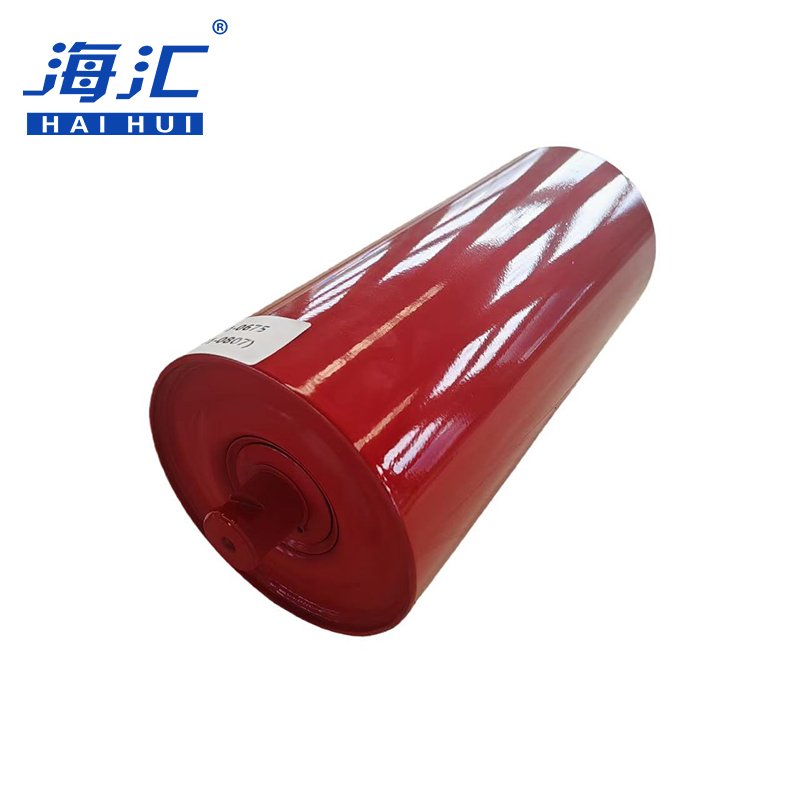
Quick Answers: Heavy Duty Conveyor Rollers Essentials
➔ Tube & Wall: Specify S235 or S355 steel, verify wall thickness (±0.3 mm tolerance), and demand certified material traceability.
➔ Bearing & Shaft: Choose deep groove ball bearings (P6 or P5 grade), confirm shaft straightness (≤0.2 mm/m), and document grease fill.
➔ Sealing & Protection: Specify labyrinth or contact seals, verify ingress protection (IP65 minimum), and confirm running torque.
➔ Fabrication & Balance: Ensure concentric welding, dynamic balancing (ISO 1940 G‑16), and 100% spin testing before shipment.
How Do Tubes, Bearings, and Seals Impact Roller Life?
Service life is not just luck. It comes down to tube stiffness, bearing quality, and seal design. For teams sourcing heavy duty rollers in bulk, these small details quietly decide whether your conveyor runs for years or turns into a replacement‑every‑six‑months headache.
Tube Wall Thickness for High‑Impact Applications
When buyers look at heavy duty rollers, tube wall often gets overlooked. That’s risky. On every roller, rigidity starts with steel grade and wall thickness. I’ve seen plants buy cheap rollers and watch them bend under a heavy load within weeks.
Steel grades and their roles
- S235 (mild steel): Good for light duty, dry goods, low impact. Fine for distribution centers.
- S355 (higher strength): Better yield strength, handles impact, suitable for most heavy duty applications.
- Hardened tube (surface induction): Extreme wear resistance, longer life in abrasive environments.
Wall thickness recommendations
| Roller Diameter | Light Duty (mm) | Heavy Duty (mm) | Impact Duty (mm) |
|---|---|---|---|
| 89 mm | 2.0 | 2.5 | 3.0 |
| 114 mm | 2.5 | 3.2 | 4.0 |
| 133 mm | 3.0 | 4.0 | 5.0 |
| 159 mm | 3.5 | 4.5 | 5.5 |
“We used to buy standard 2.5mm wall rollers,” one plant manager told me. “After crushing a dozen under a heavy load, we switched to 4mm. Haven’t bent one since.”
Why wall thickness matters
- Thicker wall = more dent resistance (obvious, but you’d be surprised how often people skimp)
- Thinner wall = lighter, cheaper, but a single impact can oval the tube—then the bearing binds and it’s done
Brands ordering heavy duty rollers in bulk often request cut‑and‑measure samples before full production. Haihui supports wall thickness verification on random samples—you pick the pieces, they cut them open right there.
Bearing Grade and Shaft Fitment
The bearing is the heart of a roller. A cheap bearing fails silently—rolls fine empty, seizes under load. I’ve pulled apart rollers that looked perfect on the outside but had bearings full of rust and dust.
Bearing options
- 6202, 6204, 6206 series: Common sizes for 89–159 mm rollers
- Grade P0 (normal): Basic precision, fine for slow conveyors
- Grade P6: Tighter tolerance, lower runout, recommended for medium speed
- Grade P5: High precision, for fast belts and demanding applications
Shaft fitment
- Shaft tolerance: h7 or h6 depending on application
- Concentricity: ≤0.1 mm between shaft and tube centerline
- Shaft straightness: ≤0.2 mm per meter—any more, and the roller wobbles
Grease and lubrication
- Lithium complex grease (NLGI 2) is standard
- Fill volume: 30–50% of bearing cavity—too much, and it overheats; too little, and it dries out
- Operating temperature range: –20°C to +120°C for standard grease
Haihui uses SKF or FAG bearings as standard, with lower‑cost options available only on request. Their shop foreman told me, “We lost too many customers with no‑name bearings. Now we don‘t compromise.”
Seal Types and Contamination Resistance
The seal is the roller’s first defense against dust, water, and fine material. I’ve seen rollers fail in six months simply because the wrong seal was spec’ed for the environment.
Seal families
- Labyrinth seal (non‑contact): Low drag, good for dry, clean environments. Spins easy, but doesn’t keep out fine dust.
- Contact seal (rubber lip): Higher drag, much better contamination protection. Standard for heavy duty.
- Double seal (labryrinth + contact): Best of both worlds—used in mining and recycling.
Ingress protection ratings
| Seal Type | IP Rating | Typical Environment |
|---|---|---|
| Labyrinth | IP54 | Indoor, dry, light dust |
| Contact lip | IP65 | Outdoor, moderate dust/moisture |
| Double seal | IP66+ | Wet, muddy, abrasive fines |
“A roller can have the thickest tube and best bearings,” said a Haihui application engineer, “but if dust gets past the seal, it’s just a matter of time. Weeks, not months.”
Running torque and spin testing
- Low torque = less belt drag = lower power consumption
- Spin test: Roller should coast for several seconds after a sharp flick
- Cold start torque: Higher initially, but should smooth out within a minute
For high-volume roller orders, Haihui spins every roller before packing—not a random sample, every single one. They‘ve got a simple rule: if it doesn’t spin freely, it doesn’t ship.
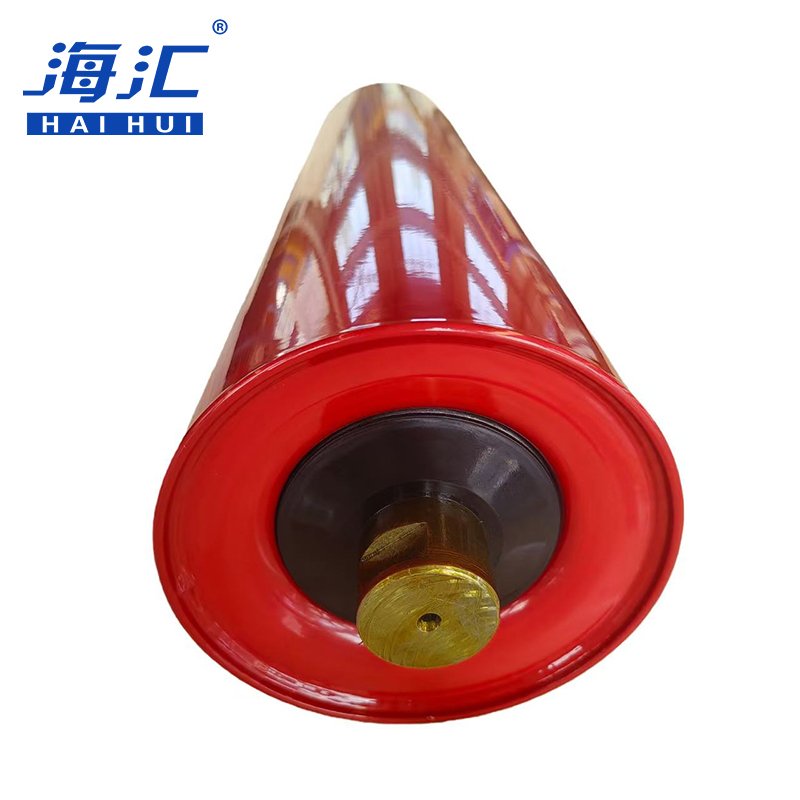
Steel Grade vs. Roller Tube Cost Trade‑offs
Choosing between tube grades isn’t just about strength; it shapes weight, weldability, and how long the roller survives impact.
| Tube Grade | Yield Strength (MPa) | Weld Quality | Cost Index | Best Use |
|---|---|---|---|---|
| S235 | 235 | Good | 1.0 | Light duty, indoor |
| S355 | 355 | Very good | 1.2 | Heavy duty, general |
| Hardened S355 | 800+ | Fair (pre-weld anneal) | 1.8 | Extreme impact |
For most bulk handlers, S355 hits the sweet spot: good strength without breaking the bank. I’ve seen S235 rollers fold under a heavy load—never again.
OEM vs. Off‑The‑Shelf Rollers: Pros & Cons
OEM Rollers
- Customization: Tube length, shaft ends, bearing spacing, seal type—everything.
- Quality control: Weld inspection, concentricity check, 100% spin test.
- Lead time: Sampling → batch production (typically 4–6 weeks).
- Best for: Long conveyors, critical paths, or when standard sizes don’t fit.
Off‑the‑shelf rollers
- Availability: Stock sizes, short lead times (1–2 weeks).
- Cost: Lower unit price, no tooling fee.
- Trade‑off: Fixed lengths, standard seals only, no shaft modifications.
Haihui keeps ready‑to‑ship stock for common roller sizes (89, 114, 133 mm) with standard wall and bearings. I’ve seen them ship a pallet of 200 rollers in five days when another supplier quoted four weeks.
4 Shipping Considerations for Bulk Roller Orders
1. Bulk Packaging Strategies
- Primary layer: Wax coating or light oil for rust protection—skip this, and you’ll get surface rust.
- Secondary layer: Cardboard sleeves or foam between layers to prevent scratching.
- Tertiary layer: Banded pallets with corner boards.
2. Palletized Shipments
- Even weight distribution—lopsided pallets tip in transit.
- Roller axes parallel to pallet direction for stability.
- Reinforced strapping (two bands each way).
3. Container Loading Optimization
| Container | Typical Rollers (89mm x 1000mm) | Approx Weight (kg) |
|---|---|---|
| 20ft | 1,600 | 4,800 |
| 40ft | 3,500 | 10,500 |
| 40ft HC | 3,800 | 11,400 |
4. Lead Time & Global Shipping
- Fabrication cycle (cutting, welding, bearing pressing, spin testing) — typically 3–5 weeks.
- Final inspection and packing (add 1 week).
- Sea freight + customs clearance buffer (10–15 days extra). Port delays aren’t getting shorter.
Haihui sends photos of packed containers before sealing—you get to see how your rollers are loaded. Small gesture, saves a lot of worry.
How to Verify Heavy Duty Roller Supplier Credibility
1. Assess ISO 9001 and Material Certificates
- Request mill test reports for tube steel (S235, S355, etc.).
- Verify bearing brand and grade (SKF, FAG, NSK, or equivalent).
- Check grease specification and fill volume.
2. Inspect Tube Weld and Concentricity
| Process | Key Indicator | Acceptable Range |
|---|---|---|
| Tube weld | Penetration | Full penetration, no stitch welds |
| Concentricity | Runout between shaft and tube | ≤0.5 mm |
| End cap weld | Visual + tap test | No gaps, solid sound |
3. Review Spin Testing and Torque Records
- Spin test: Roller should spin freely, no grinding or wobble.
- Running torque: Measured at factory, recorded batch‑level.
- Random sample cut‑up for wall thickness verification.
Haihui publishes quarterly quality summary reports—defect rates, return reasons, corrective actions. You don’t have to beg for data.
FAQs
1. What types of heavy duty rollers suit different bulk handling industries?
- Mining: Heavy wall (4–5 mm), double seals, hardened tube option, P6 bearings.
- Aggregates: S355 tube, contact seals, standard wall (3–4 mm).
- Food processing: Stainless steel tube, smooth ends, food‑grade grease.
- Recycling: Impact‑resistant tube, double seals, sacrificial outer sleeve option.
2. How do bearings and seals affect heavy duty roller durability?
- Bearings: P6 grade minimum for medium speed, brand name (SKF/FAG) for heavy duty.
- Seals: Contact or double seal for dusty/wet environments. Labyrinth only for clean indoor duty.
- Verification: Spin test + torque measurement.
3. What should buyers check before signing a long‑term roller contract?
- Wall thickness tolerance and material certificate.
- Bearing brand and grade commitment in writing.
- Seal type and IP rating.
- Spin test acceptance criteria (e.g., “coast time ≥5 seconds”).
- Quality hold points (in‑process inspection, final audit).
When tube, bearing, and seal align, heavy duty rollers become boringly reliable—and that‘s the best compliment a maintenance manager can give.
References
- Modern Bulk Handling – Conveyor Components Market Estimate 2024
- ISO 1940 – Mechanical vibration – Balance quality requirements
- DIN 22102 – Conveyor belts – Idlers
- Haihui – Technical data sheets for heavy duty conveyor rollers
- SKF – Bearing selection for bulk handling applications

 English
 العربية
 简体中文
简体中文 Nederlands
 Français
 Deutsch
 Bahasa Indonesia
 Italiano
 日本語
日本語 한국어
한국어 Bahasa Melayu
 Polski
 Português do Brasil
 Русский
 Español
 Türkçe