
Top Return Rollers for Conveyors Installation Guide
Partnering with a reliable manufacturer of return rollers for conveyors instantly stabilizes your entire belt conveying system and cuts long-term operational downtime. As conveyor system reliability becomes a core benchmark for industrial productivity, factory managers are prioritizing durable, low-resistance return rollers over generic low-cost alternatives. From correcting belt deviation and reducing running friction to resisting dust corrosion and heavy cyclic load fatigue, premium return rollers deliver consistent belt stability, minimal maintenance frequency, and reliable long-term conveyor performance.
Ready to upgrade your conveyor idle system? With decades of industrial manufacturing experience and an ISO 9001-certified production facility, Haihui provides rapid 1-day customized solution proposals for all standard and non-standard return roller needs. Contact Us Today to optimize your conveyor operation efficiency.
Key Pointers for Sourcing Quality Return Rollers for Conveyors
➔ Material & Surface Design: Match carbon steel, galvanized or rubber-coated roller shells to site dust, humidity, and impact load conditions.
➔ Structural Precision: Control shell roundness, wall thickness uniformity and shaft concentricity to eliminate belt jitter and deviation.
➔ Sealing & Bearing Performance: Adopt multi-layer sealing and low-friction bearings to prevent dust and moisture intrusion in harsh working conditions.
➔ Process Consistency: Verify automated welding, finishing treatment and dynamic balance testing to stabilize batch product quality.
➔ On-Site Adaptation: Match roller diameter, spacing and load rating to conveyor speed, belt width and material conveying volume.
4 Steps To Source The Right Return Rollers for Conveyors
Sourcing qualified return rollers for conveyors becomes tricky when balancing low procurement cost, stable running performance and long service life. This practical guide sorts out core evaluation dimensions, helping you conduct data-driven supplier audits and accurate product selection when cooperating with professional manufacturers like Haihui.
Assess Roller Shell Materials for Industrial Conveyor Conditions
For return rollers for conveyors, shell material directly determines wear resistance, anti-corrosion performance and overall service life. Material selection must be strictly matched with on-site environment and cyclic load intensity to avoid premature aging and failure.
Carbon Steel Shell
The most widely used industrial solution, featuring high structural rigidity and strong impact resistance. It perfectly adapts to heavy-load cyclic operation of mine, quarry and bulk material conveyor lines. Strict surface derusting and finishing treatment is required to delay oxidation wear in open-air environments.
Hot-Dip Galvanized Shell
Integrates excellent anti-rust and anti-corrosion capabilities, ideal for humid ports, coastal salt-fog environments and outdoor exposed conveyor systems. It reduces manual maintenance frequency and avoids performance degradation caused by surface rust accumulation.
Rubber-Coated Shell
The surface rubber buffer layer effectively reduces direct friction and impact between the roller and the conveyor belt. It solves common problems such as belt wear, slipping and deviation, suitable for high-speed conveying lines and scenarios requiring noise reduction and belt protection.
Core material verification standard
Confirm wall thickness uniformity and material tensile strength of return rollers for conveyors. Inferior thin-walled rollers are prone to bending deformation under long-term cyclic load, leading to continuous belt deviation and abnormal vibration.
Compare Manufacturing Precision and Process Standards
High-performance return rollers for conveyors rely on refined manufacturing processes rather than simple assembly. You need to require manufacturers to provide transparent process data to judge product stability.
Key process comparison and evaluation
Seamless Welding Process
High-quality return rollers adopt full circumferential seamless welding and smooth polishing treatment. No welding protrusions or burrs scratch the belt, effectively avoiding local belt wear and residue accumulation. Generic products often have uneven welds, which become hidden dangers for long-term operation failure.
Precision Cutting and Finishing
Strict control of roller end face flatness and shaft concentricity ensures uniform contact stress between the roller and the belt. Poor finishing precision will cause unilateral friction overload and accelerate belt aging.
Dynamic Balance Calibration
High-speed conveyor return rollers must undergo dynamic balance testing to eliminate operational jitter. Uncalibrated products produce severe vibration during high-speed operation, affecting overall conveyor stability.
Factory core indicators to audit
Stable batch scrap rate, standardized tooling maintenance cycle and in-line full inspection mechanism are the core proofs of a manufacturer’s process capability.
Verify Sealing, Bearing and Anti-Failure Performance
More than 80% of return roller failures stem from sealing failure and bearing contamination, rather than shell wear. It is necessary to require manufacturers to provide verifiable test data and quality records.
Core performance testing items
Multi-layer Sealing Performance
Labyrinth + rubber composite double-layer sealing structure blocks external dust, slurry and moisture. It adapts to high-dust and humid harsh environments, preventing bearing rust and jitter caused by internal contamination.
Bearing Operation Stability
Adopt high-precision low-resistance bearings with high-temperature and wear-resistant grease. It maintains flexible rotation under long-term continuous operation, reduces conveyor operating load and energy consumption, and avoids bearing burnout failure.
Anti-Aging and Fatigue Resistance
Long-term cyclic load operation requires rollers to have excellent fatigue resistance. Qualified return rollers for conveyors maintain stable rotation accuracy without deformation or stuck after thousands of hours of operation.
| Checkpoint | Target (example) | Sampling (example) |
|---|---|---|
| Roller roundness error | ≤0.8mm | 5 pcs / 1 batch |
| Rotational resistance | ≤1.5N | 10 pcs / 1000 pcs |
| Sealing dust-proof performance | No jamming after 24h dust test | 1 pc / 2000 pcs |
| Dynamic balance deviation | ≤2.0g·cm | Full inspection for high-speed models |
Plan Installation Spacing and Matching Application Scenarios
Blindly installing return rollers for conveyors without scenario matching will lead to insufficient support or resource waste. Scientific spacing layout and model matching can maximize system stability and cost performance.
Scenario-based matching rules
Heavy-load mine conveyor: Adopt thickened steel return rollers with dense spacing configuration to resist heavy impact and dust erosion.
Port outdoor conveyor: Adopt galvanized anti-corrosion return rollers to adapt to high humidity and salt fog weather.
High-speed logistics conveyor: Adopt rubber-coated silent return rollers with dynamic balance calibration to reduce vibration and belt wear.
Standard spacing reference
The return section adopts 1000mm–1200mm standard spacing, which balances support stability and operational energy consumption, effectively preventing belt sagging and deviation.
Need stable and low-friction return rollers for conveyors? Haihui relies on automated production lines and complete quality control systems to provide high-stability products. Custom samples can be delivered quickly, and professional on-site matching solutions are provided free of charge. Explore Customization Options
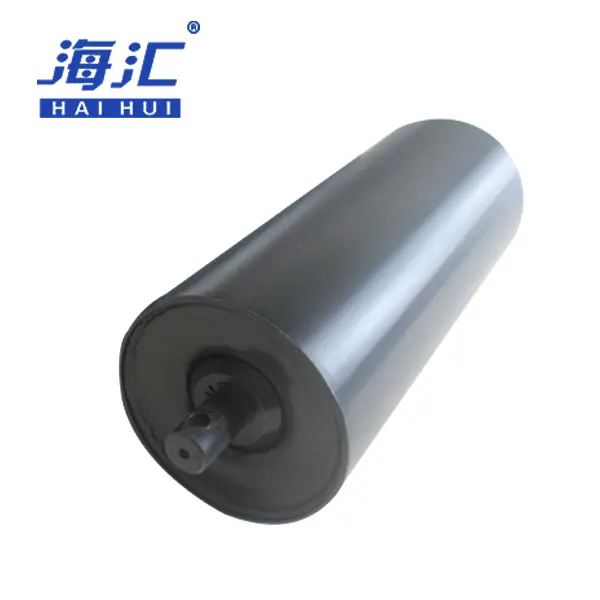
Trough Roller vs Return Roller for Conveyors
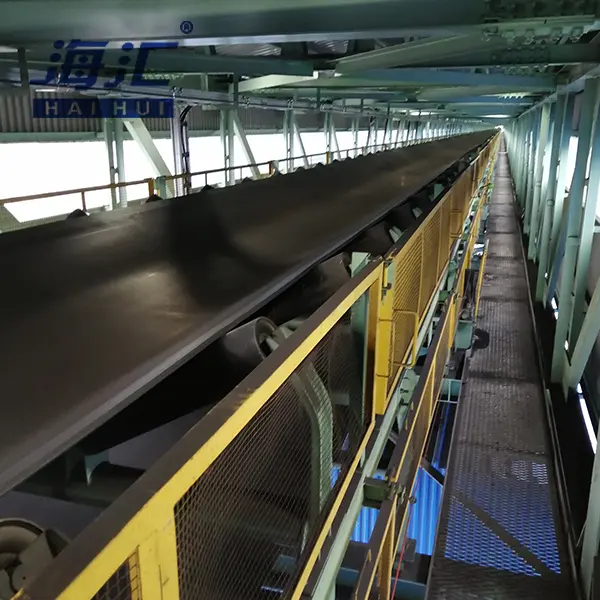
Many engineering teams confuse trough rollers and return rollers for conveyors in system design and procurement. Clarifying their functional differences and application scenarios is the key to improving the overall operating efficiency of the conveyor system and reducing failure rates.
Return Rollers for Conveyors
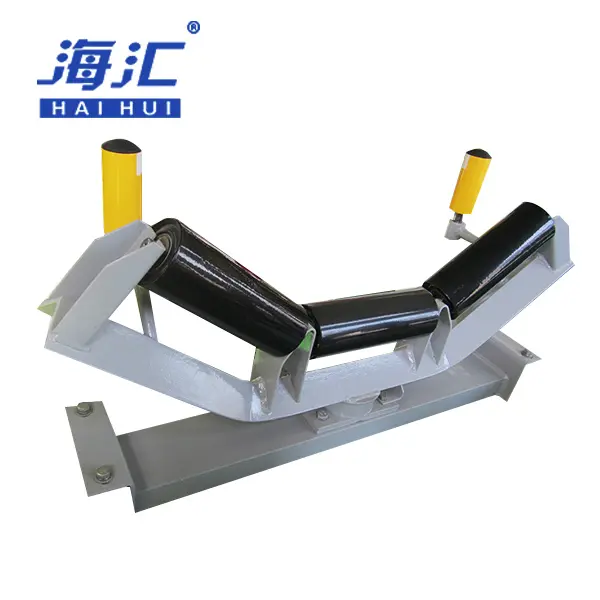
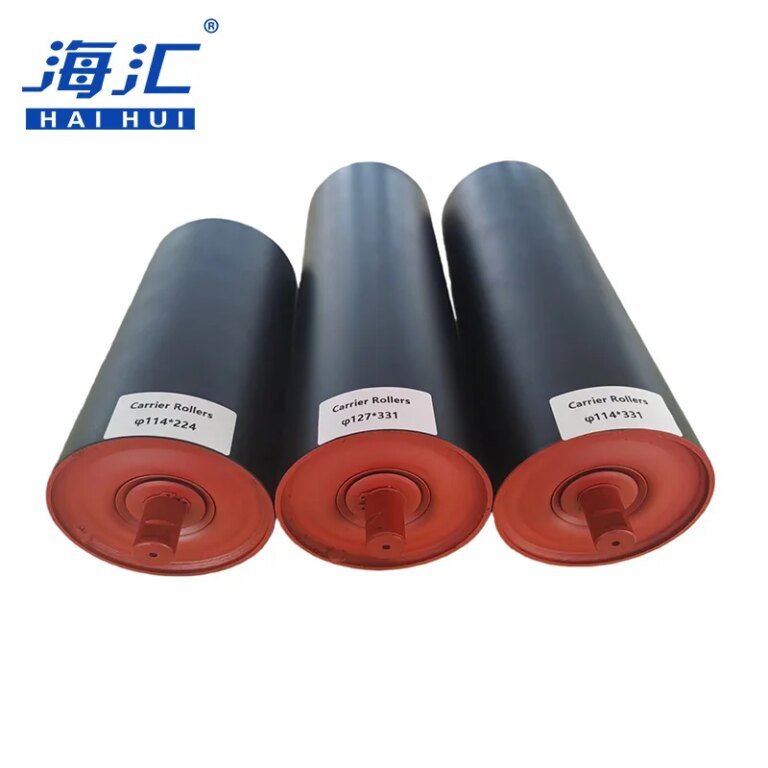
Return rollers are core idle components for the conveyor return section, mainly used to support the empty belt and ensure smooth belt circulation. They focus on low rotation resistance, anti-wear and anti-deviation performance.
Performance and Application Snapshot
| Application Position | Main Load | Core Requirement | Failure Impact |
|---|---|---|---|
| Belt return section | Empty belt lightweight load | Low resistance, flexible rotation | Belt deviation, increased operating resistance |
Core advantages
Stable circulation: Uniform rotation ensures continuous and stable belt return without jitter or stagnation.
Energy saving and consumption reduction: Low-friction bearing design reduces conveyor motor load and daily operating energy consumption.
Long service life: Excellent sealing performance avoids internal contamination and maintains long-term stable operation.
Low maintenance: High structural stability reduces replacement frequency and manual maintenance costs.
Trough Carrying Rollers
Trough rollers are used for the conveyor feeding section, bearing bulk material impact and heavy load. They focus on structural strength, anti-impact and anti-spillage performance, with higher requirements for wall thickness and structural stability.
Key differences in selection
Trough rollers need to match trough angle and material density, while return rollers for conveyors focus more on rotation flexibility and environmental adaptability. The two cannot be substituted for each other in engineering design, otherwise it will cause system instability and frequent failures.
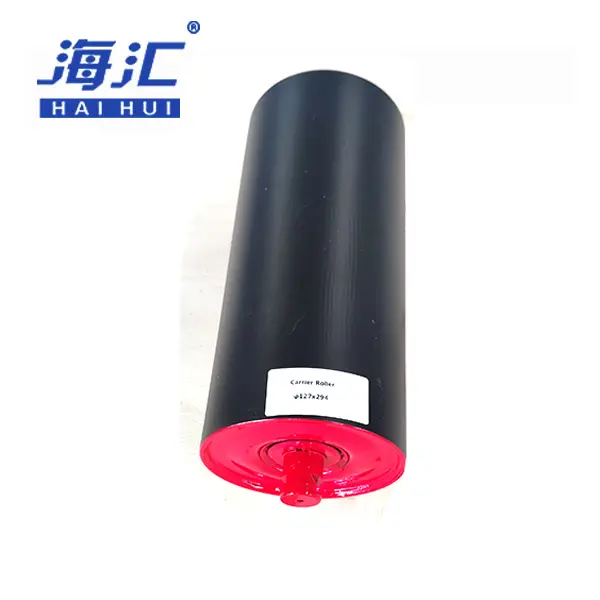
3 Core Benefits Of Premium Return Rollers for Conveyors
High-quality return rollers for conveyors manufactured by Haihui are precisely engineered for long-term stable operation, harsh environment adaptability and low-cost maintenance, solving multiple pain points of traditional conveyor idle systems.
Stable Rotation Performance and Low Energy Consumption
Premium return rollers adopt high-precision matching bearings and strict dynamic balance calibration. The ultra-low rotation resistance ensures that the empty belt runs smoothly, effectively reducing the overall operating power consumption of the conveyor. Long-term operation can save a lot of energy costs for enterprises.
Ordinary inferior rollers have large rotation resistance and unbalanced operation, which will increase belt running resistance and cause motor overload operation, resulting in increased power consumption and accelerated equipment aging.
Excellent Sealing and Harsh Environment Adaptability
Haihui return rollers for conveyors adopt multi-layer composite sealing technology, which can effectively isolate dust, moisture, slurry and other pollutants. Whether it is dusty mines, humid ports or corrosive chemical workshops, they can maintain stable internal bearing operation and avoid stuck rollers caused by contamination.
This excellent environmental adaptability greatly reduces the failure rate of the return section, avoids frequent shutdown maintenance caused by roller jamming, and ensures continuous and stable production.
Strict Quality Control and Long Service Life Stability
All Haihui return rollers are produced under ISO 9001 quality management system, with full-process inspection from raw material incoming inspection, precision processing to finished product testing. Strict dimensional tolerance control and process standards ensure batch consistency of products.
Long-term fatigue resistance and anti-deformation performance enable the rollers to maintain stable working accuracy after thousands of hours of cyclic operation, greatly reducing product replacement frequency and comprehensive operational costs.
| Control point | Sample size | Accept limit |
|---|---|---|
| Roller appearance & welding | 32 pcs/batch | 0 critical defects |
| Shaft concentricity | 20 pcs/batch | ±0.1mm |
| Rotation flexibility test | 100% full inspection | No jamming, uniform rotation |
| Surface anti-corrosion layer | 10 pcs/batch | No peeling, uniform coating |
Ensure your conveyor return system runs efficiently and stably all year round. Haihui’s return rollers for conveyors meet strict industrial standards, backed by rigorous quality control and customized service support. Learn About Our Manufacturing Capabilities
Can Premium Return Rollers for Conveyors Save Your Operational Costs?
Excellent return rollers for conveyors do not only reduce replacement costs. They fundamentally reduce conveyor operating energy consumption, belt wear loss and shutdown maintenance losses, helping enterprises achieve long-term cost control and efficiency improvement.
Precision Manufacturing Cuts Scrap and Replacement Costs
Haihui optimizes every production link of return rollers. Strict tooling management and SPC process control eliminate dimensional drift and defective products. Low-quality generic rollers have high scrap rates and frequent failures, bringing continuous hidden costs such as shutdown debugging and belt replacement.
Standardized production processes and strict quality inspection greatly reduce batch defects, ensuring that each batch of return rollers for conveyors maintains consistent high performance.
Optimized Structural Design Reduces Belt Wear Loss
Unqualified return rollers with unbalanced rotation and rough surfaces will cause severe unilateral wear and scratch damage to the conveyor belt. Premium Haihui return rollers with smooth finishing and balanced operation effectively protect the belt, greatly extending belt service life and reducing expensive belt replacement costs.
Stable Performance Eliminates Shutdown Losses
Roller jamming, deviation and failure are important causes of unplanned shutdowns. High-quality return rollers for conveyors have stable sealing and rotation performance, extremely low failure rate, effectively avoiding production stagnation losses caused by return section failures.
Stop bearing hidden losses caused by inferior conveyor parts. Partner with Haihui—your professional manufacturer of return rollers for conveyors. With flexible MOQ, fast sample delivery and professional technical support, we provide one-stop customized solutions for global industrial conveyor systems. Get Your Free Quote & Consultation Now
References
Conveyor Return Roller Structural Design and Precision Standard – Industrial Mechanical Specification 2025
Belt Conveyor Return Section Layout and Spacing Design Manual – Mechanical Engineering Industry Standard
Conveyor Idler Roller Sealing Performance and Anti-Corrosion Technology Research – Equipment Maintenance Journal
ISO 9001 Industrial Mechanical Parts Quality Control Guidelines
Conveyor Roller Dynamic Balance Calibration Specification
Harsh Environment Conveyor Component Adaptation Technical Report
Conveyor System Energy Saving and Consumption Reduction Design Standard
 English
 العربية
 简体中文
简体中文 Nederlands
 Français
 Deutsch
 Bahasa Indonesia
 Italiano
 日本語
日本語 한국어
한국어 Bahasa Melayu
 Polski
 Português do Brasil
 Русский
 Español
 Türkçe