
5 Critical 2026 Standards for Belt Conveyor Drive Pulley Sourcing
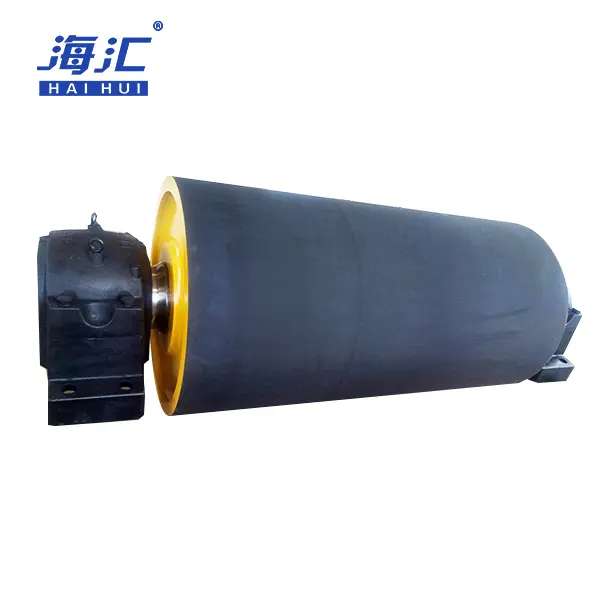
A belt conveyor drive pulley looks simple—just steel, lagging, and a shaft—but in your bulk material line, it’s a ticking downtime bomb if ISO and DIN standards aren’t locked down. One undersized shaft or a sloppy weld, and your entire shift grinds to a halt. Plant managers don’t lose sleep over idlers; they lose sleep over shredded belts, seized bearings, and production bonuses down the drain.
“A drive pulley isn‘t just a component—it’s the heartbeat of a conveyor system,” said a Haihui senior engineer in a 2025 technical briefing. “Spec it wrong, and you‘re not fixing a pulley; you’re rebuilding trust with every delayed ton.”
According to Grand View Research, the global conveyor systems market is projected to exceed $30 billion by 2026. Think of it like a truck’s axle on a mountain pass. Same tonnage, steeper grade. The operations that breeze through are the ones specced for it.
5 Critical 2026 Standards for Belt Conveyor Drive Pulleys
Tighter global standards in 2026 are redefining how drive pulleys manage torque, heat, and fatigue. From shaft diameter checks to lagging adhesion tests, every component now faces sharper scrutiny. If you specify or source belt conveyor drive pulleys, this is the stuff you can’t ignore.
1. ISO 15360:2026 – Shaft Diameter & Fatigue Life Limits
Updated ISO limits focus on pulsating torque cycles, not just static load.
- Scope of control
Shaft diameter under 250 mm
Torque reversal under braking
High-cycle fatigue zones - Material validation
42CrMo4 or C45 steel grade certification
Ultrasonic testing for internal flaws
Hardness verification (HB 220–280)
| Shaft Diameter (mm) | Max Static Torque (kN·m) | Fatigue Life Cycles (×10⁶) |
|---|---|---|
| 80 | 8 | 12 |
| 120 | 18 | 10 |
| 180 | 32 | 8 |
| 240 | 48 | 6 |
At Haihui, fatigue mapping is logged per batch, keeping drive pulleys compliant and audit‑ready.
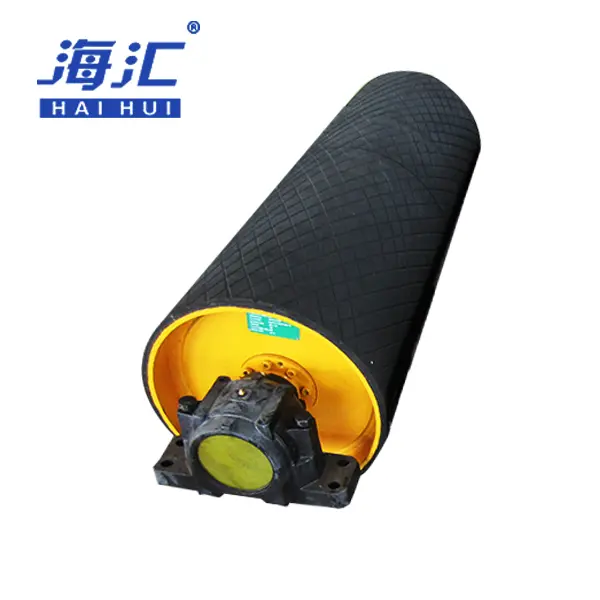
2. DIN 22101:2026 – Lagging Thickness & Adhesion
For rubber‑lagged drive pulleys, lagging thickness and adhesion have become non‑negotiable.
- Material requirements
SBR or ceramic lagging
FRAS (flame‑retardant anti‑static) grade for underground use - Adhesion testing
Minimum peel strength 12 N/mm
Shear strength after 72h humidity soak
European regulators have tightened documentation for mining and bulk‑handling pulleys alike. “Lagging detachment is now a top‑three cause of unscheduled conveyor downtime,” noted the 2026 VDMA mining equipment outlook.
3. OSHA 1910.269 – Lockout/Tagout & Run‑in Protection
Revised OSHA rules place sharp attention on pulley in‑run nip points and maintenance isolation.
- Facility safety
Two‑step LOTO (lockout/tagout) verification
Nip‑point barrier requirement within 2 cm of pulley edge - Operational controls
Zero‑speed switch interlock
Emergency stop pull‑cord overlap
A single missed LOTO step can trigger a full plant shutdown and a heavy fine.
4. FEM 9.851 – Shell Thickness & Weld Integrity
Convex shell designs improve belt tracking, yet regulators now demand strict weld testing.
- Structural checks
Shell thickness tolerance ±0.5 mm
Weld penetration depth ≥75% of plate thickness - Performance sequence
Seal and pressurize weld zone
Dye‑penetrant crack inspection
Record deformation under 150% design torque
Data proves that a continuously welded shell distributes stress more evenly across the pulley face.
5. ATEX 2014/34/EU – Static Dissipation for Hazardous Areas
For drive pulleys in explosive dust or gas zones, static dissipation is no longer optional.
- Earthing path
Shaft‑to‑frame resistance ≤10 Ω
Carbon‑impregnated lagging for conductive path - Marking & documentation
II 2D or II 2G rating stamped on end disc
Full material traceability for every batch
Good quality control keeps sparks off your floor and the mine inspector off your back. That’s the baseline for 2026—and the standard serious buyers now expect.
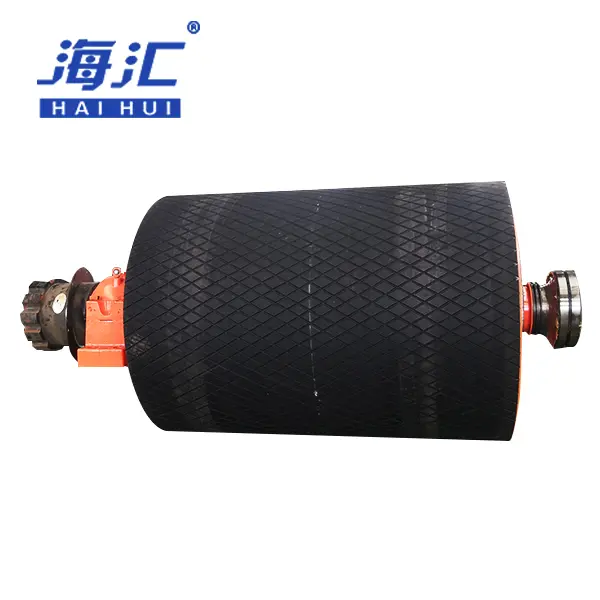
Drive Pulley Dimensions: New Limits Revealed
Drive pulleys are getting a serious rethink. From crown radius tweaks to smarter shell thickness control, the latest updates reshape how pulleys perform on belt lines and under starting torque.
1. Maximum Crown Radius and Face Width Constraints
Updated limit rules focus on belt tracking stability.
- Primary control areas
Crown radius: ensures belt centering
Face width: improves belt edge support - Operational impact
Better fit with auto‐align idlers
Lower edge wear on steel cord belts
Manufacturers like Haihui adjust crown profiles carefully, so drive pulleys run true without rubbing structure.
2. Revised Shell Thickness and Torque Rating Rules
New rules tie shell thickness directly to starting torque behavior.
- Adjusted thickness limits reduce ovaling under load
- Refined weld spec prevents fatigue cracks
- Balanced torque rating keeps coupling alignment
3. New Shaft–Hub Connection Specifications
The shaft‑hub connection now follows stricter interference‑fit rules.
- Tighter H7/s6 tolerance class
- Hydraulic or shrink‑fit assembly only
- Keyless friction connection preferred for high‑torque applications
For drive pulleys, even a minor shift in concentricity can cause belt mistracking.
4. Updated Bearing Housing Standards
The new bearing housing guidelines redefine minimum material strength for cast steel or fabricated housings.
- Layers of control
Structural: MEE cast iron grade
Safety: temperature sensor mounting pad
Sustainability: grease‑saving labyrinth seals
Thinner housings cut weight. Too thin, and alignment drifts. The updated standards strike a balance, protecting bearing life without overbuilding.
How to Retrofit Your Drive Pulley Line – 5 Steps
Upgrading a line that produces drive pulleys is not just a technical tweak; it is a mindset shift. If you fabricate pulleys, these adjustments keep your product competitive and ready for modern belt demands.
Step 1 – Switching to High‑Fatigue Alloy Feedstock
Review current C45 or 42CrMo4 properties. Assess high‑fatigue grades for high‑torque applications, then adjust press settings and recertify welding procedures.
Step 2 – Installing Automated Weld Seam Lines
Outdated manual weld seams limit output. Upgrade to automated welding with real‑time penetration monitoring. Benefits: better repeatability, lower scrap, and cleaner shell finish.
Step 3 – Integrating Dynamic Balancing Checks
Even flawless shells fail if balancing slips. Add automated balancing machines (ISO 1940 G‑6.3) and functional vibration trials.
Step 4 – Adapting Lagging Vulcanization with Conductive Compounds
Switching to conductive lagging is not just swapping rubber. Upgrade to low‑temperature vulcanization, install flame‑proof ovens, and align with ATEX static dissipation rules.
Step 5 – Embedding LOTO and IoT Condition Monitoring
Compliance cannot sit in a binder. Embed digital work orders for lockout/tagout and real‑time torque sensors into daily maintenance routines. Turn paperwork into a normal habit rather than a last‑minute scramble.
When your line supports certified drive pulleys and tight documentation, your conveyors move tons across borders without drama.
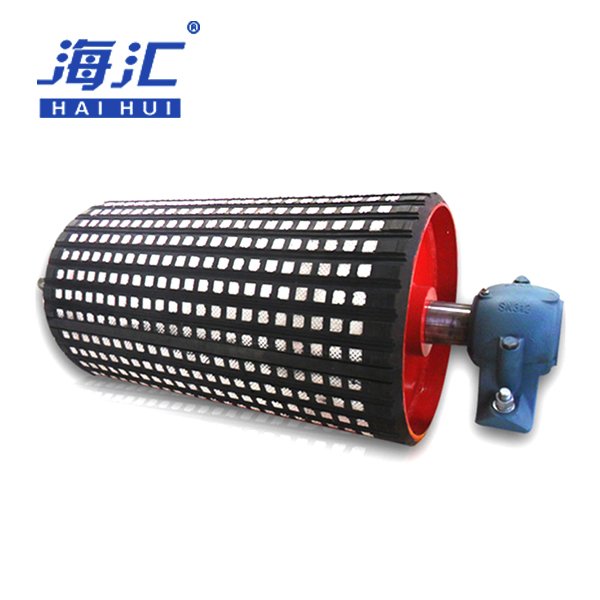
FAQs about Belt Conveyor Drive Pulleys
1. What 2026 safety updates impact belt conveyor drive pulleys for heavy industry?
DIN 22101 (lagging adhesion), ISO 15360 (shaft fatigue), OSHA 1910.269 (nip‑point protection), FEM 9.851 (weld integrity), and ATEX (static dissipation).
2. How do dimensions and structure affect belt tracking and service life?
Crown radius and face width drive belt centering. Shell thickness resists ovaling under starting torque. Shaft‑hub interference fit prevents backlash. Too thin = flex; too thick = unnecessary inertia.
3. What should buyers confirm about lagging and shaft quality before bulk orders?
Lagging peel strength ≥12 N/mm, shaft ultrasonic test report, certified material hardness (HB 220‑280), and documented fatigue‑life cycles per ISO 15360.
References
- ISO 15360:2026 – Steel cord conveyor belts
- DIN 22101:2026 – Continuous conveyors
- OSHA 1910.269 – Electric power generation, transmission, and distribution
- VDMA Mining Equipment Outlook 2026
- FEM 9.851 – Drive pulleys – Shell construction
- Grand View Research – Conveyor Systems Market Report
 English
 العربية
 简体中文
简体中文 Nederlands
 Français
 Deutsch
 Bahasa Indonesia
 Italiano
 日本語
日本語 한국어
한국어 Bahasa Melayu
 Polski
 Português do Brasil
 Русский
 Español
 Türkçe