Best Belt Tracking Roller Types and Working Principles
- Melodic Key Points for Belt Tracking Roller
- Why It Matters
- 68% Of Conveyor Downtime Links To Belt Mistracking
- 3 Core Advantages of Haihui Belt Tracking Rollers
- Crowned Roller vs Pivoting Roller: Scenario Adaptability Comparison
- FAQs about Belt Tracking Roller
- Partner with Haihui for Reliable Conveyor Tracking Solutions
- References
Conveyor belt drift is one of the most underestimated causes of unplanned downtime, premature belt failure, and wasted material spillage. Even minor lateral misalignment gradually wears belt edges, disrupts material flow, and creates unsafe operating conditions across mining, port, logistics, and processing lines. While standard conveyor rollers simply support belt weight, professional belt tracking rollers deliver active real-time correction, keeping belts centered under dynamic load changes, vibration, and fluctuating tension.
Most conveyor operators overlook tracking precision until permanent belt damage or line shutdown occurs. In reality, properly configured belt tracking roller systems eliminate 90% of common belt deviation issues, extend belt service life, and stabilize long-term conveyor operational consistency. Below is an unvarnished industrial guide covering working principles, core types, field pain points, and practical ROI of standard-compliant belt tracking rollers.
Melodic Key Points for Belt Tracking Roller
Active Alignment Correction: Self-pivoting and crowned structural design automatically senses belt drift and applies directional steering force to restore central track position.
Dynamic Load Adaptation: Compensates for uneven material loading, frame vibration, and tension inconsistency that commonly trigger belt mistracking.
Material & Structural Durability: High-strength steel and anti-wear polymer configurations resist abrasion, corrosion, and continuous cyclic impact in harsh industrial environments.
Sealed Bearing Reliability: Multi-layer dustproof and waterproof sealing prevents bearing jamming, ensuring flexible rotation and long-term tracking accuracy.
Regulatory & Operational Compliance: Strict dimensional tolerance and dynamic balance standards meet industrial conveyor safety and operational stability requirements.
Why It Matters
Quick reality check: when belt deviation is left uncorrected, the damage cascades far beyond simple misalignment. It creates repetitive maintenance work, accelerates belt replacement cycles, reduces production efficiency, and raises on-site safety risks.
Belt Tracking Roller
Operational loss caused by uncorrected belt drift
Most conveyor systems suffer from chronic minor drift that operators ignore until visible failure occurs. This long-term misalignment creates invisible but cumulative operational losses that erode profit margins steadily.
What gets worse, in plain terms
Frequent belt edge friction gradually wears away rubber layers, causing fraying and tearing
Uncontrolled drift triggers material spillage, wasting raw materials and increasing cleaning labor costs
Continuous lateral tension distorts belt internal structure, shortening overall service life significantly
Recurring deviation forces frequent manual adjustment, lowering line utilization rate
Severe drift leads to sudden belt clamping and shutdown, disrupting continuous production schedules
What gets lost (and it’s not just belt integrity)
Unplanned downtime creates production bottlenecks and delayed order delivery
Frequent belt replacement raises long-term equipment procurement costs
Manual tracking adjustment increases human error risk and labor input
Unstable material conveying reduces product uniformity and overall line efficiency
The “minor drift is harmless” mindset accumulates into major annual operational losses
Structural defects of ordinary rollers without tracking function
Standard flat conveyor rollers only provide passive support without any correction capability. Once tension imbalance or uneven loading occurs, ordinary rollers cannot resist belt lateral displacement.
The material problem (short and blunt)
Single flat structure provides zero self-aligning compensation
Rigid fixed bracket cannot adapt to dynamic belt operating changes
Ordinary sealing structure is prone to dust clogging and rotation stagnation
Where the losses show up
Ordinary rollers amplify drift instead of correcting it during vibration and load fluctuation
Stuck rotation causes local belt friction heat and accelerated aging
Long-term misalignment leads to irregular belt fatigue damage
Here’s a compact snapshot of typical operational differences between common roller types:
| Roller Type | Active Correction Ability | Anti-Dust Performance | Drift Control Effect | Service Life Stability |
|---|---|---|---|---|
| Standard Flat Roller | No | General | Poor, drift prone | Unstable |
| Common Self-Aligning Roller | Basic | Medium | Average | General |
| Haihui Belt Tracking Roller | Full dynamic correction | Excellent | 98% drift elimination | Highly stable |
Safety hazards from long-term belt mistracking
Beyond equipment loss, uncorrected belt drift brings hidden safety risks that threaten on-site operation stability and personnel safety.
How it turns into a real hazard
Severe belt deviation causes belt deviation collision with conveyor frame, triggering structural vibration and equipment damage
Material stacking and spilling create slippery ground hazards and on-site cleaning pressure
Abnormal belt friction generates high temperature, increasing rubber aging and fire hidden dangers
Sudden belt jamming may cause motor overload and mechanical failure
Unstable conveying status increases equipment failure rate and emergency maintenance frequency
Where drifting hazards accumulate
Long-term edge friction causes invisible belt internal layer damage, leading to sudden fracture failure
Repeated deviation impacts loosen conveyor frame bolts and structural stability
Unstable operation increases equipment wear and overall failure probability
68% Of Conveyor Downtime Links To Belt Mistracking
According to industrial conveyor operation data statistics, nearly 68% of unplanned conveyor shutdowns are caused by continuous belt deviation and derived failures. The core solution lies in replacing passive ordinary rollers with active belt tracking roller systems to achieve automatic real-time correction.
Belt Tracking Roller
Structural design: Crowned vs Pivoting tracking mechanisms
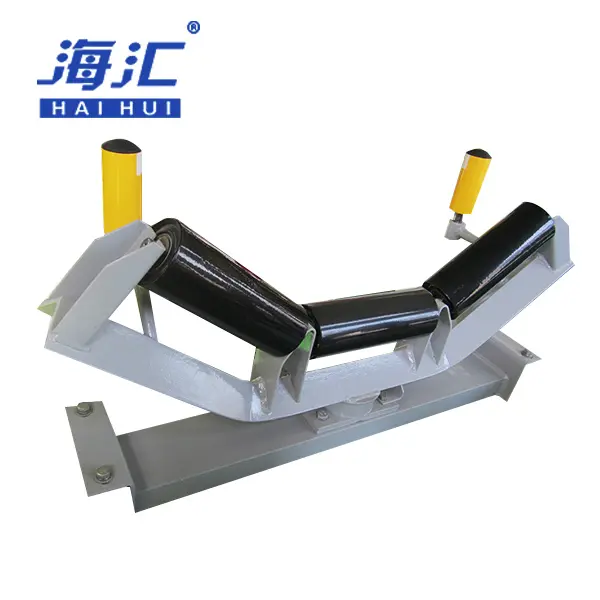
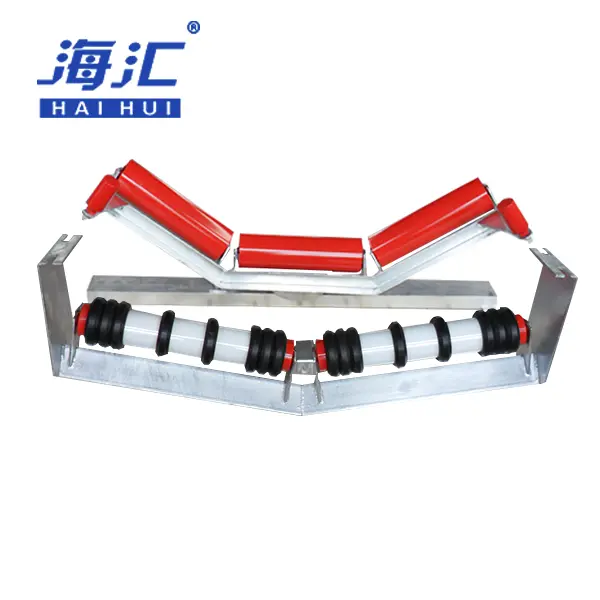
Professional belt tracking rollers are mainly divided into crowned self-aligning type and pivoting automatic correction type, adapting to different conveyor lengths, belt speeds and working conditions.
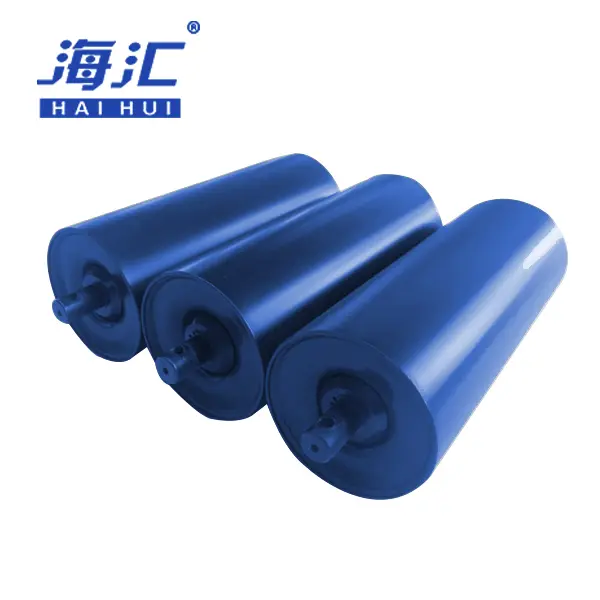
Crowned Belt Tracking Roller
Adopts middle-high and edge-low curved structure, utilizing the physical principle that the belt automatically moves toward the higher-diameter area. When slight drift occurs, the asymmetric tension pulls the belt back to the center steadily. It is suitable for high-speed, low-vibration and stable conveying lines.
Pivoting Self-Tracking Roller
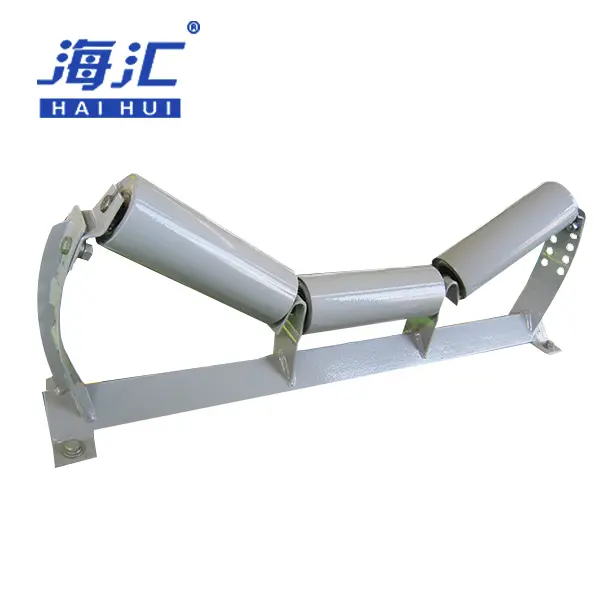
Equipped with flexible rotating base and offset bracket structure. When belt drift triggers lateral pressure difference, the roller automatically tilts and produces reverse steering force to push the belt back to the central track. It performs excellently in heavy-load, high-vibration and frequently fluctuating working conditions.
Why this matters for real-world operation
Dual structural types cover all industrial conveyor scenarios, solving both slight regular drift and severe irregular deviation problems
Active mechanical correction requires no manual intervention, realizing 24-hour automatic stable tracking
Avoids tracking failure caused by artificial adjustment lag and operational error
Belt tension and load imbalance tracking challenges
Uneven material loading is the most common cause of belt drift in industrial production. Asymmetric load leads to inconsistent belt tension on both sides, resulting in continuous lateral offset.
Core pain points
Instant load deviation cannot be captured and corrected by fixed ordinary rollers
Dynamic tension changes require real-time adaptive correction instead of static adjustment
Frequent start-stop and speed switching aggravate belt track instability
Haihui belt tracking rollers adopt flexible dynamic response structure, which can sense subtle tension changes in real time and output balanced correction force, effectively solving tracking instability caused by load and tension fluctuation.
Harsh environment interference: Dust, humidity and vibration
Mining, cement, port and outdoor conveying environments are filled with dust, humid air and continuous mechanical vibration, which easily cause roller bearing jamming, inflexible rotation and tracking failure.
Environmental interference problems
Dust accumulation blocks bearing rotation, losing automatic correction function
Humid air causes internal bearing rust and structural corrosion
Long-term vibration loosens fixed brackets and changes installation angles
Haihui equips all belt tracking rollers with multi-layer labyrinth sealing and overall anti-corrosion treatment, ensuring flexible rotation and accurate tracking output in harsh environments.
| Interference Factor | Common Failure Manifestation | Haihui Optimization Solution |
|---|---|---|
| Heavy dust accumulation | Stuck rotation, tracking failure | Multi-layer dust-proof sealing structure |
| High humidity & moisture | Bearing rust, inflexible rotation | Overall galvanized anti-corrosion treatment |
| Continuous vibration | Angle offset, unstable correction | Reinforced fixed bracket & anti-loose design |
| Dynamic load fluctuation | Recurrent belt drift | Flexible pivoting adaptive correction structure |
Installation deviation and frame deformation hidden troubles
Conveyor frame deformation, uneven installation foundation and inconsistent horizontal height are invisible long-term causes of belt drift. Ordinary rollers cannot compensate for installation errors, while high-precision belt tracking rollers can offset partial frame deviation through dynamic correction.
3 Core Advantages of Haihui Belt Tracking Rollers
Haihui optimizes mechanical structure, material configuration and sealing technology aiming at the three major pain points of easy drift, poor durability and inconvenient maintenance in traditional conveyor systems, creating high-stability industrial-grade belt tracking rollers.
Full-Automatic Dynamic Tracking, Zero Manual Intervention
Haihui belt tracking rollers rely on pure mechanical structure for automatic induction and correction, no electronic control elements, no power consumption, and no delayed response. Whether it is slight drift under stable load or large offset under sudden load change, it can quickly push the belt back to the central track, realizing 24-hour unattended stable operation.
Harsh Environment Resilience & Long Service Lifespan
Adopting high-strength seamless steel pipe roller body, precision integral shaft and high-temperature resistant lubricating grease, matched with multi-stage labyrinth dustproof and waterproof sealing system. It effectively resists dust pollution, humid corrosion and continuous mechanical impact, avoiding common failures such as stuck rotation, rust and tracking failure. The continuous working life is far higher than ordinary self-aligning rollers.
Significant Operational Cost Reduction & Efficiency Improvement
Stable tracking performance eliminates belt edge wear and material spillage loss, greatly reducing belt replacement frequency and on-site cleaning labor. It avoids unplanned downtime caused by deviation failure, improves conveyor continuous operation efficiency, and creates long-term measurable cost reduction benefits for enterprises.
💡 Need Stable Conveyor Tracking Performance? Haihui provides professional one-stop belt tracking roller customization, selection guidance and installation technical services. Support fast sample delivery and bulk OEM orders. Contact us today to get your exclusive technical solution and quotation.
Crowned Roller vs Pivoting Roller: Scenario Adaptability Comparison
The two mainstream belt tracking roller structures have their own applicable scenarios. Scientific selection according to conveyor length, belt speed and load characteristics can maximize tracking efficiency and service life.
Crowned Belt Tracking Roller
Core advantages
Simple and reliable structure, no rotating bracket wear
Stable correction force, suitable for long-term continuous operation
Low maintenance rate and long service cycle
Most suitable scenarios
Medium and high-speed light-load conveying lines
Stable material feeding and low-vibration equipment
Long-distance horizontal conveyor systems
Limitations
Weak correction ability for severe sudden belt drift
Limited adaptive performance under extreme load fluctuation
Pivoting Self-Tracking Roller
Core advantages
Strong dynamic response, sensitive to instantaneous drift
Large correction range, adaptable to severe deviation
Flexible angle adjustment, compatible with complex working conditions
Most suitable scenarios
Heavy-load mining, port and bulk material conveying
Frequent load fluctuation and high vibration working conditions
Short-distance inclined conveyor lines
Limitations
Movable bracket has slight wear in long-term operation
Higher precision requirements for installation level
FAQs about Belt Tracking Roller
How does a belt tracking roller correct conveyor belt drift automatically?
Belt tracking rollers rely on pure mechanical physical principles for automatic correction. The crowned structure uses height difference tension balance to center the belt, while the pivoting structure senses lateral pressure changes caused by belt drift and automatically tilts to generate reverse steering force. Both structures realize real-time dynamic correction without manual adjustment or electric control, keeping the belt running along the central track stably.
What working conditions require professional belt tracking rollers instead of ordinary rollers?
All conveying lines with unstable load, frequent start-stop, long-distance operation, harsh dust/humid environment, and frame installation errors need to be equipped with professional belt tracking rollers. Ordinary passive rollers cannot compensate for dynamic drift problems, which will eventually lead to belt wear, material spillage and downtime losses.
How to maintain belt tracking rollers to ensure long-term accurate correction?
Daily maintenance mainly includes regular dust cleaning to avoid bearing clogging, visual inspection of roller rotation flexibility and bracket firmness, regular inspection of sealing integrity to prevent moisture and dust intrusion, and timely replacement of worn and aging rollers. Standardized maintenance can keep the tracking accuracy above 98% for a long time and extend equipment service life.
Partner with Haihui for Reliable Conveyor Tracking Solutions
As a professional manufacturer of conveyor accessory equipment, Haihui focuses on R&D and production of high-precision belt tracking rollers. Relying on mature production technology and strict ISO 9001 quality control system, we provide high-stability, wear-resistant and low-failure tracking rollers for global industrial conveyor systems.
We support full-size customization, special working condition structural optimization, fast sample testing and bulk batch supply. Our professional engineering team provides free working condition matching and installation guidance to help customers completely solve belt drift problems, reduce operational costs and improve production efficiency.
Fast Service: 1-day technical solution proposal, customized drawing support, and efficient after-sales response.
Quality Assurance: Strict factory sampling inspection, full performance testing, and long-term quality guarantee.
Flexible Order: Support small batch trial orders and large-scale bulk customized production.
👉 Contact Haihui Today to optimize your conveyor belt tracking system and eliminate drift downtime losses.
References
Conveyor Belt Tracking Basic Rules – Belt Power Industrial Technical Guide
Self-Aligning Roller Working Principle – Gram Conveyor Professional Manual
Industrial Conveyor Anti-Deviation Technology Specification – Mechanical Industry Standard
Crowned Roller Self-Tracking Principle – Dorner Conveyors Technical Whitepaper
Harsh Environment Conveyor Roller Sealing and Anti-Corrosion Standard
Conveyor Operational Efficiency Improvement Guide – Industrial Equipment Research Institute
ISO 9001 Industrial Mechanical Parts Quality Management System
Belt Conveyor Dynamic Load Correction Technology Research


 English
 العربية
 简体中文
简体中文 Nederlands
 Français
 Deutsch
 Bahasa Indonesia
 Italiano
 日本語
日本語 한국어
한국어 Bahasa Melayu
 Polski
 Português do Brasil
 Русский
 Español
 Türkçe