
Snub Pulley Belt Conveyor Guide:Positioning, Lagging, and Maintenance
- Quick Insights for Snub Pulley Mastery
- Why Snub Pulleys Matter for Belt Conveyors
- How Snub Pulleys Work
- Key Components and Their Roles
- Benefits of Properly Designed Snub Pulleys
- Critical Design Parameters
- 4 Key Snub Pulley Applications
- Installation and Commissioning
- Maintenance and Service Life
- Common Problems and Solutions
- Quality and Testing
- What Makes a Snub Pulley Suitable for Conveyors?
- Why Choose Haihui Snub Pulleys?
- 🚀 Strengthen Your Conveyor Drive with Haihui
- FAQs about Snub Pulleys
- References
Snub Pulley on Belt Conveyors: The Small Component with Big Impact
A snub pulley looks like just another roller on a belt conveyor. But its position and angle determine belt grip and tracking stability. One poorly placed snub pulley leads to belt slip, uneven wear, and unplanned stops. Haihui engineers in 2025 emphasize correct positioning, lagging selection, and proper wrap angle as the backbone of reliable conveyor operation.
Quick Insights for Snub Pulley Mastery
- Wrap angle control: The snub pulley increases the belt’s wrap angle around the drive pulley, improving grip without increasing drive pulley size.
- Lagging selection: Rubber or ceramic lagging on the snub pulley provides additional friction where needed.
- Positioning accuracy: The snub pulley must be precisely placed to achieve the desired wrap angle without causing belt misalignment.
- Belt tracking: Proper snub pulley alignment supports smooth belt tracking across the entire conveyor.
- Maintenance essentials: Regular lagging inspection and bearing checks prevent unexpected failures.
Why Snub Pulleys Matter for Belt Conveyors
The snub pulley is a secondary pulley positioned near the drive pulley. Its primary job is to increase the belt’s contact angle—or wrap angle—around the drive pulley. A larger wrap angle means more friction between the belt and drive pulley, which reduces the risk of belt slip. This simple design trick allows smaller drive pulleys to handle higher loads without losing grip.
How Snub Pulleys Work
The snub pulley is placed along the belt path, usually on the return side just before or after the drive pulley. It redirects the belt slightly, forcing a greater portion of the belt to contact the drive pulley surface. This increased contact area boosts frictional force without requiring a larger drive pulley. The snub pulley also helps maintain proper belt tension and supports tracking stability.
Key Components and Their Roles
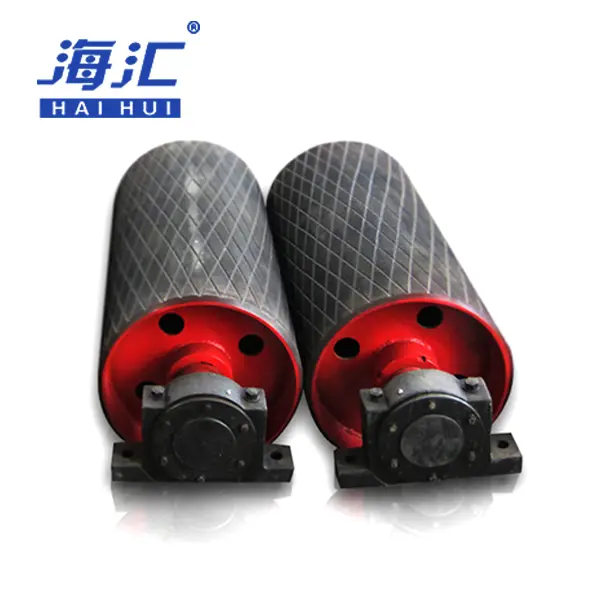
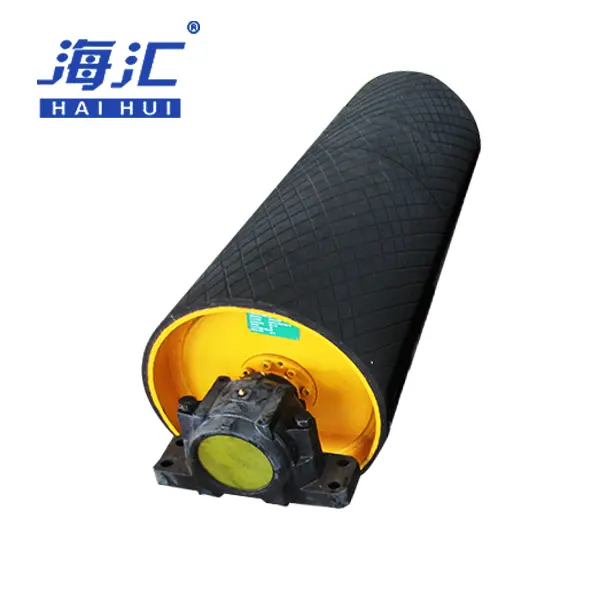
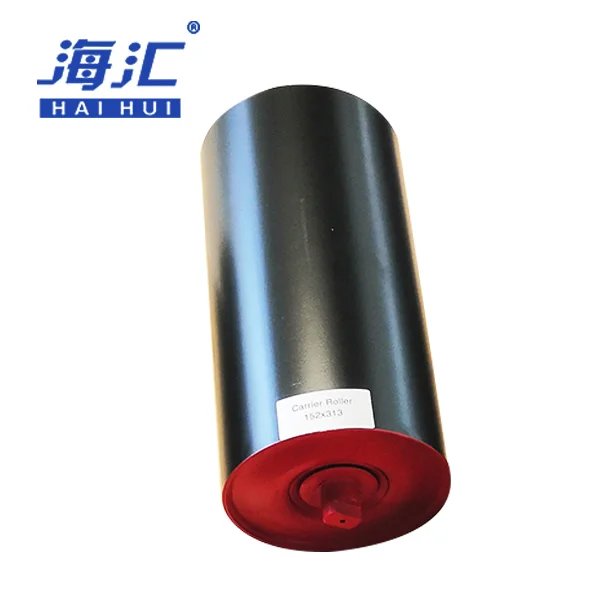
Shell: The cylindrical body of the snub pulley must be concentric to prevent belt tracking issues. Heavy-duty steel shells handle belt tension and impact forces.
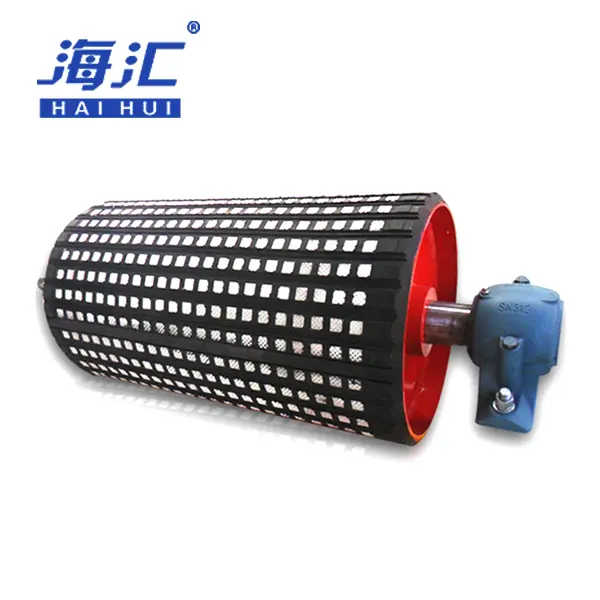
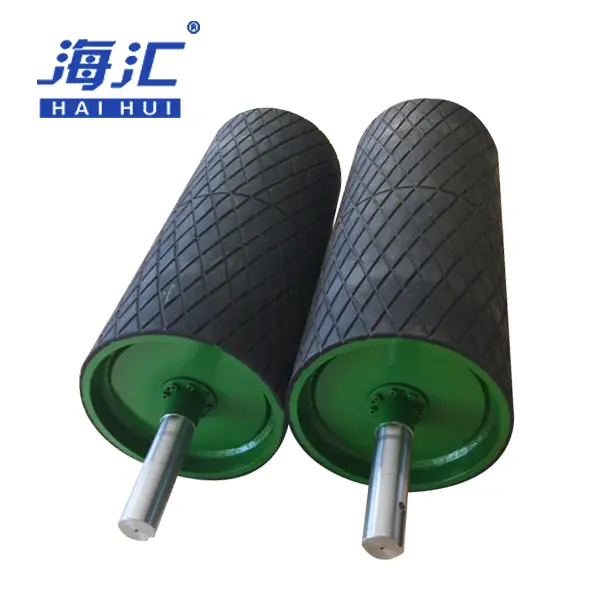
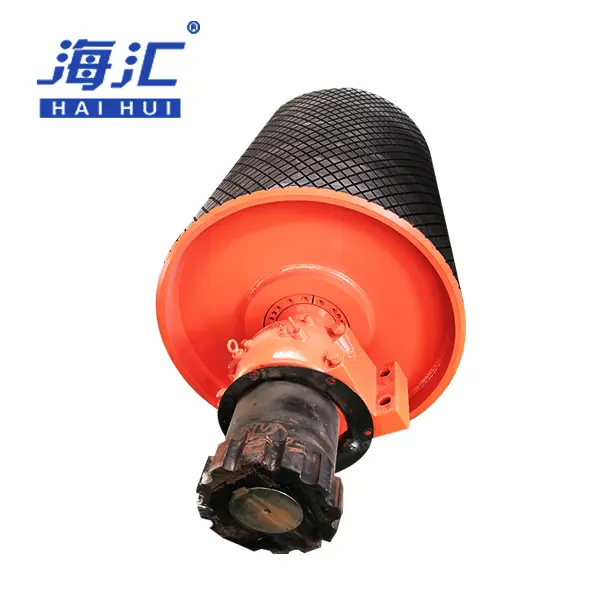
Lagging: Rubber lagging on the snub pulley increases friction and protects the shell from wear. Ceramic lagging is available for high-tension or abrasive applications.
Shaft: The shaft supports the pulley and handles radial loads. It must be sized to prevent deflection under load.
Bearings: Sealed spherical roller bearings handle radial and axial loads in dusty environments.
Positioning bracket: The bracket secures the snub pulley at the correct angle and position. Adjustability is often built in to allow fine-tuning during installation.
Benefits of Properly Designed Snub Pulleys
- Improved belt grip: Increased wrap angle reduces slip, especially during starting and stopping.
- Smaller drive pulleys: Snub pulleys allow the use of smaller drive pulleys, saving space and cost.
- Better tracking support: Correctly positioned snub pulleys support belt tracking and reduce edge wear.
- Longer belt life: Reduced slip means less belt wear and longer service intervals.
Critical Design Parameters
| Parameter | Typical Range | Impact |
|---|---|---|
| Wrap angle | 180° to 220° | Determines friction force |
| Shell diameter | 250 mm to 800 mm | Matches belt speed and tension |
| Face width | 500 mm to 2400 mm | Aligns with belt width |
| Lagging thickness | 6 mm to 15 mm | Affects grip and wear life |
| Position accuracy | ± 2 mm | Prevents misalignment |
| Bearing life (L10) | 30,000 to 80,000 hours | Defines replacement interval |
4 Key Snub Pulley Applications
Standard Snub Pulley
The standard snub pulley is positioned adjacent to the drive pulley to increase wrap angle. It is typically installed on the return side and uses rubber lagging for improved grip. This configuration suits most general conveyor applications.
Ceramic Lagged Snub Pulley
Ceramic lagging provides maximum grip and wear resistance for high-tension or abrasive applications. Ceramic snub pulleys are widely used in mining, cement, and heavy industry where belt slip must be eliminated.
Wing Snub Pulley
Wing pulleys feature metal wings instead of a solid shell. This design is used in sticky material applications where material buildup on the pulley surface would affect belt tracking.
Adjustable Snub Pulley
Adjustable snub pulleys allow fine-tuning of the wrap angle during installation. This design is useful for conveyors where belt tension varies or for retrofitting existing systems.
Installation and Commissioning
Snub pulley positioning is critical. The pulley must be placed at the correct angle and distance from the drive pulley to achieve the target wrap angle. The pulley must also be perpendicular to the belt centerline and level across its width. Common mistakes include incorrect wrap angle, misalignment, and using the wrong lagging type.
Maintenance and Service Life
Snub pulleys are low-maintenance but require regular inspection.
| Maintenance Item | Frequency | Action |
|---|---|---|
| Lagging inspection | Monthly | Check for wear, damage, or separation |
| Bearing temperature | Weekly | Monitor with thermal imaging |
| Shaft alignment | Semi-annual | Verify with dial indicator |
| Bearing lubrication | Quarterly | Re-grease per schedule |
| Wrap angle check | Annual | Verify pulley position |
Common Problems and Solutions
Belt slip:
- Causes: Insufficient wrap angle, worn lagging, low belt tension.
- Solutions: Adjust snub pulley position, replace lagging, increase belt tension.
Tracking issues:
- Causes: Misaligned pulley, uneven belt tension, worn lagging.
- Solutions: Realign pulley, correct tension, replace lagging.
Lagging wear:
- Causes: Abrasive material, improper lagging selection, belt slip.
- Solutions: Replace with appropriate lagging, improve belt grip.
Bearing failure:
- Causes: Overload, misalignment, poor sealing.
- Solutions: Realign shaft, upgrade bearings, improve sealing.
Quality and Testing
Haihui snub pulleys undergo rigorous testing before shipment. Each unit is tested for:
- Shell concentricity and roundness
- Shaft straightness
- Lagging adhesion strength
- Bearing temperature under load
- Dynamic balancing to G-16 standard
What Makes a Snub Pulley Suitable for Conveyors?
- Positioned for optimal wrap angle adjustment
- Shell concentricity within 0.5 mm TIR
- Lagging selected for material and environment
- Sealed bearings with adequate L10 life
- Adjustable mounting bracket for fine-tuning
Why Choose Haihui Snub Pulleys?
- Experience: Haihui has been manufacturing conveyor pulleys for over 20 years.
- Quality: All pulleys are designed and manufactured to CEMA and ISO standards.
- Customization: Haihui offers custom shell diameters, face widths, and lagging options.
- Service: Haihui provides technical support, on-site commissioning, and after-sales service.
🚀 Strengthen Your Conveyor Drive with Haihui
Stop dealing with belt slip and tracking issues. Haihui snub pulleys offer reliable grip, rugged construction, and easy installation. Contact us today for a customized quotation and fast delivery.
FAQs about Snub Pulleys
1. What is a snub pulley on a belt conveyor?
A snub pulley is a secondary pulley positioned near the drive pulley. It increases the belt’s wrap angle around the drive pulley, improving grip and reducing slip.
2. Where is the snub pulley located?
The snub pulley is typically located on the return side, either just before or just after the drive pulley. Its exact position depends on the conveyor layout.
3. Does the snub pulley need lagging?
Yes. Rubber or ceramic lagging on the snub pulley increases friction and protects the shell from wear. Lagging is especially important when the snub pulley is used to increase wrap angle.
4. How do I know if my snub pulley is positioned correctly?
Correct positioning is confirmed by measuring the wrap angle around the drive pulley. Typical wrap angles range from 180° to 220°. If the belt slips during starting or stopping, the snub pulley may need adjustment.
5. What is the typical service life of a snub pulley?
With regular maintenance, a snub pulley can operate for 10 to 15 years. The lagging typically needs replacement every 2 to 5 years, depending on material abrasiveness and operating conditions.
References
- CEMA – Belt conveyor design standards
- ISO 5048 – Continuous mechanical handling equipment
- DIN 22101 – Belt conveyors – Calculation of operating power and tensile forces
- AGMA 2001 – Gear rating standards
- Haihui internal test reports and field data (2020-2025)

 English
 العربية
 简体中文
简体中文 Nederlands
 Français
 Deutsch
 Bahasa Indonesia
 Italiano
 日本語
日本語 한국어
한국어 Bahasa Melayu
 Polski
 Português do Brasil
 Русский
 Español
 Türkçe