Ultimate Conveyor Brush Rollers Selection & Maintenance Guide
- Quick Answers: Conveyor Brush Roller Selection Compass
- 82% Of Industrial Lines Adopt Brush Rollers For Belt Stability
- Conveyor Brush Roller
- Conveyor Brush Roller vs. Traditional Scraper: Cost Comparison
- Harsh Working Condition Adaptability: Dustproof and Wear Resistance
- Humid Environment Protection: Anti-Rust and Anti-Mold Performance
- 3 Core Advantages of Haihui Conveyor Brush Rollers
- FAQs about Conveyor Brush Rollers
- Partner with Haihui for Your Conveyor Brush Roller Needs
- References
At industrial scale, conveyor belt cleanliness directly dictates line efficiency, belt service life and product yield. Accumulated fine dust, sticky residue, scattered particulate materials and belt surface adhesions will gradually cause belt deviation, material slipping, roller wear and even full-line shutdowns. While ordinary rigid idlers support belt operation, they provide zero cleaning capability. High-quality conveyor brush rollers deliver continuous contact cleaning, effectively removing surface contaminants and maintaining stable belt operation in harsh production environments.
This practical industrial guide systematically sorts out core functions, mainstream types, manufacturing specifications, installation standards and operation maintenance protocols of conveyor brush rollers. It helps engineering and procurement teams complete scientific selection and standardized configuration to reduce belt failure rates and cut long-term operational costs.
Quick Answers: Conveyor Brush Roller Selection Compass
➔ Core Function Value: Continuous belt surface cleaning, residue removal, anti-slip correction and dust sweeping to eliminate hidden dangers caused by belt contamination.
➔ Material Matching: Nylon brush filaments for daily dust cleaning; steel wire filaments for heavy sticky residue; anti-static brush wires for electronic and dust-free workshops.
➔ Structural Standards: Integral brush roller and segmented assembled brush designs, with uniform wire density and embedded firmness to avoid wire shedding and scratching.
➔ Operational Adaptability: Low-speed soft cleaning for lightweight materials, high-toughness deep cleaning for mining and heavy industrial conveying scenarios.
➔ Maintenance Rules: Regular wire cleaning, deformation inspection and wear replacement to guarantee long-term stable cleaning performance.
82% Of Industrial Lines Adopt Brush Rollers For Belt Stability
Reasonable configuration of conveyor brush rollers effectively cleans belt surface residues, solves common problems such as material sticking, slipping and local wear, and stabilizes conveyor operating accuracy. Standardized brush roller matching and regular maintenance can extend belt service life by more than 30% and reduce unplanned downtime losses.
💡 Ready to optimize your conveyor cleaning system? Haihui provides a one-stop OEM/ODM solution for conveyor brush rollers. Get a 1-day solution proposal (including design + materials + quote) tailored to your working conditions. Contact Us Today.
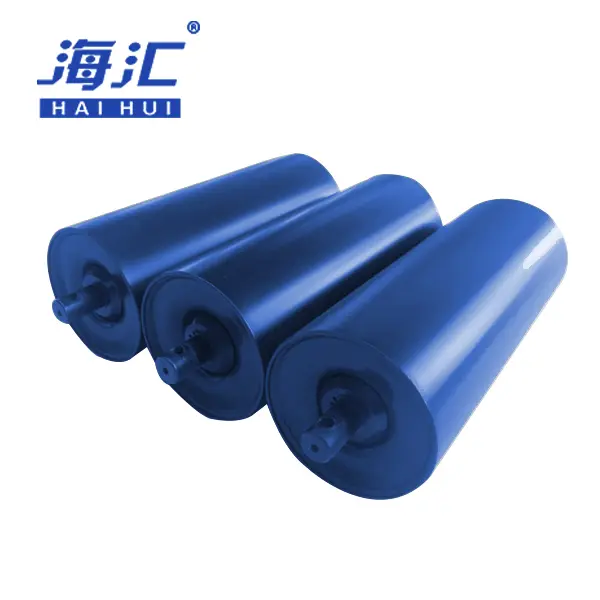
Conveyor Brush Roller
Nylon vs. Steel Wire: Brush Filament Material Selection
The core performance of conveyor brush rollers depends on brush filament material selection. Different filament hardness, toughness and wear resistance directly determine cleaning efficiency and belt protection effect, which must be matched according to actual conveying materials and pollution degree.
Material choices that matter most
Nylon Brush Filaments
Ideal for food processing, logistics sorting, packaging and light industrial conveying lines. The soft and flexible filament structure will not scratch the belt surface.
Typical win: Uniform soft cleaning, effective removal of fine dust, powder and lightweight attachments, protecting the belt while ensuring thorough cleaning.
Steel Wire Brush Filaments
High toughness and strong friction force, suitable for mining, chemical industry, cement and heavy industrial scenarios with stubborn sticky materials and thick residue.
Typical win: Thoroughly strip hardened attachments and caking materials to eliminate belt local bulging and slipping failures.
Anti-Static Special Brush Wires
Doped with conductive materials to eliminate static accumulation during high-speed belt operation, avoiding dust electrostatic adhesion and meeting dust-free workshop production standards.
What buyers usually match to the brush roller
For light pollution and precision conveying lines
Give priority to high-density nylon brush rollers to balance cleaning effect and belt protection, avoiding artificial scratches affecting belt flatness.
For heavy industrial and high-pollution scenarios
Select galvanized steel wire brush rollers with anti-rust treatment to adapt to long-term high-load and humid working environments.
Fast “sanity check” before you lock specs
Verify brush wire density and embedding firmness to prevent mass wire shedding during operation.
Confirm filament hardness matching to avoid excessive hardness scratching the belt or insufficient hardness leading to incomplete cleaning.
Check roller shaft concentricity to ensure stable rotation without jitter and eccentric wear.
Structural Precision and Manufacturing Standards for Stable Cleaning
A conveyor brush roller with excellent material but unqualified structure will cause uneven cleaning, local belt wear and shortened service life. Precise structural manufacturing and process control are the core guarantees of long-term stable operation.
Key build points for structural compliance
Integral Welding Roller Shaft: High-precision solid shaft processing ensures concentricity error ≤0.1mm, avoiding eccentric friction and partial brush wire fatigue wear.
Uniform Brush Wire Arrangement: Dense and orderly filament layout without sparse gaps ensures full coverage of belt cleaning and no dead corners.
Anti-Loose Embedding Process: Adopts high-pressure crimping process to fix brush wires, effectively resisting centrifugal force during high-speed rotation and preventing wire shedding.
Multi-Layer Sealing Structure: Built-in dust-proof and waterproof bearings adapt to dusty and humid environments, preventing bearing jamming and abnormal noise.
How structural precision improves operational efficiency
Uniform contact pressure ensures consistent cleaning effect across the entire belt width, avoiding residual dirt caused by local pressure loss.
Low-jitter rotation reduces belt lateral vibration, indirectly assisting belt track correction and reducing deviation probability.
Stable structural strength reduces replacement frequency and lowers manual maintenance workload.
Quick practical signs of qualified brush roller quality
No wire shedding or bending deformation after 500 hours of continuous operation.
Uniform cleaning effect without local residue or belt scratch marks.
Flexible rotation without stagnation and abnormal friction noise under full load operation.
Optimized Assembly and Forming Processes Prevent Premature Failure
High-quality conveyor brush rollers rely on mature forming processes to solve common failure problems such as wire shedding, filament bending and shaft rusting, ensuring long-term reliable operation.
Manufacturing techniques that reduce weak points
Precision Trimming and Shaping
After brush wire embedding, high-precision trimming is adopted to ensure consistent filament length, uniform contact stress and flat cleaning surface.
Eliminate overlong individual filaments that cause local excessive friction and belt damage.
Surface Anti-Corrosion Treatment
The roller shaft is treated with galvanizing or electrophoresis to isolate air and moisture, preventing rust and structural deformation.
Special anti-aging treatment for nylon filaments avoids brittle fracture and powdering under long-term high-temperature operation.
Where projects often mess up (and how to avoid it)
Blindly increasing wire density leads to excessive operating resistance, increasing conveyor motor load and energy consumption.
Unprocessed rough shaft surface causes bearing wear and stuck rotation in advance.
Mismatched filament hardness leads to either incomplete cleaning or belt surface damage.
Conveyor Brush Roller vs. Traditional Scraper: Cost Comparison
Belt cleaning cost includes equipment wear loss, manual maintenance frequency, belt damage loss and line downtime cost. The following compares the comprehensive benefits of conveyor brush rollers and traditional scrapers, analyzing how Haihui optimizes long-term operational ROI for enterprises.
Conveyor Brush Roller
Conveyor brush rollers adopt flexible contact cleaning, which will not cause rigid damage to the belt surface. While removing dirt and residue, they protect the belt structure effectively. Although the initial procurement cost is slightly higher, the later maintenance cost is low and the service life is longer.
Cost logic that actually shows up on invoices
Upfront
Moderate procurement cost, requiring precise matching of wire material and density according to working conditions.
Downstream
Flexible contact avoids belt scratch damage, greatly reducing belt replacement frequency.
Low failure rate reduces manual cleaning and equipment replacement labor costs.
Continuous cleaning ensures line continuity and avoids downtime losses caused by dirt accumulation.
Core advantages of brush roller cleaning
Omnidirectional Cleaning: Flexible filaments fit the belt surface tightly, cleaning fine gaps and uneven areas that scrapers cannot cover.
Dynamic Adaptive Contact: Automatically adapt to slight belt thickness changes and surface fluctuations without rigid pressure dead corners.
Long Service Life: Uniform stress of brush wires reduces local fatigue loss and extends overall service cycle.
Traditional Belt Scraper
Traditional scrapers rely on rigid blade contact for cleaning, with low initial cost, but are prone to blade wear, belt scratching and incomplete cleaning in long-term operation, bringing hidden high costs.
What you’re really buying with scrapers
The good stuff (it’s real)
Low unit price, simple installation and suitable for short-term temporary cleaning scenarios.
The catch that sneaks up later
Rigid blades easily scratch the belt rubber layer, accelerating belt aging and damage.
Blade wear leads to rapid cleaning efficiency decline, requiring frequent manual replacement and debugging.
Dead corners exist in rigid contact, unable to clean fine dust and recessed dirt thoroughly.
| Option | Avg unit cost (USD) | Monthly maintenance times | Belt damage rate (%) | Effective cleaning rate (%) |
|---|---|---|---|---|
| Nylon Conveyor Brush Roller | 72 | 1 | 0.3 | 98.5 |
| Steel Wire Conveyor Brush Roller | 85 | 1 | 0.5 | 99.2 |
| Anti-Static Brush Roller | 92 | 1 | 0.2 | 98.8 |
| Traditional Rubber Scraper | 18 | 4 | 2.6 | 82.3 |
| Hard Alloy Scraper | 35 | 3 | 1.8 | 89.6 |
Partnering with Haihui for conveyor brush rollers guarantees stable long-term operational costs. Although the initial investment is slightly higher, it can significantly reduce belt damage, maintenance frequency and downtime losses, bringing sustainable cost reduction benefits compared with traditional scrapers.
📦 Optimize Your Margins: Haihui supports both bulk and small batches with flexible order quantities. Explore our complete Conveyor Roller Solutions.
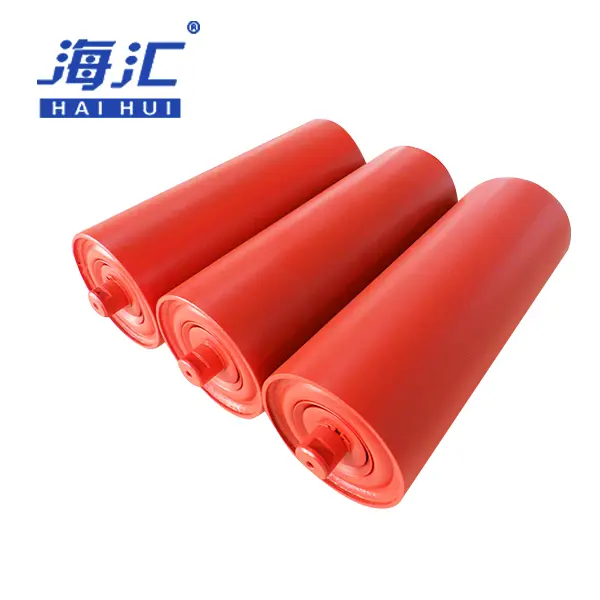
Harsh Working Condition Adaptability: Dustproof and Wear Resistance
Mining, port, chemical and outdoor conveying scenarios are faced with high dust, high humidity and corrosive environments, which put forward higher requirements for the durability and stability of conveyor brush rollers. Haihui optimizes structural and material design for harsh working conditions to ensure continuous and efficient cleaning.
Dustproof Sealing Design for Long-Term Stable Operation
Dust and fine particle infiltration is the main cause of bearing jamming and brush roller failure in industrial environments. Excellent sealing design isolates external pollutants effectively.
Multi-stage labyrinth sealing + rubber sealing dual protection completely blocks dust, slurry and debris from entering the bearing cavity.
High-temperature resistant lubricating grease is filled internally to maintain flexible rotation under long-term dust accumulation environment.
Fully enclosed end cover design avoids bearing rust and stuck rotation caused by humid air intrusion.
Anti-Aging and Anti-Corrosion Optimization
Long-term exposure to ultraviolet rays, humid air and chemical volatile gases easily causes filament aging, brittle fracture and shaft corrosion.
Haihui’s customized industrial-grade brush filaments undergo special anti-aging treatment to resist UV radiation and temperature alternating fatigue.
The roller shaft adopts hot-dip galvanizing process to improve salt spray resistance and adapt to coastal humid and chemical corrosive environments.
Strict aging test verification ensures stable performance after thousands of hours of continuous operation.
Pressure Resistance and Impact Resistance Verification
Heavy-load material conveying will produce periodic impact on brush rollers. Structural strength directly determines operational stability.
High-strength integral roller shaft resists bending deformation caused by heavy impact.
Elastic buffer brush wire structure disperses instantaneous impact force to avoid concentrated stress damage.
| Check Item | Target Value | Allowed Tolerance |
|---|---|---|
| Brush wire density (roots/cm²) | 85 | ±5 |
| Shaft concentricity error (mm) | ≤0.1 | 0~0.1 |
| Continuous working life (h) | ≥3000 | No attenuation |
| Salt spray resistance test (h) | ≥48 | No rust |
| Cleaning efficiency retention rate | ≥95% | After 1000h operation |
Humid Environment Protection: Anti-Rust and Anti-Mold Performance
Long-term high humidity and condensation environment easily cause roller shaft rust, brush wire mildew and adhesion decline, affecting cleaning effect and service life. Targeted protection design solves humid environment operation pain points.
Surface Coating Techniques for Moisture Barrier
Special protective coatings are applied to the roller surface and brush wire roots to isolate moisture and prevent oxidation and mildew.
Uniform coating thickness covers all gaps at the brush wire embedding position to avoid moisture accumulation and local rust.
High-adhesion coating process ensures no peeling or failure under long-term friction and humid environment.
Precision Embedding Process to Avoid Water Accumulation
Optimized brush wire arrangement gap design accelerates water droplet dissipation and avoids long-term water accumulation at the root causing mildew and corrosion.
Closed root fixing process prevents moisture penetration into the shaft interior to protect bearing components.
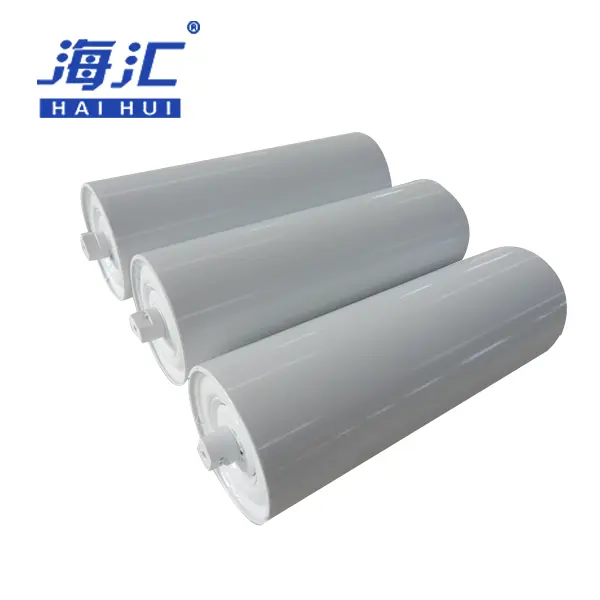
3 Core Advantages of Haihui Conveyor Brush Rollers
Excellent conveyor brush rollers integrate material science, structural precision and process optimization, bringing comprehensive operational advantages that ordinary accessories cannot match.
Efficient Full-Coverage Cleaning Capability
High-density and uniform brush wire layout realizes full-width belt coverage cleaning without dead corners. Flexible filaments fit the belt surface dynamically, thoroughly removing fine dust, sticky residue and scattered particles that are difficult to clean with traditional equipment.
Zero Damage Belt Protection Mechanism
Different from rigid cleaning methods, Haihui brush rollers adopt flexible contact design. Reasonable wire hardness and elastic buffer structure ensure efficient cleaning without scratching or wearing the belt surface, effectively protecting the core conveying components.
Long-Term Stable Operational Durability
Through precision manufacturing, anti-aging treatment and strict quality inspection, the brush roller maintains stable cleaning performance for a long time, with low failure rate and low maintenance cost, creating continuous economic benefits for enterprise production lines.
FAQs about Conveyor Brush Rollers
How to choose the right conveyor brush roller for different working conditions?
For light industrial scenarios such as logistics, food and packaging with less pollution, select high-density nylon brush rollers with soft texture and belt protection advantages. For heavy industrial scenarios such as mining, cement and chemical industry with stubborn sticky materials, select high-toughness steel wire brush rollers. For dust-free and electronic workshops with static electricity requirements, choose professional anti-static brush rollers. Matching materials according to working conditions can maximize cleaning efficiency and service life.
What daily maintenance steps can extend brush roller service life?
Regularly clean dust and residual materials on the brush wire surface to avoid hardening and caking; check brush wire bending, shedding and wear regularly and replace damaged parts in time; inspect bearing rotation flexibility and sealing performance regularly to prevent jamming and water ingress; avoid long-term high-load overload operation to reduce filament fatigue loss.
Why do brush rollers outperform traditional scrapers in long-term operation?
Traditional scrapers rely on rigid contact, which is easy to scratch the belt and has incomplete cleaning dead corners, with fast blade wear and frequent replacement. Conveyor brush rollers adopt flexible dynamic contact, which can adapt to belt surface fluctuations, realize full-range fine cleaning, and will not damage the belt. They have low failure rate and long maintenance cycle, effectively reducing comprehensive operational costs.
Partner with Haihui for Your Conveyor Brush Roller Needs
With years of professional manufacturing experience in conveyor accessories, Haihui relies on ISO 9001 certified quality control system and mature production processes to provide high-performance, durable and low-consumption conveyor brush rollers for global industrial conveying equipment. We support full-size customization, special working condition material matching and fast sample delivery services.
Whether you need standard nylon brush rollers, heavy-duty steel wire brush rollers or customized anti-static and anti-corrosion brush rollers, Haihui provides one-stop industrial solutions to help enterprises optimize conveying efficiency and reduce operational costs.
Get a Quote: Contact Us today to receive your 1-day customized solution proposal.
References
ISO 9001 Industrial Quality Management System Standard – iso.org
Industrial Conveyor Belt Operation and Maintenance Specification
Industrial Brush Roller Manufacturing and Testing Standard
Conveyor Component Anti-Corrosion and Wear Resistance Design Guide
Mining Conveyor Dust Removal and Cleaning Technical Specification
Industrial Equipment Static Elimination Technology Standard
Harsh Environment Mechanical Parts Durability Test Specification
 English
 العربية
 简体中文
简体中文 Nederlands
 Français
 Deutsch
 Bahasa Indonesia
 Italiano
 日本語
日本語 한국어
한국어 Bahasa Melayu
 Polski
 Português do Brasil
 Русский
 Español
 Türkçe