Top Belt Conveyor Material Types & Working Properties
- Why Belt Conveyor Material Specs Define Operational Stability
- Core Belt Conveyor Material Types & Industrial Properties
- 4 Core Advantages of Standardized Belt Conveyor Material Manufacturing
- Large-Volume Production: Belt Conveyor Material QC Essentials
- Common Material Selection Mistakes & Site Losses
- FAQs about Belt Conveyor Material
- Haihui Professional Belt Conveyor Material Solutions
- References
If your belt conveyor material fails on-site, you’re not just replacing a worn belt—you’re dealing with unplanned downtime, material spillage, safety violations, and repeated maintenance costs. Industrial conveyor performance lives or dies by its raw material specifications. No guesswork allowed in modern bulk handling operations.
Material quality now separates reliable production lines from problematic ones. Properly selected belt conveyor material delivers stable tension, consistent wear resistance, and long-term operational safety. Get the material right, and you eliminate 80% of common conveyor failure modes.
Why Belt Conveyor Material Specs Define Operational Stability
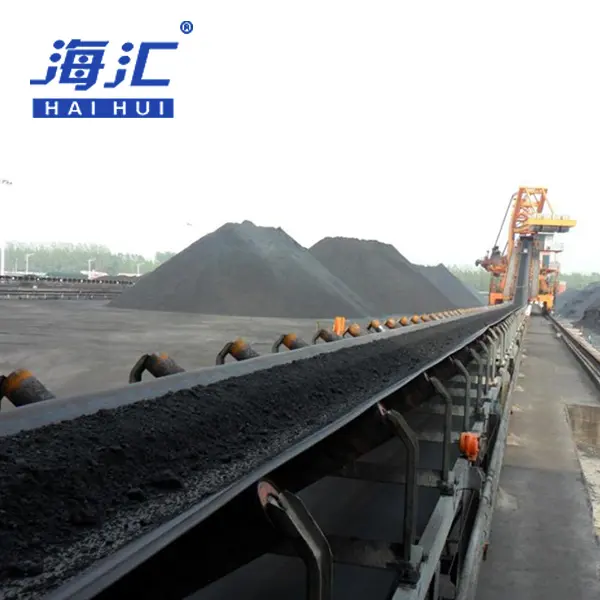
Belt Conveyor Material
In industrial material handling, every belt conveyor must do more than simply move bulk goods. It must resist abrasion, withstand temperature swings, maintain structural tension, and comply with workplace safety standards. Many onsite breakdowns trace back to one core issue: mismatched or substandard belt conveyor material.
Generic low-grade belts may look identical to industrial-grade options, but their internal material composition creates massive operational gaps. From core fabric layers to surface rubber compounds, every material parameter directly impacts service life, load capacity, and safety performance.
Key Failures Caused by Poor Belt Conveyor Material
- Premature surface abrasion and material coating peeling
- Excessive elastic elongation leading to frequent tension adjustment
- Poor temperature resistance causing belt hardening or softening
- Insufficient flame retardant and anti-static properties triggering safety risks
- Weak layer adhesion resulting in delamination and belt tearing
For professional manufacturers like Haihui, belt conveyor material selection is never based on price alone. Every material formula and structural design is tailored to actual working conditions, ensuring stable operation under long-term, high-load, and harsh industrial scenarios.
Core Belt Conveyor Material Types & Industrial Properties
Belt Conveyor Material
All belt conveyor materials fall into two core structural categories: fabric core materials as the tension skeleton and rubber compound materials as the protective surface layer. Each material combination delivers unique mechanical properties and scenario adaptability.
1. Nylon (NN) Fabric Core Material
Nylon core is the most widely used conventional belt conveyor material, featuring high tensile strength, excellent flex fatigue resistance, and lightweight structure. It adapts to most conventional bulk material transportation scenarios including grain, sand, and ordinary minerals.
Key Performance Features
- High tensile strength up to 700N/(mm·layer)
- Excellent water resistance and corrosion resistance
- Strong flexural recovery for frequent bending operation
- Moderate elastic elongation, requiring regular tension calibration
2. Polyester (EP) Fabric Core Material
Polyester core is an upgraded industrial-grade belt conveyor material, solving the excessive elongation defect of nylon belts. Its elastic elongation is only half that of nylon, making it ideal for long-distance and high-precision conveying lines.
Key Performance Features
- Ultra-low permanent deformation and stable tension retention
- Better heat resistance and dimensional stability than nylon
- Strong anti-deformation capability under continuous high load
- Suitable for long-span, high-speed conveyor systems
3. Steel Cord Core Material
Steel cord belt conveyor material is customized for heavy-duty harsh scenarios, using high-strength steel wires as the tension skeleton. It delivers extreme tensile strength, zero elongation, and excellent impact resistance.
Key Performance Features
- Nearly zero elastic elongation, no frequent tension adjustment
- Super impact resistance for large lump ore and heavy bulk materials
- Excellent tear resistance and long service life
- Adaptable to steep inclination and ultra-long distance conveying
4. Special Functional Rubber Compound Materials
Surface rubber compounds determine the environmental adaptability of belt conveyors. Haihui formulates targeted rubber materials for different extreme working conditions:
- Abrasion-resistant compound: For sharp, high-hardness mineral materials to reduce surface wear
- Heat-resistant compound: For high-temperature clinker and hot material transportation
- Flame-retardant & anti-static compound: For coal mine and flammable dust environments
- Oil-resistant & corrosion-resistant compound: For chemical and oily industrial scenarios
Every batch of Haihui belt conveyor material undergoes layered testing, from fabric core tensile verification to rubber compound formula inspection, ensuring consistent performance across the entire production batch.
4 Core Advantages of Standardized Belt Conveyor Material Manufacturing
Premium belt conveyor material is not just about raw material quality—it relies on standardized layered manufacturing processes that stabilize overall performance. As a professional manufacturer, Haihui strictly controls every material processing link to avoid hidden quality risks.
Stable Tensile Strength & Dimensional Consistency
Unstable fabric core tension is the main cause of belt deviation and stretching failure. Haihui controls material precision through standardized process management.
Raw Material Calibration
- Fabric core thickness tolerance controlled within ±0.1mm
- Steel wire diameter and arrangement density full inspection
- Rubber compound hardness uniformity testing per batch
- Layered laminating process to ensure zero gaps between fabric and rubber
- Constant-temperature vulcanization to prevent internal stress concentration
- Finished belt flatness straightness detection
This strict precision control ensures every Haihui conveyor belt maintains stable running track and tension, avoiding deviation, slipping, and abnormal vibration.
Enhanced Wear & Impact Resistance for Heavy Loads
Most ordinary belts fail due to surface wear and impact tearing. High-quality belt conveyor material optimizes rubber formula and structural design for heavy industrial loads.
Performance Optimization Measures
- High-density rubber molecular structure to improve abrasion resistance
- Thickened buffer layer design to disperse material impact force
- Integrated vulcanization technology to enhance layer adhesion strength
Compared with ordinary materials, Haihui upgraded belt conveyor material improves wear resistance by more than 35% and effectively resists heavy impact from large lump materials, greatly extending service life.
Strict Safety Compliance for Industrial Scenarios
Mine, chemical, and high-dust scenarios have mandatory safety requirements for belt conveyor material, especially flame retardant, anti-static, and anti-smoldering performance.
Safety Testing Standards
- Surface resistance value ≤3×10⁸Ω for anti-static performance
- Full-thickness flame self-extinguishing time ≤3 seconds
- Peeled rubber layer self-extinguishing time ≤5 seconds
- Drum friction temperature resistance ≤325℃
All Haihui safety-type belt conveyor materials pass third-party industrial safety certification, fully complying with national mine and industrial safety specifications, eliminating hidden fire and static risks.
Weather & Environmental Adaptability
Field conveyors face complex environmental interference including high temperature, low temperature, humidity, and ultraviolet radiation. Qualified belt conveyor material must maintain stable performance in variable environments.
Environmental Resistance Performance
- Low-temperature resistant materials adapt to -40℃ severe cold environments without cracking
- High-temperature resistant formulas avoid softening and aging under 120℃ working conditions
- Anti-ultraviolet and anti-oxidation formulas prevent outdoor aging and fading
Haihui selects targeted belt conveyor material formulas according to user installation environments, ensuring zero performance attenuation in all-weather operation.
Large-Volume Production: Belt Conveyor Material QC Essentials
Belt Conveyor Material
Bulk order manufacturing demands consistent material quality across thousands of meters of conveyor belts. A tiny material parameter deviation in mass production will lead to batch failure and huge onsite losses. Haihui implements full-process material quality control for large-scale orders.
Incoming Raw Material Inspection
All fabric cores, steel cords, and rubber compounds undergo strict sampling inspection before entering production.
- Fabric core tensile strength and elongation rate sampling test
- Steel wire diameter, tensile force, and arrangement density verification
- Rubber compound hardness, viscosity, and aging resistance detection
- Supplier COA document matching and batch traceability recording
In-Process Material Forming Monitoring
Material performance is finalized during vulcanization and lamination processes. Haihui locks process parameters to avoid performance drift.
- Real-time monitoring of vulcanization temperature, pressure, and time
- Layered lamination gap inspection to prevent delamination risks
- Online thickness and width dimension sorting
Finished Product Material Performance Sampling
Before delivery, each batch undergoes random performance re-inspection to verify material stability.
- Tensile fracture test and permanent elongation data recording
- Abrasion loss weight testing to verify wear resistance
- Flame retardant and anti-static performance spot check
- Adhesion strength test between rubber and fabric layers
No unqualified material batch is allowed to enter the market. This strict QC mechanism is why Haihui bulk conveyor belt orders maintain stable customer feedback for years.
Common Material Selection Mistakes & Site Losses
Belt Conveyor Material
Most conveyor premature failure is not equipment quality problems, but material mismatching caused by blind selection. Summarized below are four typical mistakes that industrial users often make.
Mistake 1: Using ordinary NN material for high-temperature hot material conveying
Ordinary nylon rubber materials cannot resist high-temperature radiation, easily causing surface rubber aging, bubbling, and peeling, leading to rapid belt scrapping.
Mistake 2: Applying common materials to mine dust flammable environments
Non-flame-retardant and non-anti-static belt conveyor materials generate static electricity and sparks during operation, triggering major mine safety hazards.
Mistake 3: Choosing low-elongation EP material for frequent bending short-distance lines
Excessively rigid materials have poor bending fatigue resistance, prone to layer cracking and fracture in frequent bending scenarios.
Mistake 4: Universal material selection for corrosive chemical workshops
Ordinary rubber materials are corroded by chemical gases and liquids, resulting in accelerated aging and reduced structural strength.
Haihui provides free material matching consultation according to user material properties, temperature, environment, and conveying distance, completely avoiding material mismatching losses.
FAQs about Belt Conveyor Material
1. What is the difference between NN and EP belt conveyor material?
NN (nylon) material features good flexibility and low cost, suitable for conventional short-distance and ordinary load scenarios. EP (polyester) material has ultra-low elongation, higher dimensional stability, and better heat resistance, ideal for long-distance, high-speed, and high-precision conveyor lines. Haihui recommends EP materials for most standardized industrial production lines.
2. Which belt conveyor material is best for mine heavy-duty conveying?
Steel cord core material is the first choice for mine heavy-load, large-lump, and long-distance conveying. It has super tensile strength, zero elongation, and strong impact and tear resistance, matching high-intensity mine operation conditions. Supporting flame-retardant and anti-static formulas meet mine safety standards.
3. How to choose conveyor belt material for high-temperature scenarios?
For hot material conveying above 80℃, special high-temperature resistant rubber compound materials must be selected, matching EP or steel cord core structures. Ordinary nylon belts will quickly age and fail in high-temperature environments. Haihui customizes temperature-resistant materials for 80℃–120℃ working conditions.
4. Why do conveyor belts crack and delaminate frequently?
The main reasons include mismatched belt conveyor material, unqualified rubber-layer adhesion, substandard vulcanization process, and long-term overload operation. Low-quality materials have poor interlayer bonding force, which will delaminate and crack after repeated bending and impact.
5. Can conveyor belt materials be customized for special working conditions?
Yes. Haihui supports full-custom belt conveyor material formulas, including anti-corrosion, oil-resistant, flame-retardant, low-temperature resistant, and high-wear-resistant customized materials. We adjust core fabric structure and rubber compound ratio according to user’s special site demands to achieve scenario-exclusive performance matching.
Haihui Professional Belt Conveyor Material Solutions
Belt Conveyor Material
Many users only focus on conveyor belt price and appearance while ignoring core material performance parameters, resulting in frequent equipment failures and high maintenance costs in the later stage. In fact, belt conveyor material is the fundamental determinant of conveyor system stability and service life.
As a professional industrial conveyor system manufacturer, Haihui has long focused on material formula optimization and scenario-based matching. We have accumulated rich practical experience in mine heavy-duty, port logistics, chemical corrosion resistance, high-temperature industrial, and outdoor weather-resistant scenarios.
Different from manufacturers with universal material configurations, Haihui insists on customized material solutions for different working conditions. From raw material selection, formula ratio adjustment, process parameter locking to finished product performance testing, every link is strictly controlled to ensure that the belt conveyor material perfectly adapts to user onsite environments.
Whether you need conventional standard material selection, special working condition material customization, batch bulk order production, or onsite material matching consultation, Haihui’s professional technical team can provide accurate and cost-effective belt conveyor material solutions to help users reduce operational failures and extend equipment service life.
References
GB/T 7984 Conveyor Belt Standard for General Use – National Standard of China
Industrial Conveyor Belt Material Performance Specification – ASTM International
Mine Flame-Retardant Conveyor Belt Safety Standard – National Mine Safety Supervision
Fabric Core Conveyor Belt Structural Design Principles – Industrial Equipment Research Institute
Steel Cord Conveyor Belt Manufacturing & Testing Guidelines – Global Mechanical Safety Organization
Industrial Rubber Material Aging Resistance Research – Material Science Journal
Belt Conveyor Operational Failure & Material Matching Analysis – Industrial Handling Report 2026
High-Load Conveyor Belt Wear Resistance Benchmark – Engineering Application Standard
 English
 العربية
 简体中文
简体中文 Nederlands
 Français
 Deutsch
 Bahasa Indonesia
 Italiano
 日本語
日本語 한국어
한국어 Bahasa Melayu
 Polski
 Português do Brasil
 Русский
 Español
 Türkçe