
Transportador de roletes: como funciona e dicas sobre vida útil
- Pontos-chave: Apresentação do transportador com roletes guia
- O que são transportadores de roletes?
- Como funcionam os transportadores de roletes
- 5 Componentes Principais dos Transportadores de Rolos-Guia
- Revestimento: Resistência do material e resistência ao desgaste
- Rolamento: Capacidade de carga regulável para uma rotação consistente
- Vedação: Ajuste preciso da exclusão de contaminantes e da retenção de graxa
- Eixo: Equilíbrio entre resistência e tolerância de precisão
- Estrutura e Suporte: Maximizando a transferência de carga da correia para a estrutura
- Vida útil e manutenção de transportadores com roletes
- Condições de armazenamento: o impacto da temperatura e da umidade na vida útil dos rolamentos
- Programação de manutenção: inspeção de rotina para garantir o tempo de operação ideal
- Melhores práticas de instalação: proteção de componentes de precisão contra desalinhamento
- Seleção de fornecedores: aquisição de roletes que atendam às normas ISO e CEMA
- Referências
Os transportadores com roletes não são apenas tubos giratórios montados em uma estrutura — eles são a espinha dorsal do manuseio de materiais quando o tempo de operação, a produtividade e o alinhamento da correia estão em jogo. Se os roletes não tiverem o desempenho esperado, as correias se desviam, o material se espalha e os custos de manutenção aumentam rapidamente.
Os compradores não querem especificações obscuras nem roletes que emperram após uma temporada. É preciso que a rotação seja suave, que a distribuição de carga seja adequada e que os componentes funcionem bem em condições de poeira, chuva e variações de temperatura, sem surpresas.
Análises recentes da Grand View Research e da Mordor Intelligence destacam uma demanda constante impulsionada pela expansão dos setores de mineração, agregados e logística, com as decisões de aquisição cada vez mais ligadas à qualidade dos rolamentos, à integridade das vedações e à conformidade regulatória em todas as regiões.
Pontos-chave: Apresentação do transportador com roletes guia
→ Composição: O invólucro de aço ou polímero, os rolamentos de precisão e o eixo formam um conjunto rotativo que sustenta a correia e distribui a carga uniformemente.
→ Mecanismo: Os rolamentos se movem dentro da carcaça do rolo, enquanto as vedações impedem a entrada de contaminantes; o eixo permanece fixo à estrutura, enquanto a carcaça gira livremente em torno dele.
→ Componentes principais: a integridade da carcaça, a precisão dos rolamentos, o projeto das vedações, a tolerância do eixo e a montagem na estrutura maximizam o desempenho e minimizam o tempo de inatividade.
→ Dicas para prolongar a vida útil: adapte a capacidade nominal do rolo guia à carga, siga os cronogramas de lubrificação de rotina, utilize o espaçamento adequado e escolha fornecedores em conformidade com as normas ISO/CE, como a Haihui, para garantir o funcionamento correto das correias.
O que são transportadores de roletes?
Os transportadores com roletes oferecem grande confiabilidade em um equipamento que, à primeira vista, parece um simples cilindro. De minas a céu aberto até linhas de embalagem em armazéns, esse sistema de transporte combina engenharia e durabilidade. Quem trabalha com transportadores com roletes aprecia o fato de que uma linha bem ajustada funciona silenciosamente, quase sem precisar de atenção — até que algo dê errado; aí, você percebe na hora.
Transportador de roletes
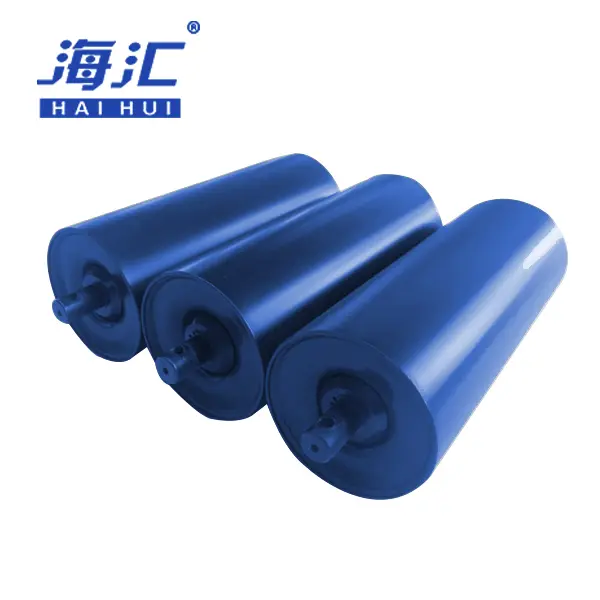
Definição de transportadores de roletes: noções básicas sobre carcaça, rolamento e eixo
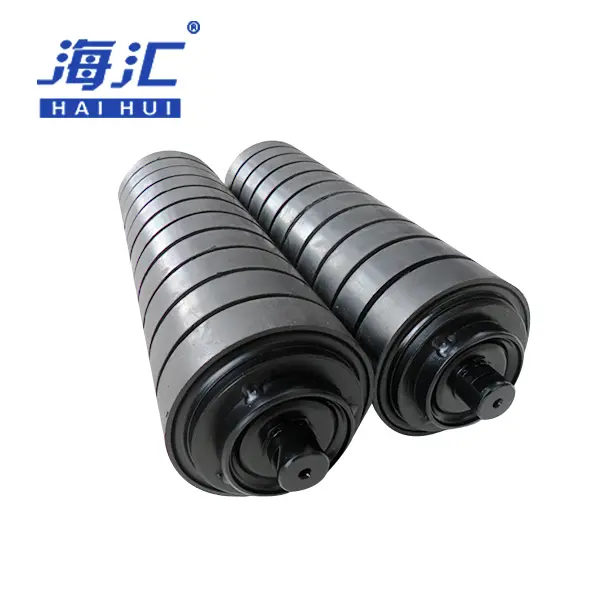
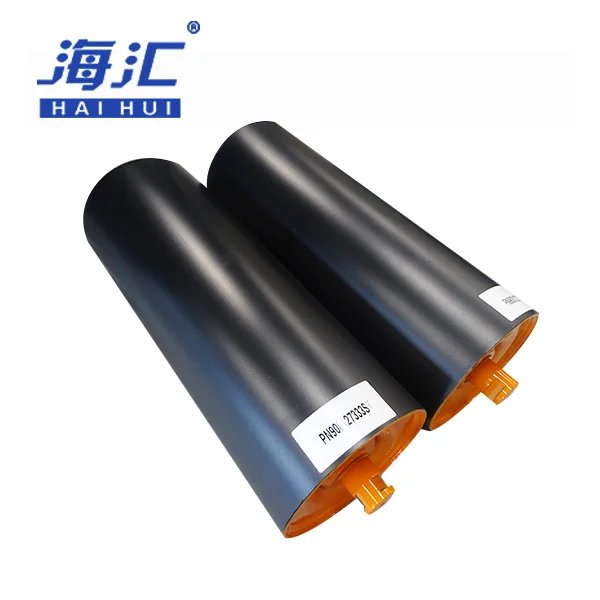
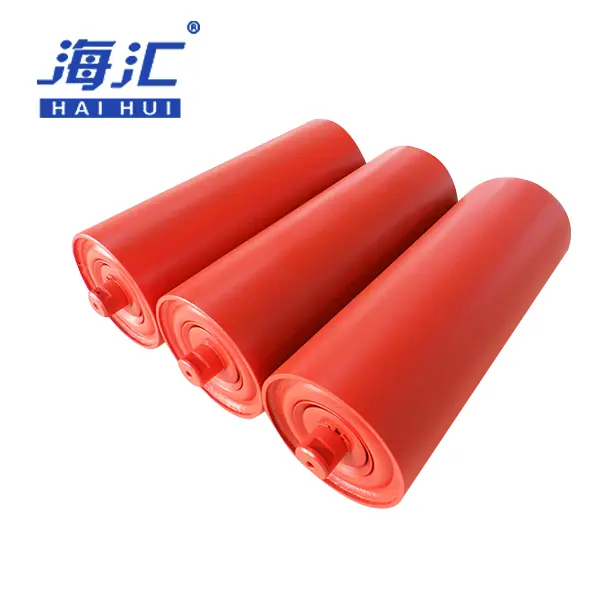
O invólucro fica na parte externa; o tubo que entra em contato com a correia e suporta a carga. Os rolamentos controlam a rotação, permitindo que o invólucro gire livremente em torno de um eixo fixo. Funções do eixo: fixa o rolo guia à estrutura da esteira transportadora e transfere a carga da esteira para a estrutura de suporte. Funções do invólucro: a construção em aço ou HDPE define a área de cobertura; a espessura da parede mantém a deflexão dentro dos limites aceitáveis. Configuração dos rolamentos: rolamentos de esferas de ranhura profunda para serviços padrão; rolamentos de rolos cônicos para cargas de impacto pesadas. Essa combinação permite que as esteiras transportadoras com rolos guias funcionem silenciosamente, sem travar. É por isso que os principais fabricantes de transportadores confiam nos conjuntos de roletes da Haihui, fabricados com expertise, para manter o alinhamento e garantir a integridade estrutural, proporcionando resultados confiáveis em todas as larguras de correia e taxas de tonelagem.
No interior do rolo: rolamento, vedação e mistura lubrificante
✓ Os rolamentos suportam cargas radiais e de impacto
✓ As vedações impedem a entrada de poeira, água e areia
✓ O lubrificante mantém o atrito baixo e controla o calor
Os transportadores de roletes funcionam em camadas
Dentro da carcaça, os rolamentos giram; uma película de graxa protege; na linha de vedação, vedações labirínticas e de contato protegem os pontos de entrada. Os transportadores de roletes parecem simples, mas o equilíbrio é delicado. Se houver pouca graxa, o rolamento superaquece. Se houver graxa em excesso, as vedações se rompem. Rolos de alta qualidade de fabricantes como a Haihui mantêm esse ambiente interno estável, de modo que as esteiras transportadoras com rolos se comportam da mesma forma, turno após turno.
Por que o projeto da vedação é importante para a confiabilidade a longo prazo
Um único grão de sílica pode danificar um rolamento desprotegido. É aí que o projeto da vedação ganha destaque.
Medidas de proteção: Impedir a entrada de partículas na entrada do eixo; Desviar a água da cavidade do rolamento; Manter a retenção do lubrificante sob pressão. Transportadores com roletes sem vedações adequadas apresentam falhas prematuras. Com essas medidas, os roletes mantêm o alinhamento, continuam girando livremente e permanecem operacionais em ambientes úmidos ou empoeirados. Essa confiabilidade é o motivo pelo qual os transportadores com roletes continuam sendo a escolha preferida para minas, portos e operações de manuseio de granéis que não podem arcar com o custo de paradas.
Como funcionam os transportadores de roletes
Os transportadores com roletes parecem simples, mas, por dentro, há um conjunto coeso de componentes mecânicos de alta precisão trabalhando em sincronia. Quando a Haihui fabrica os roletes e estruturas sob medida para sistemas de transporte, o objetivo é sempre o mesmo: vedação superior, rotação suave e menos dores de cabeça. Enquanto os fabricantes de equipamentos originais (OEMs) de transportadores cuidam do projeto do sistema e da seleção da correia, são os componentes precisos dos roletes que fazem tudo funcionar. Este guia prático aborda a realidade do dia a dia: montagem, instalação, operação, vedação e manutenção.
Transportador de roletes
Da montagem à instalação: preparação do conjunto de roletes
Os transportadores de roletes começam na prensa, onde as carcaças moldadas com precisão são unidas aos eixos usinados, garantindo tolerâncias rigorosas. A escolha dos rolamentos define o perfil: rolamentos de ranhura profunda para manuseio geral de materiais a granel; rolamentos cônicos quando as cargas de impacto aumentam; tudo se resume à capacidade de carga e à vida útil esperada. A configuração das vedações garante a funcionalidade: vedações tipo labirinto para poeira seca, vedações de contato com lábios múltiplos quando há água e lama, além de orifícios de lubrificação para relubrificação em campo. Em seguida, a linha de montagem garante a consistência dos transportadores com roletes. O rolamento é pressionado na carcaça com um ajuste de interferência controlado. O eixo desliza e se encaixa no suporte da estrutura — soldado ou aparafusado, dependendo da instalação. Anéis de crimpagem e retenção garantem a vedação, para que os componentes internos não se desloquem sob vibração.
Ação do rolamento e do eixo: proporcionando um suporte suave à correia
Em transportadores com roletes, o rolamento fica dentro de cada extremidade do invólucro, de modo que a rotação permanece estável à medida que a correia se move. O eixo permanece fixo à estrutura enquanto o invólucro gira, impedindo que o trajeto da correia se desvie e entre em uma zona de desalinhamento. O controle rápido contra o travamento se resume ao básico: graxa limpa, vedações intactas e a folga correta do rolamento para a temperatura de operação. Se você já percorreu uma linha de transporte e sentiu um rolo “rangendo”, isso geralmente se deve à entrada de contaminantes ou à degradação do lubrificante, e não à tensão da correia.
Integridade da vedação e testes de vazamento: garantindo a conformidade com a classificação IP
Os transportadores com roletes contam com vedações para manter a graxa dentro e impedir a entrada de areia — se qualquer uma delas falhar, você terá que substituir os roletes muito antes do tempo. A combinação de materiais é importante: roletes de alta velocidade com graxa sintética precisam de compostos de vedação compatíveis; uma combinação incorreta pode endurecer ou inchar a borda da vedação, alterando o atrito e a sensação de rotação. Os testes não se baseiam em suposições. As verificações das vedações garantem que não haja caminhos pelos quais poeira ou água possam migrar para dentro da cavidade do rolamento. Os testes de rotação lenta garantem que cada rolo em um conjunto de transportador com rolos giratórios continue girando livremente até que você especifique uma substituição. A Haihui trata essa etapa como um ponto de controle, pois uma pequena folga na vedação transforma rapidamente excelentes transportadores com rolos giratórios em transportadores “medíocres”.
Precisão da estrutura: controle do alinhamento e do desgaste da correia
A estrutura e o suporte funcionam como o volante em transportadores com roletes-guia, orientando o percurso da correia para que o material caia no centro, em vez de no chão. O desgaste da correia depende de dois fatores: o espaçamento entre os roletes-guia — um espaçamento menor nas zonas de carga absorve o impacto, enquanto um espaçamento maior no trecho de transporte reduz o atrito. Ângulo da calha — calhas mais profundas mantêm o material centralizado, mas ângulos mais inclinados sobrecarregam as bordas da correia. Pequenos hábitos de instalação ainda fazem diferença: ✓ Alinhe o rolo ao quadro antes de aparafusá-lo. ✓ Verifique se todos os roletes de um conjunto giram aproximadamente na mesma velocidade. ✓ Se você deseja um alinhamento preciso, deixe a correia assentar antes de aumentar a tensão — os roletes Haihui são projetados para garantir um bom desempenho quando instalados corretamente.
5 Componentes Principais dos Transportadores de Rolos-Guia
Os transportadores com roletes parecem simples, mas cada peça trabalha intensamente. Nesses transportadores, o equilíbrio entre capacidade de carga, qualidade de rotação e resistência ambiental é fundamental. Veja a seguir como cada componente mantém o suporte da correia suave, estável e confiável.
Transportador de roletes
Revestimento: Resistência do material e resistência ao desgaste
As estruturas de aço e HDPE suportam a carga sem problemas. O revestimento de borracha melhora a aderência e amortece o ruído. A espessura da parede garante a longevidade estrutural. Detalhes integrados que fazem a diferença:
Função estrutural: Resiste ao impacto de materiais que caem; mantém a concentricidade sob a tensão da correia. Proteção contra desgaste: As conchas de polímero resistem à corrosão em aplicações úmidas; o aço revestido protege contra materiais a granel abrasivos.
Rolamento: Capacidade de carga regulável para uma rotação consistente
As anéis interno e externo se encaixam com folga; as esferas ou rolos distribuem a carga; a folga permite a expansão térmica. Observações rápidas:
A rotação consistente prolonga a vida útil da correia e reduz a vibração comum em conjuntos de roletes de baixa qualidade. “A precisão dos rolamentos afeta diretamente o tempo de operação da esteira transportadora e o consumo de energia”, observou uma atualização sobre equipamentos de manuseio de materiais da Grand View Research de 2024.
Vedação: Ajuste preciso da exclusão de contaminantes e da retenção de graxa
● Vedações tipo labirinto para ambientes secos e empoeirados ● Vedações de contato com múltiplos lábios para condições úmidas e com lodo ● Acessórios com anel em V para exposição extrema Percursos curtos, exclusão eficaz. É assim que os roletes mantêm a rotação livre. As vedações Haihui são projetadas para as condições adversas enfrentadas pelas esteiras transportadoras com roletes na mineração e no manuseio de materiais a granel.
Eixo: Equilíbrio entre resistência e tolerância de precisão
Uma especificação cuidadosa mantém a deflexão baixa, ao mesmo tempo em que permite a instalação em estruturas padrão.
| Material do eixo | Desvio | Resistência à corrosão | Custo |
|---|---|---|---|
| Aço carbono | Baixo | Moderado | Padrão |
| Aço inoxidável | Baixo | Alto | Mais alto |
| Cromado | Muito baixo | Alto | Premium |
Esse equilíbrio garante o alinhamento e o perfil da correia em transportadores com roletes-guia e conjuntos de roletes-guia semelhantes.
Estrutura e Suporte: Maximizando a transferência de carga da correia para a estrutura
Percurso da carga passo a passo:
O peso e o material da correia repousam sobre o invólucro. O invólucro transfere a carga, por meio dos rolamentos, para o eixo. O eixo está apoiado em um suporte aparafusado à estrutura do transportador. Vantagens de eficiência agrupadas:
Utilização: Menos desvio da correia; Melhor contenção do material; Desempenho: Ângulo de inclinação estável; Capacidade de carga confiável. Para resultados consistentes, a Haihui projeta estruturas e suportes especificamente para transportadores com roletes, conjuntos de roletes de impacto e outros conjuntos de roletes para transportadores de alta resistência.
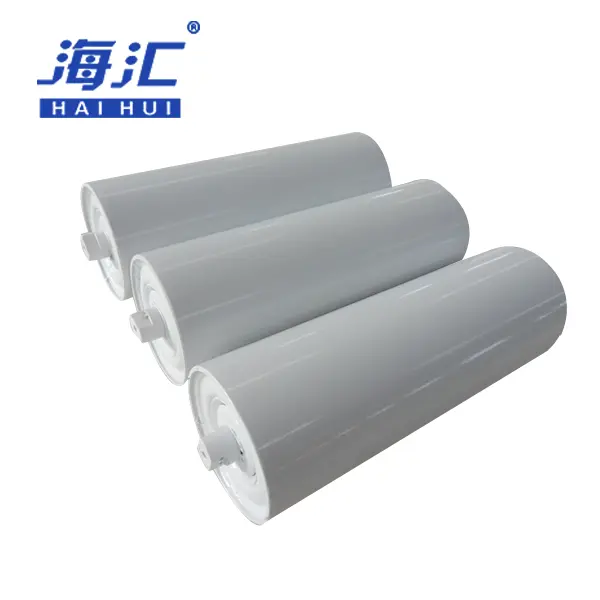
Vida útil e manutenção de transportadores com roletes
As esteiras transportadoras com roletes funcionam intensamente e por muito tempo. Este guia ajuda a mantê-las em funcionamento, abordando dicas de armazenamento, práticas de lubrificação, noções básicas de instalação e confiança no fornecedor. Ele foi escrito para quem deseja que as esteiras transportadoras com roletes funcionem sem problemas este ano, e não travem no próximo trimestre.
Transportador de roletes
Condições de armazenamento: o impacto da temperatura e da umidade na vida útil dos rolamentos
A manutenção em boas condições dos transportadores de roletes durante o armazenamento depende do controle ambiental. Pequenas oscilações afetam a pré-carga dos rolamentos.
Zonas secas: A baixa umidade impede a condensação dentro das vedações. Os roletes permanecem girando livremente na embalagem. Estresse causado pela umidade: Ferrugem superficial nos eixos. Degradação da vedação antes mesmo da primeira rotação. Procure armazenar em locais cobertos, em vez de pilhas a céu aberto. Deixe os roletes frios aquecerem antes da instalação. Faça a rotação do estoque armazenado — não deixe ele parado por muito tempo. Resumo rápido: eixos enferrujados emperram; graxa seca endurece; roletes armazenados corretamente giram como novos. Essa disciplina protege a vida útil dos rolamentos e mantém a confiabilidade das esteiras transportadoras com roletes para minas, portos e centros de distribuição.
Programação de manutenção: inspeção de rotina para garantir o tempo de operação ideal
Verificações regulares garantem a durabilidade das esteiras transportadoras com roletes, e a manutenção é mais um hábito do que um ato heróico.
Fluxo simples: Faça uma inspeção mensal ao longo da linha. Identifique os roletes que não giram livremente. Verificações complementares: Observe os padrões de desgaste da carcaça. Vazamento de graxa. Ruídos audíveis, como guinchos sob carga. Rangidos causados por falha nos rolamentos. A Associação dos Fabricantes de Equipamentos Transportadores (CEMA) observou, em um boletim de manutenção de 2024, que os intervalos de inspeção de rotina influenciam diretamente a vida útil dos rolamentos em aplicações com roletes sujeitos a altas cargas.
As falhas não se anunciam. As inspeções de rotina permitem detectá-las precocemente, especialmente no caso de transportadores de roletes que operam em condições abrasivas ou úmidas. Especialistas em embalagem, como a Haihui, recomendam enfaticamente que sejam incluídas paradas de inspeção em cada troca de turno.
Melhores práticas de instalação: proteção de componentes de precisão contra desalinhamento
A instalação é determinante para o sucesso ou o fracasso das esteiras transportadoras com roletes na primeira semana.
Os colchetes evitam o desvio da correia. O torque adequado nos parafusos de fixação impede o deslocamento. Utilize calços conforme necessário para que a polia tensora fique nivelada. A lógica em várias etapas funciona melhor:
Antes da instalação, verifique as dimensões da estrutura. Verifique se há danos causados pelo transporte. Durante a instalação, alinhe com a linha central da correia. Aperte de acordo com as especificações, não apenas “o suficiente”. Após a inicialização, fique atento a vibrações. Verifique novamente após 48 horas sob carga. Guias de instalação claras ajudam as equipes a trabalhar com rapidez. Imagens valem mais do que parágrafos. Transportadores com roletes duram mais quando a montagem é intuitiva.
Seleção de fornecedores: aquisição de roletes que atendam às normas ISO e CEMA
A confiança começa na origem. Os fornecedores devem cumprir as normas ISO, CEMA, DIN e AS, sem exceções.
Estrutura de conformidade: Materiais – Tipos de aço certificados. Origem rastreável dos rolamentos. Desempenho – Certificados de testes de carga. Dados de desempenho das vedações. Comprovação contínua – Documentos de qualidade atualizados. Rastreabilidade dos lotes. Uma cadeia de fornecedores transparente protege tanto os usuários quanto as operações. A Haihui trabalha com parceiros que tratam as esteiras transportadoras com roletes como componentes de engenharia, e não como meros equipamentos de consumo. Essa consistência mantém as linhas de esteiras funcionando de maneira precisa, segura e pronta para operação.
Referências
[Tamanho, participação de mercado e tendências do setor de sistemas transportadores] – [grandviewresearch.com]
[Análise do mercado de equipamentos para manuseio de materiais a granel] – [mordorintelligence.com]
[Norma CEMA 502: Seleção de roletes para transportadores] – [cemanet.org]
[Seleção de rolamentos para aplicações em transportadores] – [skf.com]
[Entendendo o desempenho das vedações Labyrinth] – [timken.com]
[Comparação entre roletes de HDPE e roletes de aço] – [polyroll.com.au]
[ISO 1537: Rolos transportadores — Dimensões] – [iso.org]
[Guia de alinhamento e ajuste de correias transportadoras] – [martinsprocket.com]
[Considerações sobre o projeto de roletes de impacto] – [rulmeca.com]
[Estratégias de lubrificação para rolamentos de transportadores] – [skf.com]
[Fundamentos do projeto de correias transportadoras] – [cemanet.org]
[GHS e Comunicação de Riscos para Equipamentos Industriais] – [osha.gov]
[Proteção contra corrosão para componentes de transportadores] – [nace.org]
[Melhores práticas de manutenção de esteiras transportadoras] – [mhmonline.com]
 English
 العربية
 Português do Brasil
 Русский
 Español