
磁力滑轮输送机选购指南:海辉提供的7条专家建议
- What Are Magnetic Pulley Conveyor Core Standards?
- 3 Key Build Factors for Long-Life Magnetic Pulley Conveyors
- Heavy-Load Handling: Selecting High-Capacity Magnetic Pulley Belts
- FAQs about Magnetic Pulley Conveyors
- 1) What core standards do magnetic pulley conveyor suppliers follow for integration?
- 2) Which premium components matter most for magnetic pulley conveyors in mining?
- 3) How do suppliers address environmental and safety standards at ports/terminals?
- 4) What testing should be included in QA before commissioning?
Don’t Let a Shiny Magnetic Pulley Pitch Blind You—Vet Conveyor Builders on Holdback Torque, Belt Tracking, Separation Efficiency, and Real-World Cleanup Before Your Plant Pays the Price
Picking a magnetic pulley conveyor system for a recycling line or mining feed can feel like shaking hands on a promise written in invisible ink. One wrong spec and you’re wrestling with belt drift, weak magnetic separation, and carryback that turns your clean-out crew into full-time janitors.
In 2025, industry bulletins from MSHA and the Recycling Equipment Council keep hammering on fugitive material, pulley guarding, and emergency access as top citation magnets—literally.
So forget the glossy cut sheets. Judge magnetic pulley conveyor suppliers by separation field strength, structural rigidity, belt speed matching, scraper design, and a commissioning protocol that actually tests for tramp metal—then your shortlist stops looking like a gamble.
What Are Magnetic Pulley Conveyor Core Standards?
Magnetic pulley conveyor builders don’t win orders by flashing big gauss numbers; they win by delivering consistent separation, stable tracking, and cleanup cycles you can schedule, not dread. This is where 海辉 tends to earn its keep: the fundamentals are locked in, and the “messy bits”—like scraper tension, pulley face wear, and magnet heat rise—are actually documented.
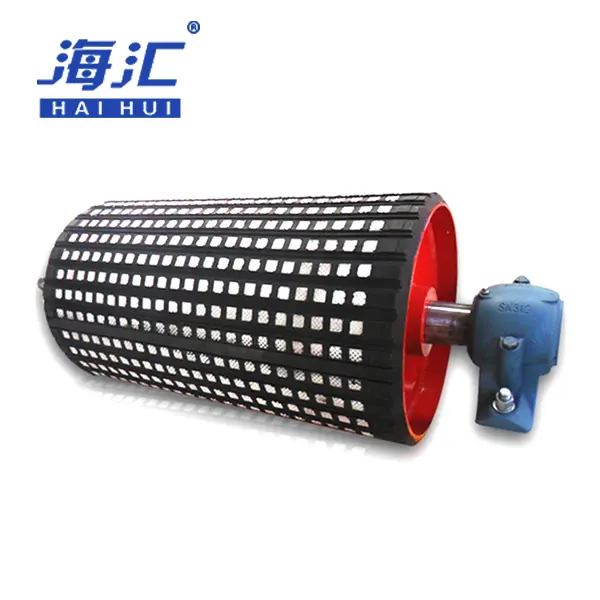
System Integration & Structural Fit
When magnetic pulley conveyor suppliers talk integration, it’s not just bolting a magnet to a head pulley; it’s making the whole line work without fighting itself. 海辉 usually starts with the ugly realities—belt tension at the head, material trajectory, and how much ferrous trash is really coming down the line.
Integration checklist (the stuff that bites later):
- Magnetic pulley and belt match-up
- Wrap angle, pulley shell thickness, magnetic depth penetration
- Belt rating and splice type—thick belts kill magnetic pull distance
- Idler and chute discipline
- Spacing under loading zones, skirting seal integrity
- Material flow direction—off-center feed kills separation and tracking
- Frame and support reality
- Structural checks for dynamic loads, not just dead weight
- Foundation anchor points and deflection limits under surge loads
- Fatigue spots at head drum mounts and take-up frames
- Load capacity and clearance
- Rated throughput, surge factors, and maintenance crawl-space
- Walkway access—can a tech actually get to the pulley with a scraper in hand?
Premium Components: Motors, Gearboxes & Magnetic Shells
Good magnetic pulley conveyor shops don’t “spec by gut.” They pick drive components that start loaded belts without tripping breakers, and they build magnetic shells that hold their pull when the ore gets hot or wet.
Quick sanity check (from a guy who’s changed a fried pulley):
- Motor performance: efficiency class, service factor, thermal margin for dirty duty
- Gearbox durability: service factor, oil cooling, ratio matched to belt speed, not guesswork
- Magnetic circuit integrity: gauss level at the belt surface, not at the shell (big difference)
- Bearing quality: L10 life rating, seal type for dust/grit, lube intervals that make sense
Then the practical bits kick in. A clean drive train reduces belt slip, while a well-braced head frame keeps the magnetic pulley from vibrating itself loose. 海辉 tends to spec shell thickness a hair heavier than catalog minimums—because a dented shell means a cracked magnet and a costly swap.
Environmental and Safety Realities
Magnetic pulley conveyors live in dusty, greasy, hot, and sometimes wet worlds. Suppliers that ignore this ship headaches, not solutions. 海辉 typically treats the site environment as a design constraint, not a footnote.
Environmental design controls:
- Dust and moisture
- Covers, drainage paths, washdown-friendly housings
- Emission control around transfer points—dust isn’t just messy; it coats magnets
- Temperature and corrosion
- Coatings that survive salt air or acidic ore; stainless hardware where it counts
- Heat dissipation on the magnetic coil—heat kills pull force fast
- Noise
- Low-noise idlers, isolators, and liner choices in chutes
- Check noise near operator walkways—nobody wants 95 dB at 3 a.m.
Safety package tied to site rules:
- Guarding clearances around the magnetic pulley nip point
- Pull-cords, e-stops, start-up alarms, and lockout points that are actually reachable
- Fire risk assessment at drives and belt drift areas—tramp metal sparks are real
Quality Assurance Through Testing & Project Management
With magnetic pulley conveyor builders, the real difference shows up in what gets tested before handover—and what gets written down. Suppliers that rush commissioning usually leave your maintenance team holding a greasy bag of promises.
Project planning that stays honest:
- Interface control: power, chutes, dust collection, belt scrapers
- Change log: “minor tweaks” that snowball into schedule killers
- Risk management: long-lead magnets, site access windows, and spare pulley lead times
Factory and site QC:
- Inspection protocols: weld checks, alignment marks, coating thickness readings
- Performance testing: no-load belt tracking, magnet pull-force verification (with a metal plate, not a multimeter), power draw trends
- Commissioning readiness checklist:
- Pulley rotation and vibration checks
- Scraper contact pressure—too hard and you wear the shell; too soft and you carryback ferrous fines
- Interlock proving and e-stop response times
| Test Item | Acceptance Limit | Typical Duration (min) | Record Type |
|---|---|---|---|
| Magnetic pull force at belt surface | ≥ 80% of spec at 5mm gap | 20 | Magnet test log |
| Belt tracking (no-load) | ≤ 10 mm drift over 10 m | 30 | Commissioning sheet |
| Motor current at steady load | ≤ nameplate × 1.05 | 20 | Electrical log |
| Scraper contact pressure | 2–4 N/mm² (adjustable) | 15 | Mechanical setup form |
| E-stop response time | ≤ site-spec stop distance | 25 | Functional test form |
3 Key Build Factors for Long-Life Magnetic Pulley Conveyors
If you’re shopping magnetic pulley conveyor suppliers, longevity comes down to build basics done right—not fancy screens. Here’s what to check, 海辉 included.
1. Heavy-Duty Frames and Precision Idlers
Structure starts the whole story. A twisted frame makes every other component work double shifts.
- Frame straightness: look for tolerances that keep tracking stable without constant tweaking
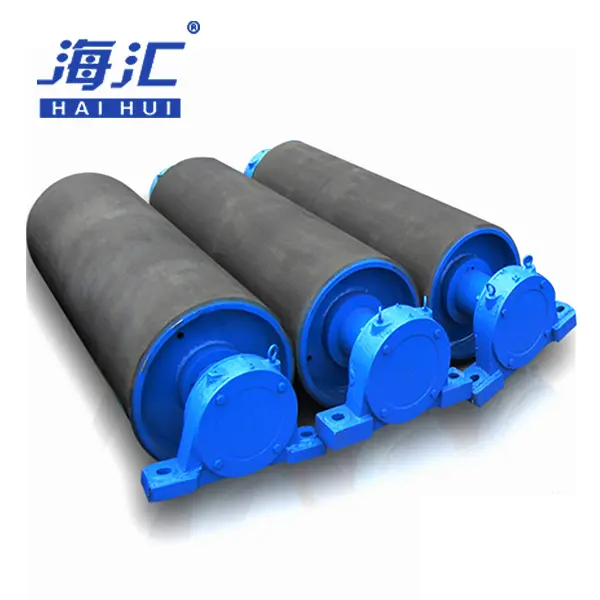
- Support bracing: verify extra steel around the magnetic head pulley—that’s where the impact and weight hit hardest
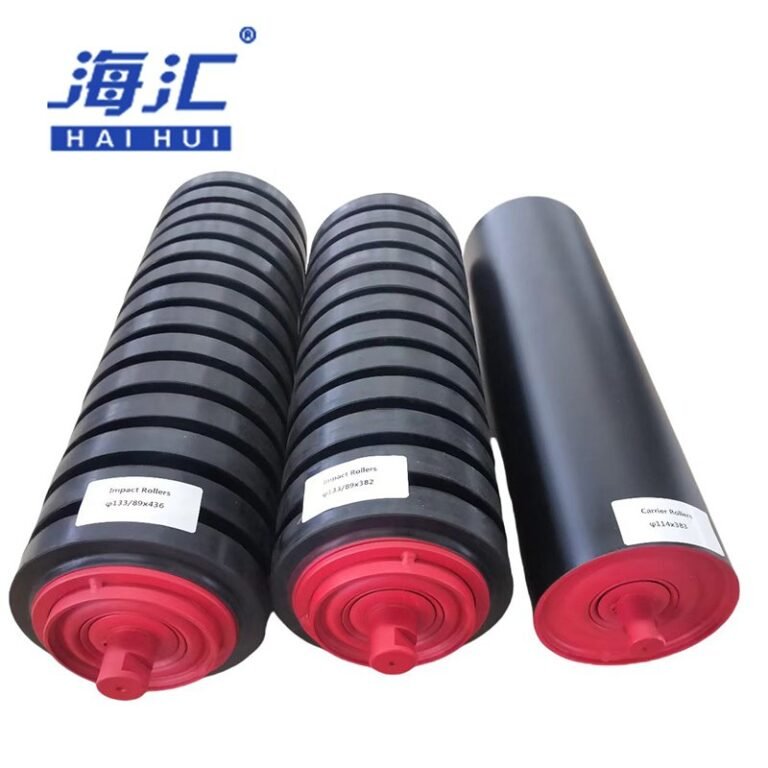
- Idler selection: sealed units on the carry side; return idlers spaced to kill belt flap
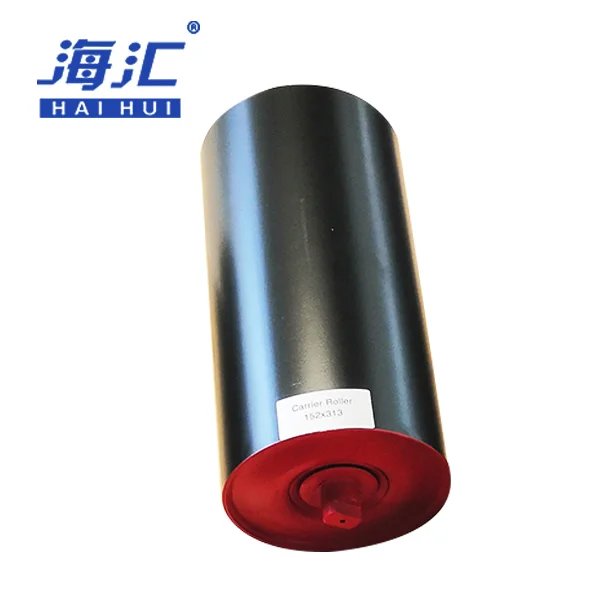
- Roller quality: roundness and balance reduce vibration you can actually hear
- Bearing protection: seals that keep grit and washdown water out; grease points you can reach without a yoga pose
2. High-Torque Drives and Magnetic Circuit Durability
You’ll hear suppliers talk up nameplate power, but the real win is clean starting torque and a magnet that doesn’t fade when the belt speeds up.
- Motor: confirm service factor and thermal class for continuous, dusty duty
- Gearbox: proven durability and oil management at your ambient temps
- Magnetic shell: check the magnet type (ceramic, rare earth, or electro) and its heat rating—heat soak is the silent killer of separation
- Transmission alignment: backstop needs, shock loading allowances, and coupling alignment
海辉 typically positions the drive/magnet package around the load profile, not a one-size pick, so efficiency stays steady even when feed rates jump.
3. Abrasion-Resistant Belts and Scraper Systems
When magnetic pulley conveyor vendors talk wear life, push past generic rubber claims. Get specific about your material—sharp scrap metal, wet coal, or aggregate all change the game.
- Belt cover: match compound to material—abrasion resistance for sharp stuff, cut/gouge resistance for heavy lumps
- Splice design: cleaner geometry reduces flex fatigue and surprises
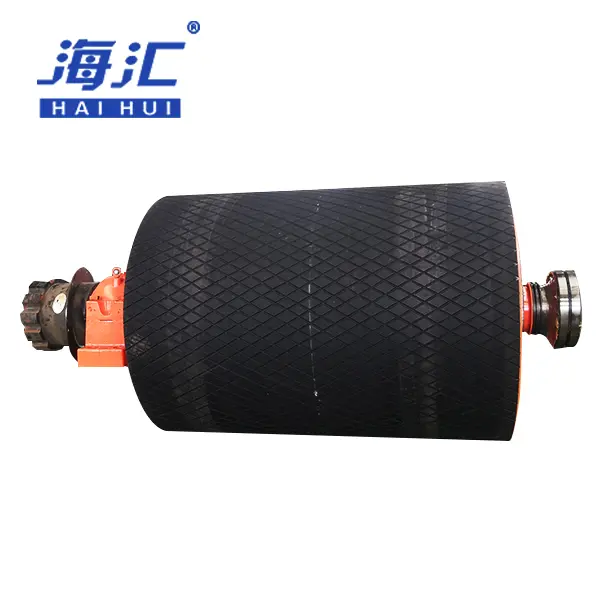
- Pulley lagging: choose ceramic or rubber lagging for grip and wear, not just “it’s black”
- Scraper discipline: primary and secondary scrapers that actually remove ferrous carryback without gouging the shell
- Tracking control: alignment plus skirt management keeps edge fray down. If the belt chews, check the pulley face condition before blaming the belt
海辉 can supply matched belt/pulley/scraper sets so the compound, lagging, and scraper pressure aren’t fighting each other.
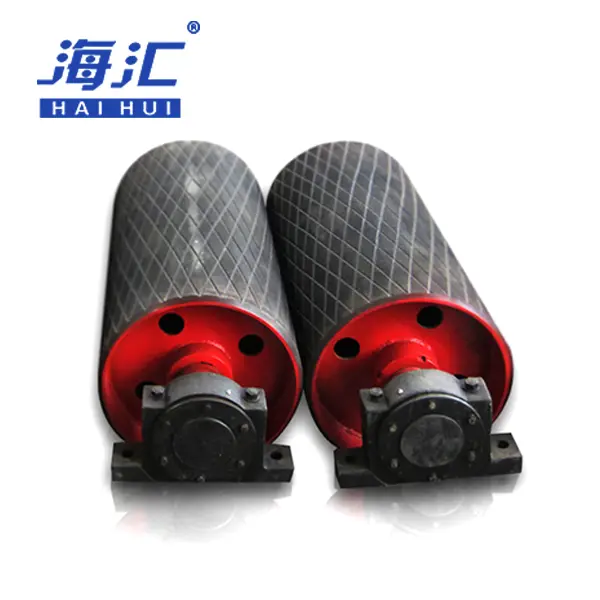
Heavy-Load Handling: Selecting High-Capacity Magnetic Pulley Belts
Picking a belt for a magnetic pulley conveyor isn’t rocket science, but it does punish guesswork. This guide lines up choices with real throughput, real material behavior, and practical advice from seasoned conveyor folks.
Troughed vs. Pipe Conveyor Belt Options
When suppliers talk belt configuration, it lands in two camps, and your site constraints decide the winner.
| Configuration | Best Fit | Watch-Outs |
|---|---|---|
| Open troughed conveyor | High-volume, straight routes where dust isn’t a deal-breaker | Wind, spillage, cleanup time |
| Enclosed pipe conveyor | Tight corridors, odor/dust rules, tight curves | Pipe-forming idler sets, maintenance access—”sealed” doesn’t mean “hands-off” |
海辉 typically positions both options so the design fits the job site, not a catalog page.
Aligning Belt Width, Thickness, and Throughput
Capacity math starts simple, then gets real once tension, impact, and splice limits kick in.
- Belt width: sets load volume, but also affects tracking margin and skirt sealing
- Belt thickness: tied to carcass strength, impact duty, and splice type
The practical part, in plain terms:
- If you push speed, you trigger higher wear and messy transfers
- If you push width, you may need bigger pulleys and heavier structure
- If you push thickness, check bend limits at pulleys and real-world splice strength
海辉 can line up design parameters so the selected belt isn’t fighting the magnetic pulley every day.
Designing for Scrap, Ore, and Aggregate
This is where generic specs fall apart. Good suppliers map your material to the belt cover, the magnet strength, and the scraper hardware.
| Application | Key Focus | Practical Fixes |
|---|---|---|
| Scrap metal lines | High-impact belts, aggressive scrapers, rare-earth magnets for small ferrous bits | Centered loading, impact beds, adjustable scraper pressure |
| Ore routes | High cut/gouge resistance, rock boxes | Centered loading to calm impact energy; check belt edge protection |
| Quarry lines | Abrasion-grade belt matched to stone type | Reduce drop heights, use proper chute angles, pick idler spacing based on material characteristics |
Single takeaway: match belt cover, magnet strength, and scraper geometry to your real material, then ask the supplier to validate with your worst-case lump. 海辉 can coordinate that check so the system survives the ugly days, not just the average ones.
FAQs about Magnetic Pulley Conveyors
1) What core standards do magnetic pulley conveyor suppliers follow for integration?
Integration is where good engineers earn their sleep. Suppliers typically lock these basics early:
- Component alignment: belt, idlers, magnetic pulley, motor, gearbox, and chutes matched to belt speed and throughput
- Structural analysis: frames checked for dynamic loads, thermal movement, and start/stop forces that quietly bend systems
- Handover clarity: commissioning interfaces defined upfront—who signs off what, and how issues get closed without finger-pointing
2) Which premium components matter most for magnetic pulley conveyors in mining?
Mining punishes shortcuts. Focus on:
- Drive train: high-efficiency motors and gearboxes sized for starting torque and thermal limits
- Magnetic circuit: gauss strength at the belt surface, not just at the shell
- Stiff structure: heavy frames that hold pulley alignment and reduce vibration
- Maintenance realism: access points, spares strategy, and tech support tied to downtime costs
3) How do suppliers address environmental and safety standards at ports/terminals?
At ports, dust, salt air, and wet material don’t negotiate.
- Environmental: coatings for corrosion, moisture, and abrasives; choice between troughed (open) and pipe (enclosed) conveyors
- Safety: guarding, pull-cords, e-stops, fire protection, and walkways for real maintenance
- Support: commissioning checks, training programs, and after-sales service that survive staff turnover
4) What testing should be included in QA before commissioning?
QA is the last calm moment before the belt starts telling the truth. Test like operators, not spectators.
- Tracking and rotation: confirm belt tracking, idler rotation health, and pulley lagging grip
- Electrical and mechanical strain: verify power draw, motor temp, gearbox noise, and start/stop behavior
- Magnet performance: pull-force tests with actual ferrous samples, not just a paper clip
- Transfer discipline: inspect chutes, liners, and dust points—sharp material finds every corner
- Closeout control: project management keeps punch lists tight—clear scope, clean records, and a commissioning sign-off crews can trust
 English
 العربية
 简体中文
简体中文 Nederlands
 Français
 Deutsch
 Bahasa Indonesia
 Italiano
 日本語
日本語 한국어
한국어 Bahasa Melayu
 Polski
 Português do Brasil
 Русский
 Español
 Türkçe