Industrial Impact Roller Fault Troubleshooting Solutions
- What Is Inside an Impact Roller
- Impact Roller Steel Tube Body: Overall Structural Rigidity
- Vulcanized Rubber Buffer Rings: Shock Absorption Core
- Precision Bearings & Lubricating System: Low-Resistance Operation
- Multi-Layer Sealing Assembly: Harsh Environment Adaptability
- Welded End Caps & Fixed Fasteners: Structural Stability
- Buffer Energy Conversion Working Principle
- Full Industrial Scenario Adaptation
- Rubber Ring Peeling & Cracking
- Bearing Stuck & Inflexible Rotation
- Steel Tube Bending & Structural Deformation
- Serious Operational Vibration & Noise
- Strict Raw Material Screening
- Precision Processing & Integrated Forming
- Full-Process Performance Testing
- Scenario-Oriented Customized Optimization
A reliable impact roller is the shock-absorbing backbone of every belt conveyor system. If your conveyor belts suffer frequent tearing, surface abrasion, or premature aging at feeding points, operational downtime and replacement costs will rise sharply. Understanding impact roller structural design, shock absorption mechanics and quality standards helps you stabilize conveying efficiency, protect belt equipment, and cut long-term maintenance expenses.
Key Notes for Impact Roller Selection & Usage
➔ Structural Configuration: Adopt thick steel tube body + high-elastic rubber buffer rings to disperse instantaneous material impact force and avoid local belt stress concentration.
➔ Material Matching: Select high-toughness steel substrates and 65° Shore hardness rubber rings, adapting to heavy-load and high-fall feeding scenarios in mining, cement and port industries.
➔ Sealing Protection: Multi-layer labyrinth dustproof and waterproof sealing structure ensures flexible rotation in dusty, humid and corrosive working environments.
➔ Performance Calibration: Match roller diameter, wall thickness and rubber ring density according to material drop height and conveying load to avoid structural deformation and failure.
➔ Installation Standard: Install concentratedly at conveyor feeding and blanking points to achieve targeted shock absorption and belt protection.
Looking for high-stability industrial impact rollers?
With mature industrial manufacturing experience and standardized production workshops, Haihui customizes heavy-duty impact rollers that adapt to harsh working conditions. All products pass strict load and anti-impact testing, effectively extending conveyor belt service life and stabilizing system operation.
What Is Inside an Impact Roller
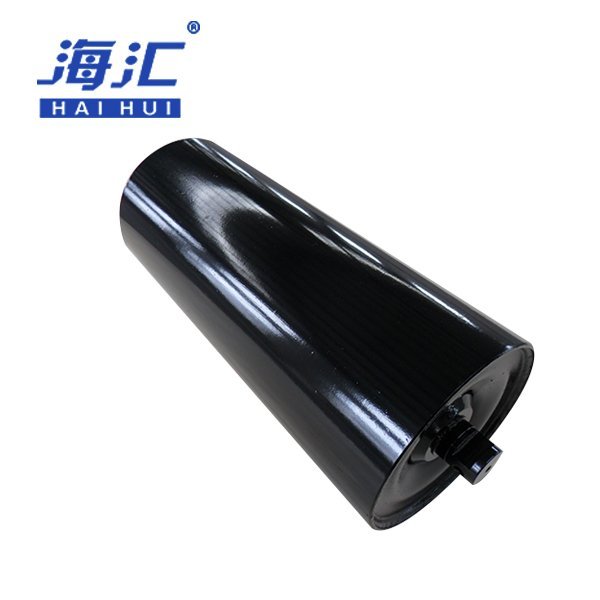
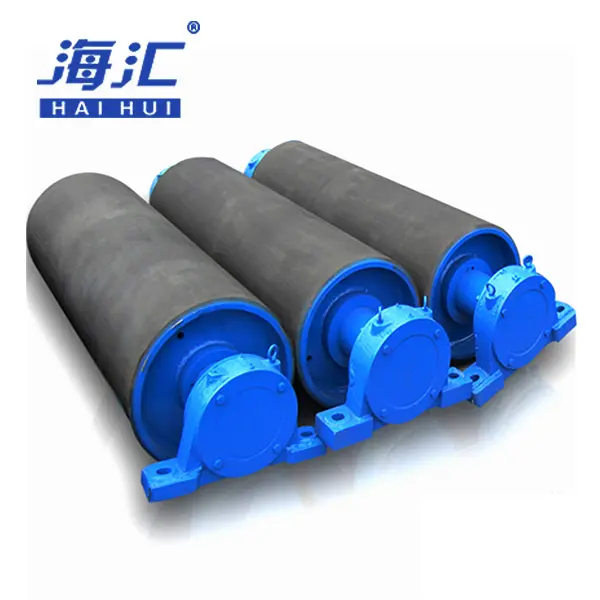
Unlike ordinary conveyor rollers that only undertake simple supporting tasks, an impact roller is a professional shock-absorbing component engineered for material blanking impact scenarios. Every structural detail is designed to buffer instantaneous impact pressure and protect the conveyor belt from rigid damage.
Thickened Steel Tube Body: Core Load-Bearing Foundation
The steel tube body is the main load-bearing structure of the impact roller, determining overall structural rigidity and deformation resistance.
Material Selection
Haihui adopts high-quality seamless steel tubes with wall thickness ranging from 3mm to 6.3mm. The integrated tube body has uniform texture, strong compression resistance and no hidden structural cracks, which can withstand long-term heavy-load impact without bending or twisting deformation.
Processing Technology
Integral cutting and precision polishing ensure consistent wall thickness and smooth roller surface. Both ends adopt seamless welding technology to fix end caps firmly, avoiding structural loosening caused by frequent vibration impact.
Performance Advantages
Superior structural stability, strong dynamic load resistance, suitable for long-term continuous operation of heavy-duty conveying lines, and effectively supports the overall buffer system.
Elastic Rubber Buffer Rings: Key Shock-Absorbing Structure
The rubber buffer ring is the core functional component of the impact roller, undertaking the key task of dispersing instantaneous material impact force.
Structural Design
Multiple independent high-elastic rubber rings are closely sleeved on the steel tube body. The rubber ring hardness is stabilized at 65 Shore hardness through professional vulcanization process, balancing soft buffer performance and wear resistance.
Working Mechanism
When bulk materials fall from a height and hit the conveyor belt, the rubber ring deforms elastically to absorb instantaneous impact energy, avoiding rigid collision between materials and the roller body, and evenly dispersing concentrated pressure to the entire roller and support frame.
Durability Performance
High-temperature vulcanization technology makes the rubber ring closely bonded with the steel tube, no peeling, no cracking after long-term impact and friction. It has excellent aging resistance and can adapt to high-temperature, low-temperature and outdoor open-air working conditions.
High-Precision Bearing & Sealing System: Stable Rotation Guarantee
Flexible low-resistance rotation is the basic premise for impact rollers to exert buffering performance, and high-quality bearings and sealing structures determine long-term operational stability.
Bearing Configuration
Equipped with 6204 C3 to 6310 C3 high-precision bearings according to different load grades, with low rotation resistance and strong load-bearing capacity. Matched with high-temperature and anti-aging lubricating grease, it ensures flexible rotation without jamming under long-term vibration.
Multi-Layer Sealing Structure
Adopt internal and external double-layer labyrinth sealing design to completely isolate external dust, coal ash, water vapor and corrosive particles. Effectively prevent impurities from entering the bearing cavity to cause rusting and stuck failure.
Operational Value
Lifelong lubrication free of frequent refueling maintenance, low failure rate in harsh dusty and humid environments, and stable long-term continuous operation.
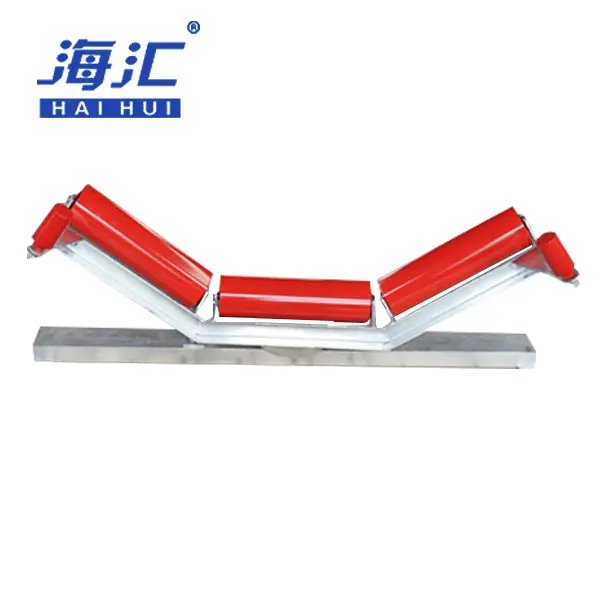
5 Core Components of Every Industrial Impact Roller
Every component of the impact roller is precisely matched to form a complete shock absorption and support system, jointly determining equipment safety, belt protection effect and service life.
Impact Roller Steel Tube Body: Overall Structural Rigidity
The steel tube body is the skeleton of the impact roller, directly determining the maximum load-bearing capacity and anti-deformation performance.
Core Specifications
Haihui supports customized diameters from 108mm to 245mm and wall thicknesses of 3–6.3mm. Strictly control wall thickness tolerance and concentricity to ensure uniform force on the roller body and avoid eccentric wear.
Performance Characteristics
High tensile strength, strong impact resistance, not easy to bend and deform under heavy load. The overall welded structure eliminates loose parts and adapts to high-frequency vibration working conditions.
Vulcanized Rubber Buffer Rings: Shock Absorption Core
Rubber buffer rings are the key to distinguishing impact rollers from ordinary supporting rollers, undertaking the core shock absorption function.
Material Advantages
High-quality natural rubber composite formula, with excellent elasticity, wear resistance and aging resistance. Fixed by compression vulcanization, no relative sliding between rubber ring and steel tube.
Functional Value
Effectively buffer instantaneous impact force generated by material blanking, reduce belt tension fluctuation, avoid belt tearing and local damage, and greatly extend conveyor belt service life.
Precision Bearings & Lubricating System: Low-Resistance Operation
Bearings and lubricating grease determine the rotation flexibility and operational energy consumption of impact rollers.
Configuration Standards
Select high-quality heavy-duty bearings with precise clearance coordination. Special industrial lubricating grease is resistant to high temperature and oxidation, maintaining stable lubrication effect for a long time.
Operational Effect
Low rotation resistance reduces conveyor operating load and energy consumption. Avoid roller stagnation caused by poor lubrication, which leads to belt friction damage.
Multi-Layer Sealing Assembly: Harsh Environment Adaptability
The sealing system is the core guarantee for the long service life of impact rollers in industrial harsh environments.
Structural Design
Combined labyrinth and contact sealing structure, multi-channel isolation of dust and moisture. All sealing accessories are made of anti-aging and corrosion-resistant materials.
Quality Inspection Standard
All finished rollers pass water bath leak test and dust simulation test to ensure no impurity ingress in daily operation.
Welded End Caps & Fixed Fasteners: Structural Stability
Integrated welded end caps and high-strength fasteners fix the internal structure to avoid loose failure caused by long-term vibration impact.
Processing Advantages
Full-circle seamless welding ensures firm connection between end caps and steel tube. No welding pores or gaps, strong vibration resistance.
Stability Value
Effectively prevent internal bearing displacement and rubber ring deviation, ensuring consistent overall performance of the impact roller during long-term operation.
Impact Roller Performance Parameter Benchmark
Different working conditions such as material drop height, conveying volume and material density put forward different performance requirements for impact rollers. Haihui calibrates parameters according to industrial standards to ensure matching performance and working conditions.
| Roller Diameter (mm) | Steel Wall Thickness (mm) | Rubber Hardness (Shore) | Max Bearing Load (kg) | Applicable Drop Height (m) | Service Life (hrs) |
|---|---|---|---|---|---|
| 108 | 3.0 | 65 | 800 | ≤2 | 8000+ |
| 133 | 3.5 | 65 | 1200 | 2–4 | 10000+ |
| 159 | 4.0 | 65 | 1800 | 4–6 | 12000+ |
| 194 | 5.0 | 65 | 2500 | 6–8 | 15000+ |
| 245 | 6.3 | 65 | 3500 | ≥8 | 18000+ |
Reasonable parameter matching is the key to giving full play to the performance of impact rollers. Excessively small specifications will cause insufficient buffer capacity and structural deformation, while excessive specifications will increase unnecessary equipment investment and operating load.
🌟 Custom Impact Roller Solutions Available Haihui provides one-stop customized services for industrial impact rollers, including size adjustment, rubber hardness customization, special anti-corrosion and high-temperature resistant treatment. We deliver professional solution proposals within 1 day and support flexible MOQs to meet small-batch trial production and large-batch bulk order needs. Contact our experts to get custom samples and technical support.
Working Principle & Scenario Adaptability of Impact Rollers
The core working logic of impact rollers is converting instantaneous rigid impact force into elastic deformation energy, so as to protect the conveyor belt and stabilize the operating system. Different structural configurations adapt to diverse industrial harsh scenarios.
Buffer Energy Conversion Working Principle
When bulk materials such as coal, ore and cement raw materials fall from a height to the conveyor belt, huge instantaneous impact force is generated. Ordinary rigid rollers cannot absorb impact energy, resulting in direct extrusion and tearing of the belt.
Haihui impact rollers rely on high-elastic rubber rings to produce reversible elastic deformation. During the instantaneous impact process, the rubber structure absorbs and disperses impact energy, reduces the pressure on the belt surface, and restores deformation after the impact ends, realizing cyclic buffer protection. The steel tube body bears the overall load to ensure no structural collapse during buffering.
Full Industrial Scenario Adaptation
Mining & Coal Industry
Adapt to high-fall and heavy-load ore and coal conveying. Resist frequent impact and coal dust erosion, effectively solving belt damage and deviation problems at mining feeding points.
Cement & Chemical Industry
Adapt to humid and corrosive working environments. Anti-aging and anti-corrosion materials prevent rubber aging and metal rust, ensuring stable operation in long-term dusty and corrosive conditions.
Port & Bulk Logistics
Suitable for high-volume and high-frequency bulk material conveying. High-load impact rollers support long-term continuous operation and reduce frequent equipment maintenance.
Metallurgy & Building Materials
Adapt to high-temperature working conditions. Special heat-resistant rubber formula avoids performance attenuation caused by high-temperature baking, maintaining stable buffer performance.
Common Impact Roller Failures & Troubleshooting
Most impact roller failures are caused by improper selection, poor sealing performance and long-term overload operation. Timely troubleshooting and maintenance can effectively extend equipment service life and reduce production losses.
Rubber Ring Peeling & Cracking
Causes: Unqualified vulcanization process, long-term high-temperature aging, overload impact beyond bearing range, and severe friction with materials.
Solutions: Select Haihui high-temperature vulcanized impact rollers with integrated bonding. Match specifications according to actual impact load, and replace aging and damaged rubber rings in time.
Bearing Stuck & Inflexible Rotation
Causes: Poor sealing performance, dust and moisture entering the bearing cavity, lubricating grease failure, and long-term static overload leading to bearing deformation.
Solutions: Adopt multi-layer sealed structural rollers, regularly check sealing integrity, avoid long-term overload operation, and replace failed bearings in time.
Steel Tube Bending & Structural Deformation
Causes: Too thin wall thickness, insufficient structural rigidity, long-term bearing ultra-high impact load, and uneven stress.
Solutions: Re-select thickened steel tube impact rollers matching the working load, optimize installation spacing to ensure uniform stress, and replace deformed rollers to avoid belt deviation and wear.
Serious Operational Vibration & Noise
Causes: Uneven rubber ring wear, eccentric roller rotation, loose internal structure, and inconsistent installation height.
Solutions: Replace worn rubber rings, calibrate roller concentricity during installation, and fasten internal fixed parts to stabilize operation.
How Haihui Optimizes Impact Roller Quality & Cost Performance
Excellent impact rollers balance high impact resistance, long service life and low comprehensive cost. Haihui optimizes product quality from material selection, processing technology and quality inspection to help customers reduce equipment maintenance and replacement costs.
Strict Raw Material Screening
All steel tubes are selected from qualified large-scale steel mills with stable material texture and uniform wall thickness. Rubber materials adopt high-elastic anti-aging formulas, rejecting inferior recycled rubber with poor wear resistance. Bearings and sealing accessories are matched with brand high-quality parts to ensure basic product performance.
Precision Processing & Integrated Forming
Adopt automated cutting, polishing and vulcanization equipment to realize integrated forming of rollers. Strictly control vulcanization temperature and time to ensure firm bonding between rubber rings and steel tubes. Precision welding technology eliminates structural gaps and hidden dangers.
Full-Process Performance Testing
Finished products undergo strict load-bearing impact test, rotation resistance test, dust-proof and waterproof simulation test and aging test. Batch inspection ensures consistent performance of each product, eliminating defective products from entering the market.
Scenario-Oriented Customized Optimization
According to customer on-site working conditions such as drop height, conveying volume and environmental characteristics, customize roller diameter, wall thickness, rubber hardness and sealing grade, avoiding performance surplus or insufficient performance and maximizing cost performance.
FAQs about Impact Roller
What is the main function of an impact roller?
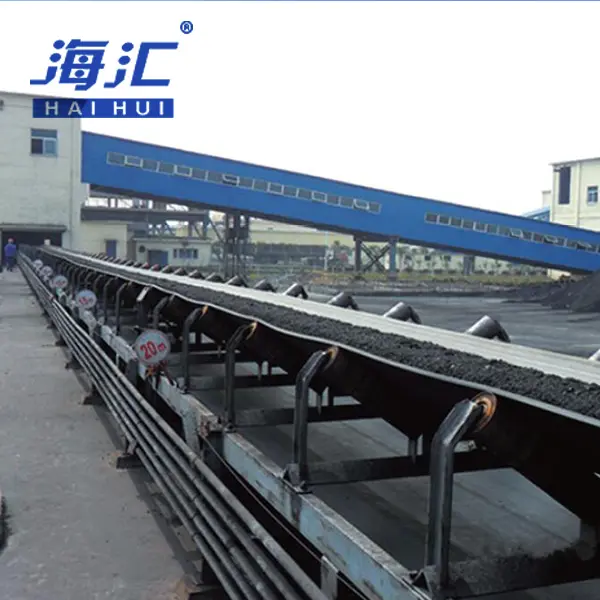
Impact rollers are mainly installed at the feeding and blanking points of belt conveyors. They absorb instantaneous impact force generated by material falling, protect the conveyor belt from tearing and abrasion, reduce equipment vibration, stabilize conveyor operation, and greatly extend the service life of conveyor belts and accessories.
What working conditions are impact rollers suitable for?
They are widely used in mining, coal mine, cement, port, metallurgy, chemical industry and other bulk material conveying scenarios, especially suitable for working conditions with high material drop height, heavy load, dusty, humid and corrosive environments.
How to choose the right impact roller specification?
Select according to three core indicators: material drop height, single-point conveying load and on-site environmental characteristics. Higher drop height and heavier load require larger diameter and thicker wall thickness rollers. Harsh environments need enhanced sealing and anti-aging rubber configuration.
How long is the service life of industrial impact rollers?
Haihui standard impact rollers have a service life of 8000–18000 hours depending on different specifications and working conditions. Strict material selection and process control effectively reduce failure rate and long-term maintenance costs.
Partner with Haihui for Reliable Impact Rollers
As a professional manufacturer focusing on conveyor accessory equipment, Haihui has long been committed to providing high-performance impact rollers and customized conveyor system solutions for global industrial customers. We adhere to standardized production processes and strict quality inspection systems, with stable product quality, flexible customization capabilities and efficient after-sales service.
Whether you need standard-specification impact rollers or scenario-based customized heavy-duty products, Haihui can meet your needs. We support fast sample delivery, flexible batch orders and 24-hour professional technical response.
👉 Contact Haihui’s professional team now to get a customized impact roller solution and exclusive bulk quotation!
References
Industrial Conveyor Component Design Standards – astm.org
Impact Roller Shock Absorption Mechanics Research – sciencedirect.com
Conveyor Belt Protection & Maintenance Guidelines – industryweek.com
Rubber Vulcanization Process & Performance Standards – rubberworld.com
Heavy-Duty Conveyor Roller Load Benchmark – grandviewresearch.com
Industrial Dustproof & Waterproof Sealing Technology – corrosionpedia.com
Mining Conveyor Equipment Application Specifications – unece.org
ISO 9001 Quality Management System Standard – iso.org
 English
 العربية
 简体中文
简体中文 Nederlands
 Français
 Deutsch
 Bahasa Indonesia
 Italiano
 日本語
日本語 한국어
한국어 Bahasa Melayu
 Polski
 Português do Brasil
 Русский
 Español
 Türkçe