شركة «هايهوي للبيئة»: سبتمبر 2026 — تقدم المشروع على جبهات متعددة
- Introduction: A Golden Window for Construction
- Tianjin Plant: 34 Belt Conveyors Under Installation, Overall Progress at 35%
- Beihai Plant: 38 Belt Conveyors, Workshop Production and Site Installation in Parallel
- Jining Yandian and Zoucheng: 45 Intelligent Conveyors Sprint to Completion
- Dezhou Decheng: Chemical Park Wastewater Treatment Project Nears Completion
- Linyi, Shandong: Steel Plant Green Upgrade Dust Removal Project
- Rizhao: Dust Removal Equipment Project at 95%, Pipe Fabrication Nearing Completion
- Overseas Markets: Australia, Canada, and Germany Orders in Critical Fulfillment Stage
- Other Projects: Yantai, Tianjin, Taiwan, Hubei, and Nanning
- Haihui's Industry Coverage and Product Scope
- Conveyor Equipment Technical Parameters and Engineering Standards
- Haihui's Project Execution System
- Belt Conveyor Applications in the Paper Industry
- Technical Path for Steel Industry Ultra-Low Emission Retrofits
- Technical Challenges in Chemical Park Wastewater Treatment
- Overseas Project Fulfillment Management Experience
- Conclusion: From North to South, from East to West
- الأسئلة الشائعة
- المراجع
Introduction: A Golden Window for Construction
September marks the start of autumn in China. The weather is clear and mild. For industrial construction, this is one of the best windows of the year. Summer heat has passed, and winter cold has not yet arrived. Outdoor steel structure installation, pipeline laying, and water treatment structure work can all proceed at comfortable temperatures.
Across Haihui Environmental’s key project sites, machines are running and welding sparks are flying. Multiple fronts are advancing at the same time: intelligent conveying equipment manufacturing, water treatment engineering, ultra-low emission retrofits, and overseas order fulfillment. Project teams are pushing for schedule, milestones, and quality.
Tianjin Plant: 34 Belt Conveyors Under Installation, Overall Progress at 35%
Project Status
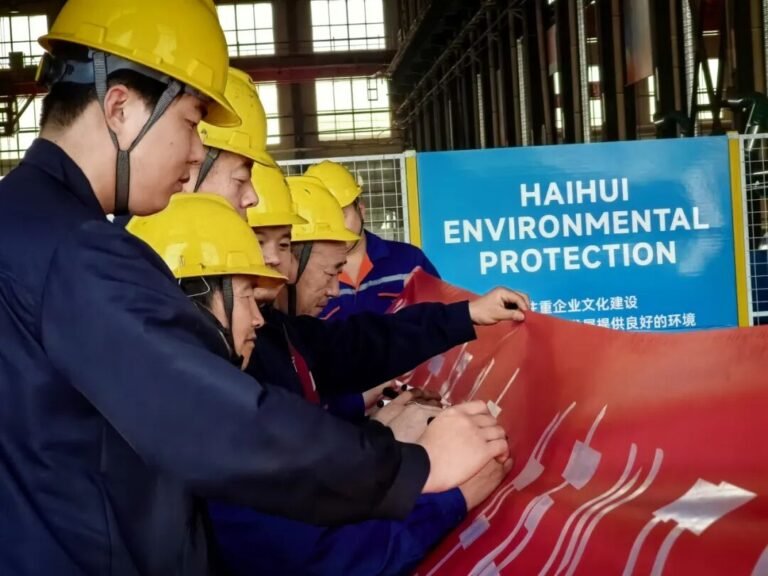
The Tianjin plant project covers 34 belt conveyors. This is a key intelligent conveying project in North China. As of mid-September 2026, installation work is fully underway. All construction personnel have entered the site.
Conveyors 1-11 and 14 have completed installation and commissioning. The remaining conveyors are moving forward in sequence. Overall progress has reached 35%.
Construction Organization
The site team works in shifts. Day and night crews coordinate closely. This keeps each process step connected without gaps and supports on-time delivery.
One feature of this project is “multiple lines in parallel.” Because there are many conveyors and the installation steps are complex, the team divided the 34 conveyors into work units. Each unit has its own crew. This approach shortens the installation cycle for each conveyor and reduces the risk that one delay affects the whole schedule.

Beihai Plant: 38 Belt Conveyors, Workshop Production and Site Installation in Parallel
Project Status
The Beihai plant project covers 38 belt conveyors. It is located in Guangxi and serves a large paper company in South China. Unlike Tianjin, the Beihai project uses a dual-track model: batch production in the workshop plus simultaneous installation on site.
Conveyors 1-9 have completed belt vulcanization. Conveyors 10-12 have reached 50% completion. Overall installation progress is about 20%. The project is moving forward on the expected schedule.
How Dual-Track Shortens the Schedule
In the traditional model, manufacturing and site installation happen one after the other. The workshop must finish all production before shipping to the site. The Beihai project breaks this order. Workshop production and site installation start at the same time. Finished components ship in batches, and the site crew installs them as they arrive.
This model demands strong coordination. But the schedule compression is significant. Workshop progress directly affects material supply to the site. Site feedback flows back to the workshop to guide adjustments. This creates an efficient closed loop.
Jining Yandian and Zoucheng: 45 Intelligent Conveyors Sprint to Completion
Yandian Section: Installation and Commissioning Complete
The 45 intelligent conveyor project at Jining Yandian and Zoucheng is a flagship project for Haihui in the paper industry. As of mid-September, the Yandian section has completed all installation and commissioning. The overall construction of this section is finished.
This completion strengthens Haihui’s service capability in intelligent conveying for the paper industry. Paper production demands high reliability from conveying equipment. If pulp or finished paper rolls stop moving, the entire production line is affected. Completing commissioning at Yandian means Haihui’s technical capability and engineering experience in this segment have been verified in practice.
Zoucheng Section: Moving Toward System Commissioning
Equipment installation at Zoucheng is proceeding on schedule. The project will soon enter the system commissioning phase. System commissioning is the key step between “installation complete” and “ready for operation.” It involves testing electrical control, signal transmission, and interlock protection systems together.
Dezhou Decheng: Chemical Park Wastewater Treatment Project Nears Completion
Project Positioning and Scale
The Dezhou Decheng chemical park wastewater treatment project is a key water treatment project for Haihui. It serves as the core supporting hub for green and low-carbon development in the chemical park. The site covers about 76 mu (approximately 5 hectares). It handles centralized industrial wastewater treatment and discharge compliance for the park. It is important for regional water environment safety and high-quality park development.
التقدم المحرز حالياً
Large water treatment structures have taken shape. Core process equipment installation has exceeded 90%. This includes scraper bridges, mixers, and pumps. The main project has entered the final stage.
The scraper bridge is a key device in the sedimentation tank. Its installation quality directly affects sludge removal efficiency and effluent quality. According to the Technical Requirement for Environmental Protection Product – Sludge Scraper (HJ/T 265-2006), the standard covers classification, naming, requirements, test methods, and inspection rules. It applies to sludge scraping at the bottom of circular or square radial sedimentation tanks. The project team followed these technical standards during positioning, leveling, and commissioning.
Technical Scope
The Dezhou project covers the north zone biochemical unit, carbon-one biochemical wastewater treatment unit, equalization and discharge mixing tank, ultrafiltration reverse osmosis unit, and membrane concentration unit. It includes more than a thousand pieces of equipment, such as high-efficiency sedimentation tank mixers, scraper bridges, and ozone generators, along with system commissioning and maintenance services.
Ultrafiltration reverse osmosis and membrane concentration are core steps for advanced treatment and reuse of chemical wastewater. Chemical wastewater is complex. It contains hard-to-degrade organics and inorganic salts. Stable operation of the membrane system is critical for meeting discharge standards.
Linyi, Shandong: Steel Plant Green Upgrade Dust Removal Project
Project Background and Scope
A large steel plant in Linyi, Shandong, is carrying out a green upgrade dust removal project. This is a core supporting project for the plant’s ultra-low emission retrofit. The project targets three main dust-generating areas: coal silos, ore troughs, and the iron casting area. It aims to cut dust emissions at the source and support the plant’s green and low-carbon transition.
Ultra-Low Emission Standards
China’s steel industry ultra-low emission requirements set clear limits. According to the Opinions on Promoting Ultra-Low Emissions in the Steel Industry, hourly average concentrations for particulate matter, sulfur dioxide, and nitrogen oxides from sintering machine heads and pelletizing roasting flue gas must not exceed 10 mg/m³, 35 mg/m³, and 50 mg/m³ respectively. For other main pollution sources, the limits are generally 10 mg/m³, 50 mg/m³, and 200 mg/m³ respectively. To qualify as ultra-low emission, a steel plant must meet these hourly average limits for at least 95% of each month.
Construction and Production Coordination
The project team adjusted the construction plan based on the steel plant’s operating conditions. The goal is to install dust removal equipment and lay pipes safely and in order, while keeping normal production running.
Steel plant dust removal retrofits face a core conflict: construction needs shutdown windows, but the production line runs continuously. The team’s approach is “off-peak construction and phased progress.” Equipment installation is concentrated during lower-load periods. Pipe prefabrication and other non-disruptive work happen during high-load periods. This keeps both the retrofit and production on track.
Rizhao: Dust Removal Equipment Project at 95%, Pipe Fabrication Nearing Completion
تقدم المشروع
The Rizhao local dust removal equipment project is proceeding on plan. Overall construction progress has reached 95%. Supporting pipe fabrication is in the final stage.
Construction Method and Current Steps
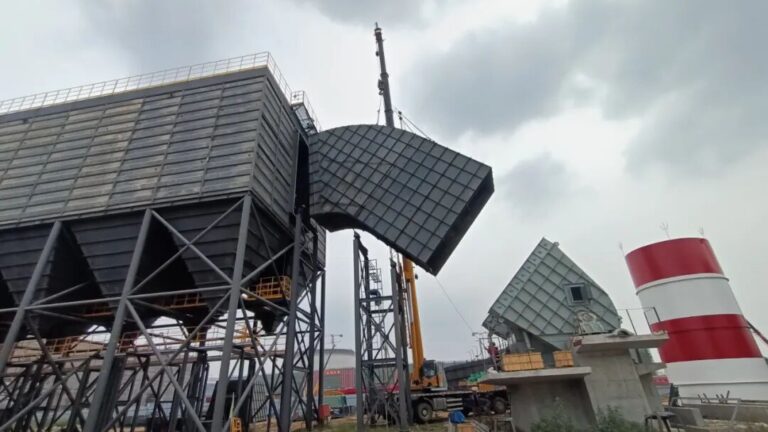
The site uses layered and zoned work. Clean air chamber and box welding are proceeding steadily. Pipe installation has also started. Current work includes the desulfurization agent silo, the mill, and raw gas and clean gas pipe installation.
The clean air chamber is the core filtration area of a bag filter. Its welding quality directly affects sealing and filtration efficiency. The team uses layered work to assign box welding, pipe installation, and equipment positioning to different work faces. This avoids interference between overlapping tasks.
Once completed, the project will improve exhaust gas treatment for the relevant company and contribute to local air quality.
Overseas Markets: Australia, Canada, and Germany Orders in Critical Fulfillment Stage
Multiple Challenges in Overseas Fulfillment
While growing its domestic market, Haihui is also advancing overseas business. Equipment delivery and technical service orders in Australia, Canada, and Germany are in a critical fulfillment stage.
Overseas fulfillment differs from domestic projects. Time zones are a challenge. China is 2-3 hours behind Australia, 12-15 hours ahead of Canada, and 6-7 hours ahead of Germany. Technical communication often crosses time zones. Logistics cycles are long. Shipping from China to Australia or Europe usually takes 30-45 days. Any delay can disrupt the site installation plan. Language and standard differences also matter. Different countries have different certification requirements, safety standards, and technical specifications.
Haihui’s Overseas Service Capability
Haihui’s overseas teams overcome time zone, logistics, and language challenges. They ensure equipment ships on time and technical service arrives when needed. The company has more than ten construction and after-sales service teams serving domestic and overseas markets. Products are exported to more than ten countries and regions, including the United States, Russia, Canada, Australia, Mexico, and India.
Other Projects: Yantai, Tianjin, Taiwan, Hubei, and Nanning
Project Distribution
In addition to the key projects above, several other projects in Yantai, Tianjin, Taiwan, Hubei, and Nanning are proceeding on schedule.
Frontline Construction Organization
Frontline workers are focused on progress. Multiple measures are in place to ensure all projects complete on time and enter operation smoothly.
Haihui’s Industry Coverage and Product Scope
Industry Coverage
Haihui Environmental Equipment Co., Ltd. was founded in 2009. It is an innovative manufacturing enterprise that integrates R&D and design of air treatment and environmental protection, production and manufacturing, installation and commissioning, and maintenance and operation. Products are widely used in petrochemical, power, metallurgy, building materials, coal, port, and paper industries.
Core Product Types
The company mainly produces high-efficiency energy-saving environmental equipment: dust removal, desulfurization and denitrification, wastewater treatment, intelligent conveying, and resource recovery equipment. Annual production capacity includes more than 15,000 sets of environmental and intelligent conveying equipment, and 1 million idler rollers per year.
مؤهلات الشركة
Haihui is a vice president unit of the Shandong Equipment Manufacturing Association and a vice president unit of the Rizhao Environmental Protection Industry Association. It has a provincial industrial technology center and a provincial flue gas desulfurization engineering laboratory. It is a Shandong manufacturing single-item champion enterprise and a national “Little Giant” specialized and sophisticated enterprise. It led the drafting of the group standard for Pulse Jet Bag Filters. It received the national enterprise standard “Leader” award, the Taishan Quality Product certification, and the provincial green factory title. Its belt conveyor was selected as one of China’s top ten belt conveyor brands.
R&D Capability
The company relies on the group’s national technology center and postdoctoral research station. It has established long-term industry-academia-research partnerships with the Chinese Academy of Sciences, Tsinghua University, Shandong University, and Qingdao University of Science and Technology. Projects include the multi-source air pollutant intelligent control and regional load pollution prevention technology integration and equipment R&D project, listed in the 2020 Shandong Major Science and Technology Innovation Project Plan. The “annual output of 200 sets of low-temperature flue gas waste heat recovery power generation equipment R&D and industrialization project” was listed in the Shandong Taishan Industry Leading Talent Project Plan. In 2021 and 2022, it won third prize and first prize respectively from the Shandong Machinery Industry Science and Technology Award.

Conveyor Equipment Technical Parameters and Engineering Standards
Basic Parameters of Belt Conveyors
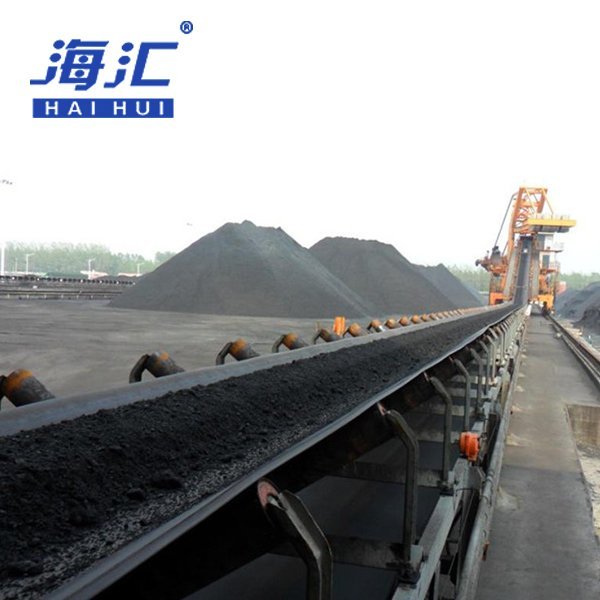
Belt conveyor design and selection involve several key parameters. According to DTII and DTII(A) fixed belt conveyor technical data, these conveyors can handle bulk materials with densities from 500 to 2,500 kg/m³, as well as packaged goods. Belt speed ranges from 0.8 to 6.5 m/s, with common values from 0.5 to 5.0 m/s.
The allowable material lump size depends on belt width, belt speed, trough angle, and incline angle. Reference values for maximum lump size by belt width are shown below.
| عرض الحزام (مم) | 500 | 650 | 800 | 1000 | 1200 | 1400 | 1600 | 1800 | 2000 | 2200 | 2400 |
|---|---|---|---|---|---|---|---|---|---|---|---|
| Max Lump Size (mm) | 100 | 150 | 200 | 300 | 350 | 350 | 350 | 350 | 350 | 350 | 350 |
Source: DTII and DTII(A) fixed belt conveyor technical data
Misalignment Control Requirements
During operation, the maximum belt misalignment must not exceed 5% of belt width. The supplier must fully consider how equipment manufacturing and component selection affect belt misalignment.
Related National Standards
Belt conveyor design and manufacturing involve multiple national standards, including:
- GB 50431 Belt Conveyor Engineering Technical Standard
- GB/T 10595 Belt Conveyors
- GB 987 Belt Conveyors – Basic Parameters and Dimensions
- GB/T 7984 Conveyor Belts of Textile Construction for General Use
- GB/T 10822 Flame-Retardant Conveyor Belts of Textile Construction for General Use
- GB/T 9770 Steel Cord Conveyor Belts for General Use
Source: List of national standards related to belt conveyors
Haihui’s Project Execution System
Field Construction Teams
Haihui has built 12 professional field construction and technical service teams. They travel to project sites across the country to provide installation, commissioning, technical support, and ongoing maintenance.
Service Network
The company has R&D and marketing teams in Jinan, Shanghai, and Beijing. It has built a service and technology network covering the whole country. Response efficiency and full-cycle project support rank among the top in the industry.
Project Execution Model
From demand research and solution design to equipment manufacturing and installation, Haihui follows a complete project execution process. Each stage has clear quality control points and responsibility assignments. This keeps the project controllable from contract signing to delivery.
Belt Conveyor Applications in the Paper Industry
Paper Industry Conveying Needs
The paper industry is a core application area for Haihui’s intelligent conveying equipment. In paper production, materials move from raw materials (wood chips, waste paper) to semi-finished products (pulp) and finished products (paper rolls, flat paper). Large amounts of conveying equipment are needed.
Technical Requirements for Paper Roll Conveying
Finished paper roll conveying demands high equipment precision and stability. Paper rolls are heavy and their surfaces are easily damaged. The conveying process must avoid strong impact. Paper company production lines often run continuously. Conveying equipment reliability directly affects line output.
Advantages of Intelligent Conveying Systems
Haihui’s intelligent conveying systems for the paper industry use automated control and intelligent scheduling for efficient material transfer. In the 45 intelligent conveyor project at Jining Yandian and Zoucheng, the conveying system must adapt to complex workshop layouts and continuous production rhythms.
Technical Path for Steel Industry Ultra-Low Emission Retrofits
Main Dust-Generating Steps in Steel Production
Steel production has a long process with many dust-generating steps. From the raw material yard, sintering, pelletizing, coking, and ironmaking to steelmaking and rolling, each step produces dust. Sintering machine heads, pelletizing roasting, coal silos, ore troughs, and the iron casting area are key dust sources.
Technical Measures for Ultra-Low Emission Retrofits
Steel industry ultra-low emission retrofits typically use high-efficiency dust removal equipment such as bag filters and electrostatic-fabric integrated precipitators. They combine enclosed conveying and spray dust suppression to achieve source control and end-of-pipe treatment.
Linyi Project Approach
The Linyi steel plant green upgrade dust removal project targets coal silos, ore troughs, and the iron casting area. It uses high-efficiency dust removal equipment to cut dust at the source and support ultra-low emission compliance.
Technical Challenges in Chemical Park Wastewater Treatment
Complexity of Chemical Wastewater
Chemical park wastewater is complex. It contains various organic compounds, inorganic salts, and heavy metals. Wastewater quality varies widely among chemical companies. After mixing, complex chemical reactions can occur. This places high demands on treatment processes.
Dezhou Project Treatment Process
The Dezhou Decheng chemical park wastewater treatment project covers the north zone biochemical unit, carbon-one biochemical wastewater treatment unit, equalization and discharge mixing tank, ultrafiltration reverse osmosis unit, and membrane concentration unit.
The project uses a “biological + membrane” combined process. Biological treatment degrades organic matter. Ultrafiltration reverse osmosis and membrane concentration handle advanced treatment and reuse. This combination adapts to fluctuating chemical wastewater quality and ensures stable discharge compliance.
Core Equipment
Core equipment includes scraper bridges, mixers, and pumps. The scraper bridge removes sludge from the bottom of sedimentation tanks. It is key to normal tank operation. According to HJ/T 265-2006, scraper bridge technical requirements cover classification, naming, test methods, and inspection rules.
Overseas Project Fulfillment Management Experience
Time Zones and Communication
Overseas project technical communication must overcome time zone barriers. Haihui’s overseas teams arrange work schedules to ensure timely and effective technical contact with overseas clients.
Logistics and Customs
Equipment shipping from China to overseas sites involves export declaration, ocean freight, destination customs clearance, and inland transport. Any delay can affect the site installation plan. Haihui works with long-term logistics partners to plan shipment batches and routes in advance, reducing logistics risk.
Standards and Certification
Different countries and regions have different certification requirements for industrial equipment. Haihui products are exported to more than ten countries and regions, including the United States, Russia, Canada, Australia, Mexico, and India. The company has accumulated experience in meeting different certification requirements.
Conclusion: From North to South, from East to West
From the coast of the Bohai Sea to the shores of the Beibu Gulf, from Shandong to overseas markets, Haihui project teams continue to work on the front lines this September.
The 34 belt conveyors at Tianjin are moving forward in shifts. The 38 belt conveyors at Beihai are in parallel production and installation. The 45 intelligent conveyors at Jining are entering the final stage. The Dezhou chemical park wastewater treatment project has exceeded 90% equipment installation. The Linyi steel plant dust removal retrofit is advancing. The Rizhao dust removal project has reached 95%. Overseas orders are in a critical fulfillment stage.
Haihui Environmental continues to support customers’ green transition, add momentum to high-quality development, and use professional capability to meet project milestones and build quality projects.
الأسئلة الشائعة
Q1: What are Haihui Environmental’s main products?
Haihui mainly produces high-efficiency energy-saving environmental equipment: dust removal, desulfurization and denitrification, wastewater treatment, intelligent conveying, and resource recovery equipment. Annual production capacity includes more than 15,000 sets of environmental and intelligent conveying equipment, and 1 million idler rollers per year.
Q2: Which industries does Haihui serve?
Haihui products are widely used in petrochemical, power, metallurgy, building materials, coal, port, and paper industries. Specific sectors include paper mills, metallurgy, coal, steel, mining, power plants, hydropower stations, chemical plants, light industry, ports, cement plants, and petroleum.
Q3: What are the technical parameters of Haihui’s belt conveyors?
DTII and DTII(A) fixed belt conveyors can handle bulk materials with densities from 500 to 2,500 kg/m³ and packaged goods. Belt speed ranges from 0.8 to 6.5 m/s, with common values from 0.5 to 5.0 m/s. Maximum belt misalignment during operation must not exceed 5% of belt width.
Q4: What project experience does Haihui have in the paper industry?
Haihui has completed multiple intelligent conveying projects in the paper industry, including the 45 intelligent conveyor project at Jining Yandian and Zoucheng, the 38 belt conveyor project at Beihai, and the 34 belt conveyor project at Tianjin. These projects serve large paper companies.
Q5: Which overseas markets does Haihui cover?
Haihui products are exported to more than ten countries and regions, including the United States, Russia, Canada, Australia, Mexico, and India. In 2026, equipment delivery and technical service orders in Australia, Canada, and Germany are in fulfillment.
Q6: What qualifications does Haihui hold?
Haihui is a national “Little Giant” specialized and sophisticated enterprise and a Shandong manufacturing single-item champion enterprise. It has a provincial industrial technology center and a provincial flue gas desulfurization engineering laboratory. It led the drafting of the group standard for Pulse Jet Bag Filters. It received the national enterprise standard “Leader” award, Taishan Quality Product certification, and provincial green factory title. Its belt conveyor was selected as one of China’s top ten belt conveyor brands.
Q7: How is Haihui’s service network structured?
Haihui has R&D and marketing teams in Jinan, Shanghai, and Beijing. It has more than ten construction and after-sales service teams serving domestic and overseas markets. The company has built 12 professional field construction and technical service teams, forming a nationwide service and technology network.
Q8: What are the emission limits for steel industry ultra-low emissions?
According to the Opinions on Promoting Ultra-Low Emissions in the Steel Industry, hourly average concentrations for particulate matter, sulfur dioxide, and nitrogen oxides from sintering machine heads and pelletizing roasting flue gas must not exceed 10 mg/m³, 35 mg/m³, and 50 mg/m³ respectively. For other main pollution sources, the limits are generally 10 mg/m³, 50 mg/m³, and 200 mg/m³ respectively.
المراجع
- Haihui Environmental steadily advances production and operations, ensuring high-quality delivery of order projects. China Shandong Net. March 2026.
- Expanding Markets, Ensuring Contract Fulfillment, Enhancing Efficiency, and Strengthening Internal Capabilities. Haihui Environmental Protection Equipment Co., Ltd. August 2026.
- Belt conveyor national standards list and technical parameter requirements. GB 50431, GB/T 10595, GB 987, and others.
- Opinions on Promoting Ultra-Low Emissions in the Steel Industry. Steel industry ultra-low emission indicator requirements.
- Haihui Environmental Equipment Co., Ltd. member unit introduction. Shandong Environmental Protection Industry Association.
- Forging Elite Teams on the Frontline in Beihai. Haihui Environmental Protection Equipment Co., Ltd. August 2026.
- DTII and DTII(A) fixed belt conveyor technical parameters. Baoding Haobo Machinery Equipment Co., Ltd.
- Technical Requirement for Environmental Protection Product – Sludge Scraper. HJ/T 265-2006. Ministry of Ecology and Environment of the People’s Republic of China.
- Shandong Juxian: “Little Giant” enterprise products exported overseas. Economic Daily. May 2023.


 English
 العربية
 Português do Brasil
 Русский
 Español