Durable Aluminum Dead Shaft Idler Rollers Solutions
- Why Switch To Aluminum Dead Shaft Idler Rollers?
- 3 Reasons Aluminum Dead Shaft Idler Rollers Outperform Steel Rollers
- OEM Production: Streamlined With Haihui Aluminum Dead Shaft Idler Rollers
- FAQs about Aluminum Dead Shaft Idler Rollers
- Partner with Haihui for Premium Aluminum Dead Shaft Idler Rollers
- References
Aluminum dead shaft idler rollers deliver superior precision and operational stability for web handling, packaging, and conveyor systems compared to heavy, high-inertia steel rollers. According to 2025 International Aluminium Institute (IAI) industry data, advanced aluminum alloy components continue to dominate high-speed industrial automation thanks to their lightweight structure, infinite recyclability, and excellent corrosion resistance.
By upgrading to high-performance aluminum dead shaft idler rollers, manufacturing plants drastically reduce equipment inertia, cut energy consumption, and minimize web wrinkling, deviation, and downtime waste. These engineered idle rollers ensure consistent, repeatable operation for high-speed converting, printing, and material conveying lines.
🚀 Ready to upgrade your conveyor and web handling system? With decades of industrial manufacturing expertise and global export experience, Haihui delivers precision-tuned aluminum dead shaft idler rollers. Get a 1-day customized technical solution proposal tailored to your production line. Contact us today.
Why Switch To Aluminum Dead Shaft Idler Rollers?
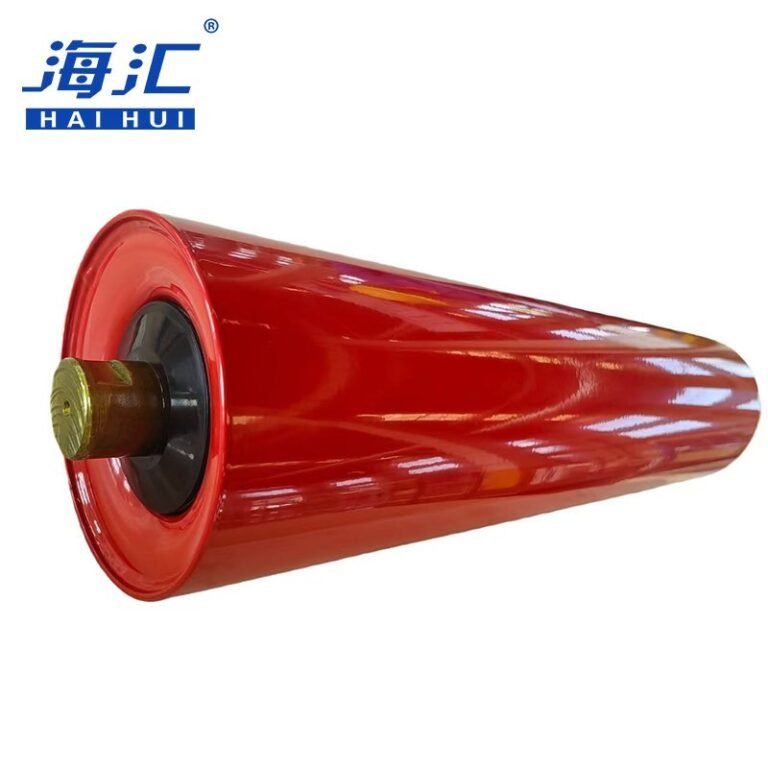
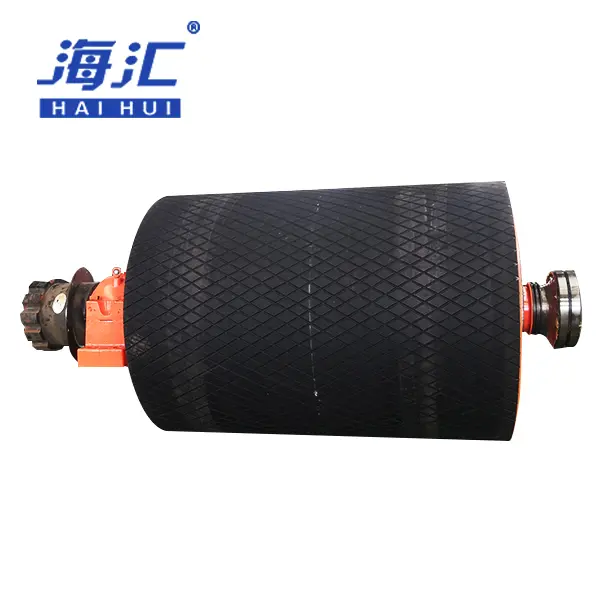
Aluminum Dead Shaft Idler Rollers
Upgrading industrial roller configurations requires practical performance and cost calculation, but aluminum dead shaft idler rollers deliver immediate long-term ROI through lower energy consumption, reduced mechanical wear, simplified maintenance, and verified sustainability advantages. For high-speed printing, flexible packaging, laminating, and light-to-medium conveyor scenarios, Haihui aluminum dead shaft idler rollers guarantee stable tension control and zero web distortion. The core dead-shaft structure—fixed shaft with rotating roller body—ensures precise running accuracy, making every material transmission smooth and consistent.
Lightweight & Low Inertia: The Core Advantages of Aluminum Dead Shaft Design
Compared with traditional steel dead shaft rollers, aluminum dead shaft idler rollers reduce overall rotating weight by up to 60%, directly optimizing high-speed line operation and lowering long-term energy costs.
Low-inertia high-speed operation
Lightweight aluminum structure minimizes startup and braking inertia, eliminating delayed response during frequent speed switching.
Enables stable running at ultra-high line speeds without web flutter or tension fluctuation.
Flexible and safe installation
Reduced unit weight lowers manual handling pressure during installation and replacement.
Simplifies equipment structural load design, saving frame manufacturing costs.
Stable mechanical performance
High-precision alloy tube ensures uniform wall thickness and concentricity, avoiding periodic jitter.
Optimized dead-shaft bearing matching maintains consistent rotational smoothness for years.
Quick buying checklist for aluminum dead shaft idler rollers
Confirm roller concentricity tolerance to eliminate high-speed web deviation.
Verify bearing sealing grade matching dustproof and moisture-proof working conditions.
Check surface finish to ensure scratch-free material contact.
When sourcing through Haihui, these standardized specifications prevent operational friction, frequent adjustments, and unnecessary line downtime.
Corrosion Resistance & Hard Anodized Surface Durability
Industrial production environments often involve humid air, weak chemical vapors, and dust accumulation. Ordinary steel rollers are prone to rust, surface peeling, and stuck rotation, while aluminum dead shaft idler rollers feature natural metal corrosion resistance plus optional hard anodized treatment for enhanced surface durability.
Advanced surface protection technology
Hard anodized coating forms a dense protective layer, resisting daily friction, solvent erosion, and oxidation discoloration.
Smooth non-stick surface prevents material adhesion, residue buildup, and web contamination.
Long-term environmental adaptability
Stable performance in coastal humid, workshop dusty, and low-corrosion industrial scenarios.
No rust debris generation, ensuring clean production and qualified finished product rate.
Validated durability testing
Haihui conducts continuous rotation aging tests, salt spray corrosion tests, and high-speed friction verification for every batch of aluminum dead shaft idler rollers, ensuring stable performance in long-cycle industrial operation.
Superior Recyclability Meets Modern ESG Production Standards
Aluminum alloy is one of the most recyclable industrial metals on the planet. Unlike steel accessories that produce large amounts of processing waste, aluminum dead shaft idler rollers support infinite recycling without structural performance degradation, perfectly matching global factory ESG assessment and green production targets.
Core sustainability advantages
Infinite recycling cycles save over 95% of primary metal production energy, reducing factory carbon footprint.
Single homogeneous material structure avoids complex sorting and waste disposal problems.
Enterprise compliance value
Provides clear, traceable green data for corporate environmental reports and supplier audits.
Reduces post-scrap processing costs and environmental liability risks.
For modern automated factories pursuing sustainable development, Haihui aluminum dead shaft idler rollers are standard upgraded accessories for green production lines.
Precision Manufacturing Specifications You Can Trust
Procuring qualified aluminum dead shaft idler rollers requires strict adherence to industrial precision standards. Loose tolerances and inconsistent processing will directly cause high-speed web deviation, tension instability, and material waste.
Key specification parameters for procurement
Tube concentricity tolerance: strictly controlled within ±0.03mm to ensure smooth rotation.
Surface finish: 32RMS high-precision polishing or hard anodized treatment.
Bearing matching: high-precision low-resistance bearings for dead-shaft dedicated use.
Wall thickness uniformity: no local thin points to avoid long-term deformation.
Practical manufacturing quality control loop
Approve engineering drawings and precision tolerances before batch production.
Complete surface treatment and compatibility testing according to working conditions.
Perform sample machine running verification to confirm stable tension control.
Haihui integrates all precision checkpoints into the production process, ensuring every aluminum dead shaft idler roller meets industrial high-speed operation standards.
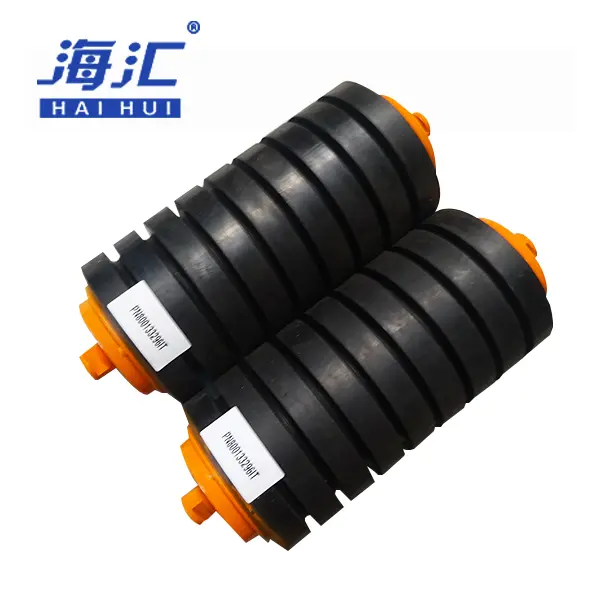
3 Reasons Aluminum Dead Shaft Idler Rollers Outperform Steel Rollers
Aluminum Dead Shaft Idler Rollers
Production managers and equipment engineers increasingly replace traditional steel rollers with aluminum dead shaft idler rollers because aluminum structures better adapt to high-speed, low-energy, high-precision modern production demands. Below are three practical, data-backed advantages that outperform ordinary steel rollers in industrial scenarios.
Reason 1 – Ultra-Low Rotational Inertia Improves High-Speed Stability
Traditional steel dead shaft rollers feature heavy weight and high inertia. During equipment startup, shutdown, and speed adjustment, delayed rotation response easily causes web stretching, wrinkling, and positioning deviation.
Low-inertia structural advantages
Lightweight aluminum body realizes instant follow-up rotation, eliminating speed hysteresis.
Uniform stress distribution prevents partial centrifugal jitter during high-speed operation.
Production practical value
Effectively improves finished product yield and reduces material waste rate.
Supports continuous stable operation of ultra-high-speed printing and laminating lines.
Haihui optimizes wall thickness and internal bearing configuration based on different line speeds, ensuring customized low-inertia performance for different working conditions.
Reason 2 – Natural Corrosion Resistance Reduces Maintenance Frequency
Steel rollers rely entirely on external paint or electroplating for anti-corrosion protection. Once the surface layer is scratched or worn, rapid rusting occurs, leading to stuck rotation, surface bulging, and web scratching.
Aluminum anti-corrosion mechanism
Aluminum alloy naturally forms a dense oxide film to isolate air and moisture.
Optional hard anodized treatment further enhances wear and chemical resistance.
Long-term maintenance cost savings
No frequent rust removal, repainting, and roller replacement work.
Stable surface flatness ensures long-term material transmission quality.
Haihui aluminum dead shaft idler rollers maintain stable performance in humid, dusty, and lightly corrosive workshops for years.
Reason 3 – Lightweight Structure Reduces Equipment Load & Energy Consumption
Excessive self-weight of steel rollers increases equipment operating load, raising motor power consumption and accelerating mechanical fatigue of brackets and frames. Aluminum dead shaft idler rollers fundamentally optimize equipment operating load with lightweight advantages.
Energy-saving operational advantages
Lightweight structure reduces startup load, cutting long-term power consumption by 10–15%.
Lower equipment load extends the service life of motors, reducers, and brackets.
On-site operational optimization
Lighter weight simplifies daily inspection, disassembly, and replacement operations.
Reduces equipment vibration and operating noise, improving workshop working environment.
| Roller Type | Rotational Inertia | Corrosion Resistance | Energy Consumption | Maintenance Cycle |
|---|---|---|---|---|
| Aluminum Dead Shaft Idler Roller | Ultra-Low | Excellent (Natural + Anodized) | Low (10–15% saving) | Long-term stable, low maintenance |
| Ordinary Steel Dead Shaft Roller | High | Poor (Prone to rust) | High | Frequent rust removal & replacement |
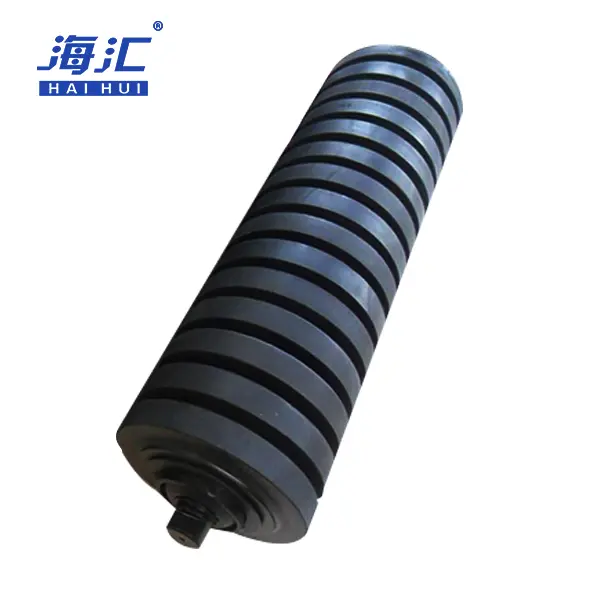
OEM Production: Streamlined With Haihui Aluminum Dead Shaft Idler Rollers
High-volume automated production lines have zero tolerance for roller precision errors and performance instability. Slight concentricity deviation or poor sealing will cause batch material defects and frequent line shutdowns. Haihui specializes in mass production of high-precision aluminum dead shaft idler rollers, achieving full-process standardized control from precision processing, surface treatment to finished product testing, ensuring 100% consistent batch performance.
🏭 Need stable high-volume OEM supply? Haihui implements full-process precision quality control, supports customized diameter, length, surface treatment and bearing configurations, and provides flexible MOQs and fast bulk delivery. Explore our customized roller solutions now.
Precision Tube Processing & Dead-Shaft Assembly Technology
High-quality aluminum dead shaft idler rollers depend on precision tube processing and standardized dead-shaft assembly technology.
High-precision tube processing
Adopts high-purity aluminum alloy seamless tube with uniform wall thickness and no internal stress.
Multi-stage fine turning and polishing ensures ultra-high concentricity and smooth surface.
Professional dead-shaft matching
Fixed non-rotating shaft body precisely matches low-resistance bearings.
Strict tolerance control eliminates shaft deviation and roller shaking.
Batch consistency guarantee
Unified tooling and assembly standards ensure zero performance difference between batches.
Every finished roller undergoes dynamic balance testing before delivery.
Customization Options: Surface Treatment & Dimensional Optimization
Different industrial scenarios require targeted roller surface performance and dimensional parameters. Haihui provides one-stop personalized customization for aluminum dead shaft idler rollers.
Surface treatment options
High-precision polishing: suitable for smooth material transmission scenarios to avoid scratching.
Hard anodization: enhances wear and corrosion resistance for harsh working conditions.
Anti-slip coating: increases surface friction for anti-deviation conveying requirements.
Dimensional customization
Customizable roller diameter, effective width, and shaft body size.
Special spacing and structural design for non-standard equipment.
Quality Assurance: ISO Certification & Industrial Standard Compliance
Operational stability and safety of industrial rollers rely on rigorous quality assurance systems. Haihui strictly follows ISO 9001 quality management system standards to implement full-process monitoring.
Core quality control system
Raw material inspection: strictly screen aluminum alloy material parameters to ensure uniform hardness and composition.
Process inspection: real-time monitoring of dimensional tolerance and surface treatment quality.
Finished product testing: dynamic balance detection, rotation resistance test, salt spray corrosion test.
Industrial compliance advantages
Meets automated production line precision matching standards.
Complies with environmental protection and recyclable material specifications for modern factories.
Logistics Management: Bulk Supply & Fast Lead Time Optimization
Stable supply chain and accurate delivery cycles are key to ensuring continuous factory production. Haihui optimizes bulk production scheduling and logistics solutions for aluminum dead shaft idler rollers.
Bulk supply guarantee
Stable production capacity supports large-scale batch orders and seasonal peak demand.
Classified inventory of conventional models supports quick delivery.
Lead time optimization
Standard products support fast delivery; customized products provide accurate cycle scheduling.
Optimize packaging and transportation to prevent surface collision and scratch damage.
FAQs about Aluminum Dead Shaft Idler Rollers
1) Why choose aluminum dead shaft idler rollers over steel rollers for high-speed lines?
Aluminum dead shaft idler rollers feature ultra-low rotational inertia, enabling instant response during high-speed startup and speed change, eliminating web flutter and deviation. Their lightweight structure reduces equipment load and energy consumption, while natural corrosion resistance lowers daily maintenance costs. For high-precision printing, packaging and conveying lines, they deliver far better stability and economy than traditional steel rollers.
2) What core specifications should be prioritized when purchasing aluminum dead shaft idler rollers?
Focus on four core indicators: roller concentricity tolerance, surface treatment grade, bearing precision and sealing performance, and wall thickness uniformity. These parameters directly determine high-speed operation stability, wear resistance, and service life, avoiding batch production defects caused by low-precision accessories.
3) What working conditions are aluminum dead shaft idler rollers suitable for?
They are widely applicable to high-speed printing, flexible packaging, laminating machinery, light and medium-duty belt conveyors, automated sorting lines, and humid/dusty workshop scenarios. They are especially suitable for production lines requiring high precision, low energy consumption, and low maintenance.
4) How to extend the service life of aluminum dead shaft idler rollers?
Select targeted surface treatment according to working conditions, avoid long-term overload operation, regularly clean surface dust and debris, check bearing rotation flexibility, and ensure good sealing performance. Haihui’s optimized structural design and high-quality accessories can effectively extend the overall service life of the rollers.
5) What is the difference between dead shaft and live shaft idler rollers?
Dead shaft rollers adopt fixed shaft and rotating roller body structure, featuring higher precision, more stable operation and lower inertia, suitable for high-speed precision production lines. Live shaft rollers feature synchronous rotation of shaft and roller body, with relatively lower precision, mostly used for ordinary low-speed conveying scenarios.
Partner with Haihui for Premium Aluminum Dead Shaft Idler Rollers
Haihui is a professional manufacturer focusing on R&D, precision processing and customized production of industrial conveyor and web handling rollers. Adhering to strict ISO 9001 quality control standards, we provide high-precision, low-inertia, durable aluminum dead shaft idler rollers for global automated production enterprises.
We support full-size customization, personalized surface treatment, special working condition structural optimization, fast sample testing and bulk batch supply. Our professional engineering team provides free working condition matching and technical guidance to help customers optimize line operation, reduce energy consumption and maintenance costs, and improve production efficiency.
Fast Service: 1-day professional technical solution proposal, customized drawing support, and efficient after-sales response.
Strict Quality Control: Full-dimensional precision testing, dynamic balance testing, salt spray corrosion testing and 100% finished product inspection before delivery.
Flexible Order Support: Support small-batch trial orders and large-scale mass customized production to meet different procurement demands.
👉 Contact Haihui Today to customize exclusive aluminum dead shaft idler roller solutions for your production line!
References
International Aluminium Institute (IAI) – https://international-aluminium.org/
Industrial Low-Inertia Roller Design Specification – Mechanical Industry Standard
Aluminum Alloy Material Corrosion Resistance Research – Industrial Material Journal
High-Speed Web Handling Precision Control Standard – Automation Industry Research
ISO 9001 Industrial Mechanical Parts Quality Management System
Industrial Energy Saving and Green Production ESG Guidelines
Dead Shaft Roller Structural Design and Application Manual
Hard Anodized Aluminum Surface Treatment Technical Specification
 English
 العربية
 简体中文
简体中文 Nederlands
 Français
 Deutsch
 Bahasa Indonesia
 Italiano
 日本語
日本語 한국어
한국어 Bahasa Melayu
 Polski
 Português do Brasil
 Русский
 Español
 Türkçe