Lagged Conveyor Pulley:Stop Belt Slippage & Downtime
If your belt conveyor uptime lives or dies by traction, a lagged conveyor pulley isn’t a side detail—it’s the deal breaker. Plant managers want grip, wear resistance, and zero slip in wet or dusty conditions, and you need a supplier who won’t cut corners when belt tension rises.
Proper lagging, tight shaft fit, clean bonding—that’s what keeps belt slip and costly shutdowns off your radar.
Grand View Research reports in 2025 that demand for high-traction conveyor components continues rising across mining, aggregate, and cement sectors.
Lyrical Notes: Mastering Lagged Conveyor Pulley
➔ Survey core types—from rubber lagged drive pulleys and ceramic lagged pulleys to herringbone groove and plain surface designs
➔ Ensure traction safety with proper durometer (60-75 Shore A), bond strength (≥12 N/mm peel), ISO certification, and CEMA compliance
➔ Score cost savings by leveraging lead-time flexibility, bundled lagging options, shaft specs, and detailed engineering drawings
➔ Guarantee performance via bond testing, dynamic balancing, and strict concentricity checks
Types Of Lagged Conveyor Pulley Explained
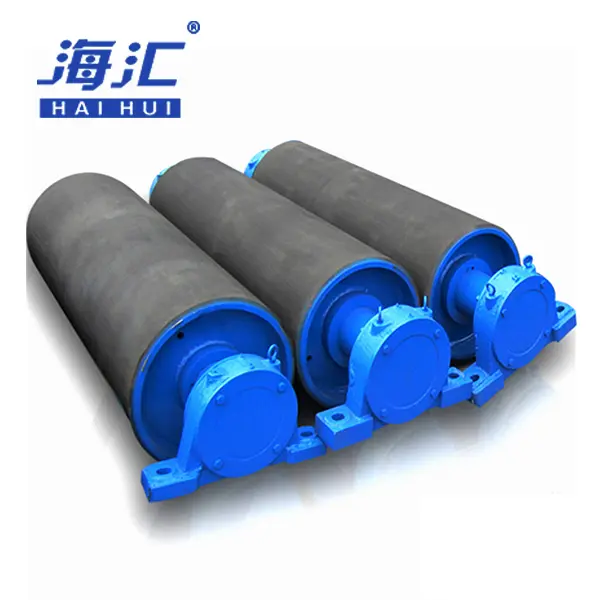
Lagged conveyor pulleys show up everywhere, from quarry belt feeders to overland conveyors. When people talk about drive pulleys, head pulleys, or tail pulleys, they often mean practical, high-grip solutions that just work. This guide breaks down how lagged pulleys are built, why different lagging types matter, and how smart pulley design keeps belts tracking true and product moving.
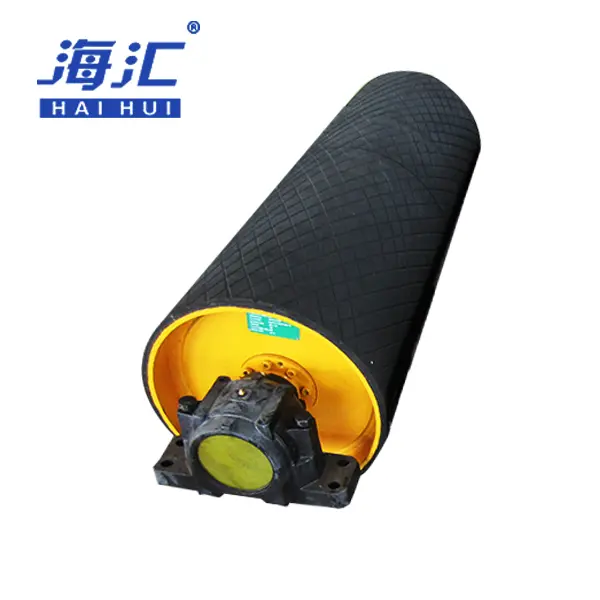
Standard Rubber Lagged Drive Pulley
In daily operations, rubber lagged pulleys feel simple. Inside, though, the structure of a high-traction pulley is carefully arranged.
Core Structural Parts
- Can Body (Shell) – Made from fabricated S355 steel for strength and concentricity. Acts as the torque-transferring core for belt drive.
- Shaft – Forged 42CrMo4 with induction-hardened bearing seats (HRC 50-55). Transmits motor torque to shell.
Lagging System
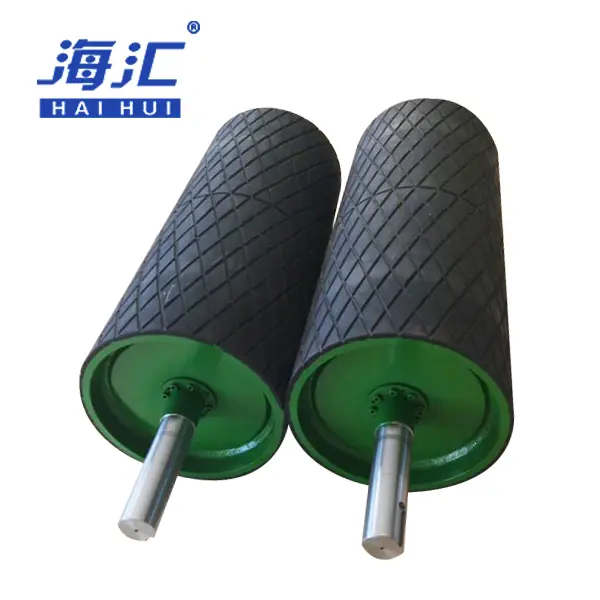
- Base layer – Vulcanized rubber bonded to shell (6-12 mm thickness). Provides friction between pulley and belt.
- Groove pattern – Herringbone for self-cleaning, plain for even wear, or ceramic for extreme grip.
Functional Benefits
- Stable traction coefficient (0.4-0.6 typical)
- Abrasion resistance (≤150 mm³ loss per DIN 53516)
- Belt slip prevention in wet or dusty conditions
These standard drive pulley formats dominate quarry and aggregate applications.
According to Smithers’ 2025 bulk handling outlook, demand for lagged conveyor pulleys is expected to grow steadily, driven by mining and aggregate safety requirements.
Explore Haihui’s full range of lagged pulley solutions to find the perfect fit for your quarry’s drive requirements.
Ceramic Lagged Pulleys for Extreme Grip
High-traction applications rely on ceramic lagging. Ceramic tiles (6x6mm or 12x12mm) are embedded in rubber, creating a high-friction surface that sheds water and grips belts in mud or ice.
Manufacturing Flow
- Shell preparation – Abrasive blasting to SSPC-SP10, primer application.
- Tile placement – Ceramic tiles positioned in rubber matrix, vulcanized to shell.
- Curing – Heat and pressure bond rubber to steel and encapsulate tiles.
Compliance and Safety
- MSHA-approved materials for underground coal
- ATEX certification for hazardous areas
Market Value
- Extended belt life (reduced slip)
- High grip in wet or icy conditions
- Reduced belt cover wear
Brands like Haihui focus on ceramic lagging solutions that balance grip and cost, making lagged pulleys a smart pick for modern aggregate operations. See our heavy-duty pulley options here.
Herringbone Groove Lagged Pulleys for Self-Cleaning
Wet or muddy conveyors need self-cleaning lagging. Herringbone groove lagging features V-shaped grooves that channel water and fines away from the belt interface.
Groove Pattern Benefits
- Water shedding – Channels direct moisture to pulley edges
- Self-cleaning – Grooves prevent material packing
- Traction maintenance – Grip remains consistent in wet conditions
Performance Metrics
- Friction coefficient (wet) – 0.35-0.45 (plain) vs. 0.45-0.55 (herringbone)
- Groove depth – 6-10 mm typical
- Coverage – 60-80% of pulley face
Compared with plain lagging, herringbone designs support demanding wet environments while still offering the traction expected from rubber lagged systems. Browse our heavy-duty lagged pulleys.
Plain Rubber Lagged Pulleys for Dry Applications
Not all lagged pulleys need grooves. Plain rubber lagging (smooth surface) provides even wear and is ideal for dry, clean applications where material packing isn’t a concern.
Application areas
- Dry aggregate conveyors
- Indoor or covered systems
- Low-moisture environments
Design Flexibility
- Custom durometer (60-75 Shore A)
- Bonded or vulcanized attachment
For brands wanting simple, cost-effective traction, Haihui offers plain rubber lagged pulleys that blend pressure safety with reliable grip. Learn more about our pulley manufacturing.
Is Your Lagged Pulley Properly Bonded And Compliant?
Choosing the right lagged conveyor pulley is not just box-ticking. It’s about traction, belt life, and plant trust. From rubber compound to bond strength, every detail shapes how a lagged pulley performs. If your pulley supplier cuts corners, problems show up fast.
Understanding Bond Strength and Regulatory Compliance
When sourcing lagged pulleys, start with bond strength and regulatory compliance.
Pulley materials
- Shell – Fabricated S355 or stainless steel. Certified plate certs and traceable batch records.
- Lagging – SBR, natural rubber, or neoprene. Bond peel strength verified.
Safety regulations
- Bond strength testing (≥12 N/mm for heavy duty)
- CEMA classification (B, C, D, E based on belt tension)
- Alignment with MSHA or OSHA safety regulations
Documentation flow
- Supplier declaration and third-party lab validation (peel tests, durometer checks)
Haihui works with certified rubber suppliers and tracks every lagged pulley batch, keeping paperwork clean and audit-ready. Contact us for our compliance certifications.
Bond Testing, Dynamic Balancing, and Concentricity Checks
Quality checks keep lagged pulleys from failing in real life. Key control points include bond peel testing (≥12 N/mm), dynamic balancing (G-16 minimum for >3 m/s), and concentricity within strict tolerances (≤0.5 mm TIR face runout).
At Haihui, we integrate inline sensors to flag deviations early, keeping lagged pulleys consistent across bulk orders. We ensure 100% NDT weld inspection and hardness testing.
ISO Certification Plus CEMA-Compliant Lagging Requirements
Lagging matters just as much as the shaft. Haihui aligns ISO-controlled production with certified CEMA-compliant lagging systems, protecting your belt from slip and maintaining traction stability.
Expert Tip: High-quality lagging bond prevents belt slip and cover damage, ensuring consistent material flow.
Request a custom solution proposal in just 24 hours.
4 Cost-Saving Negotiation Tips For Bulk Lagged Pulley Orders
Bulk buying lagged conveyor pulleys sounds simple, yet real savings hide in details.
Tip 1 – Leverage Lead Time Flexibility and Palletization Savings
Adjusting order windows to off-peak months and optimizing pallet heights can significantly reduce freight charges.
| Factor | Standard pallet (units) | Optimized pallet (units) | Freight/Unit saving |
|---|---|---|---|
| 800 mm pulley | 4 | 6 | ~30% |
| 1000 mm pulley | 3 | 5 | ~40% |
| 1200 mm pulley | 2 | 4 | ~50% |
Tip 2 – Bundle Lagging Type and Shaft Specs for Better Rates
Combine ceramic lagging with forged shafts under integrated engineering. Haihui uses in-house induction hardening and vulcanizing presses to ensure consistent quality with unified design planning to lower engineering fees.
Tip 3 – Specify Bond Strength and Balancing Requirements Early
Clarify lagging type (ceramic vs. rubber), bond peel strength (≥12 N/mm), and dynamic balancing grade (G-16) early to avoid costly late-stage redesigns.
Tip 4 – Provide Technical Drawings to Optimize Inventory Management
Submitting CAD files and precise dimensional data helps factories plan shaft cutting and shell fabrication with less scrap. Start your one-stop custom project with our engineering team today.
FAQs about Lagged Conveyor Pulley
What types of lagged conveyor pulleys are suitable for mining and aggregate use?
- Rubber lagged drive pulleys – for standard quarry belts and dry conditions.
- Ceramic lagged pulleys – for extreme grip in wet, muddy, or icy environments.
- Herringbone groove lagged pulleys – for self-cleaning in wet or fine material applications.
How is bond strength and regulatory compliance ensured?
Through certified rubber grades (SBR, natural rubber, neoprene), documented peel testing (≥12 N/mm), and adherence to CEMA, MSHA, and ISO safety standards.
What should buyers prepare for OEM lagged pulley orders?
Confirm custom shaft dimensions, lagging type (ceramic, rubber, herringbone), bond strength requirements, and your delivery schedule. Haihui offers flexible MOQs to support both small and large batches. For cost control, bulk packaging and optimized palletization inside shipping containers support efficient inventory management.
Ready to upgrade your conveyor drive with reliable lagged pulleys? Get a quote from Haihui now.
References
- Grand View Research – Conveyor Component Market Analysis
- Smithers’ 2025 bulk handling outlook – smithers.com
- CEMA – Conveyor Equipment Manufacturers Association standards
- ISO 9001 – iso.org
- DIN 53516 – Rubber abrasion testing
- ASTM D395 – Compression set test
- MSHA – Mine Safety and Health Administration
- Haihui – Technical specifications for lagged conveyor pulleys


 English
 العربية
 简体中文
简体中文 Nederlands
 Français
 Deutsch
 Bahasa Indonesia
 Italiano
 日本語
日本語 한국어
한국어 Bahasa Melayu
 Polski
 Português do Brasil
 Русский
 Español
 Türkçe