Aggregate Conveyor Pulley:Stop Shaft Failure & Downtime
Picking the right aggregate conveyor pulley maker can make or break your crushing and screening line. One undersized shaft or soft bearing seat, and your whole quarry operation feels it.
According to recent reports from Grand View Research and Smithers, demand for heavy-duty conveyor components continues to climb as aggregate producers push for higher uptime, lower maintenance, and regulation-ready safety standards across crushing, screening, and stacking conveyors.
Choose your partner wisely.
5 Key Criteria For Vetting An Aggregate Conveyor Pulley Maker
Choosing the right aggregate pulley maker isn’t just about price. It’s about torque capacity, corrosion protection, smart shaft metallurgy, and real field support when things get rocky.
Manufacturing Capacity and Lead Times
When reviewing an aggregate pulley maker, break capacity into clear layers:
Production Infrastructure
- Factory size and layout efficiency
- Number of active CNC lathes and welding stations
- Automation level of shaft hardening and balancing equipment
Operational Output
- Average monthly pulley production (units)
- Peak output during crushing season (spring/summer)
- Backup lines for rush orders
Delivery Control
- Standard turnaround time (weeks for custom shafts)
- Flexibility in delivery schedules for unplanned failures
- Historical on-time shipping rate
A serious pulley manufacturer won’t dodge these details. A reliable aggregate pulley maker like Haihui shares real numbers, not vague promises.
🚀 Ready to scale with a proven quarry partner? With a 50,000+ m² heavy industrial facility, robotic welding cells, induction hardening lines, and an annual capacity of ~5,000 heavy-duty pulleys, Haihui delivers real manufacturing power. Get a 1-day solution proposal today.
Industry Certifications and Compliance Records
Compliance isn’t optional in aggregate processing—MSHA, CEMA, and OSHA standards apply.
Quality Framework
- Valid ISO 9001 certification
- CEMA (Conveyor Equipment Manufacturers Association) compliance
- MSHA certification for underground aggregate (if applicable)
Safety Assurance
- Verified shaft hardness testing (HRC 50-55)
- Documented weld inspection protocols (NDT)
Regulatory Alignment
- Proof of OSHA guarding compliance
- Adherence to environmental regulations (dust, noise)
Any experienced aggregate pulley supplier should provide this fast.
Material Sourcing and Shaft Specifications
Material quality decides service life under high start-stop torque and abrasive dust.
Raw Inputs
- Certified forged 42CrMo4 or fabricated S355 steel
- Verified shaft chemistry and mechanical properties (tensile, yield)
Consistency Controls
- Tight shaft straightness tolerance (≤0.2 mm/m)
- Clear material sourcing transparency (mill certs per lot)
- Documented hardness checks (bearing seats HRC 50-55, case depth 3-5 mm)
A trusted pulley maker will explain lagging options and corrosion protection in plain terms.
Customization Capabilities and Tooling Expertise
Customization shows real strength when your conveyor has unusual center distances or torque requirements.
Design & Tooling
- In-house shaft engineering
- Precision keyway broaching
- Flexible engineering for odd face widths
Product Differentiation
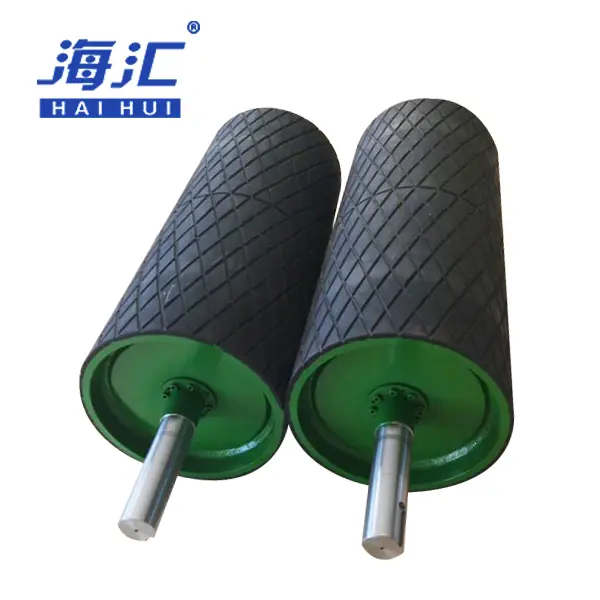
- Ceramic vs. rubber lagging (herringbone or plain)
- Custom shaft diameters and lengths
- Special coatings for abrasive aggregate (epoxy, polyurethane)
Complex specialized designs
- Gravity take-up pulleys
- Snub pulleys for belt tracking
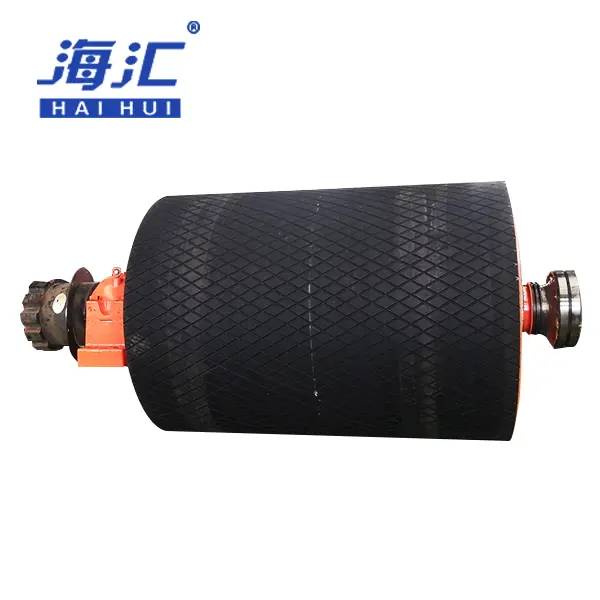
- Drive pulleys for long overland conveyors
A skilled pulley maker doesn’t just copy; it builds to spec.
🎨 Bring your custom pulley design to life: Haihui offers a seamless OEM/ODM process with in-house engineering and rapid prototyping. Enjoy flexible MOQs and sample turnarounds in approximately 10 days. Explore Haihui’s Customization Services.
After-Sales Support and Warranty Terms
Support matters long after delivery—especially when a crusher feed pulley fails on a Saturday.
Service Structure
- Responsive customer service (24/7 for emergencies)
- Direct technical support (engineers, not dispatchers)
Problem Handling
- Clear defect resolution steps
- Transparent product guarantees
Long-Term Protection
- Defined warranty period (minimum 12 months)
- Access to replacement shafts and bearings
- Reliable post-delivery assistance and optional field service
Haihui backs its work with straightforward coverage, which is exactly what quarry operators expect from a dependable aggregate pulley maker.
Quality Assurance Processes Demystified
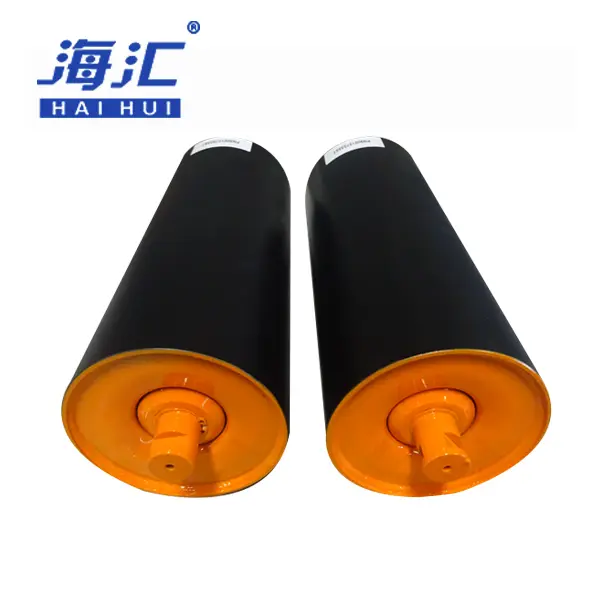
Quality isn’t luck in an aggregate pulley maker factory; it’s built in from day one. From raw steel bar arrival to final dynamic balancing, every move counts. A serious pulley maker knows small slips—shallow case depth, poor weld penetration, soft bearing seats—turn into big headaches. That’s why teams like Haihui treat quality control as daily discipline, not a last-minute fix.
Incoming Material Inspection
For any reliable aggregate pulley maker, control starts with raw materials.
Material Verification
- Shaft bar stock (42CrMo4) certs reviewed for chemistry and mechanicals
- Mechanical strength (tensile, yield) tested against design requirements
- Shell plate thickness and grade verified
Surface Evaluation
- Visual inspection for scratches, pits, or mill scale
- Structured sampling to detect hidden defects
Compliance Review
- Supplier certificates filed under quality control records
- Cross-check against internal acceptance benchmarks
Only approved steel moves forward. Anything off-spec gets flagged fast. A disciplined pulley maker knows that one weak shaft can ruin a whole crusher conveyor line.
In-Line Production Testing
On the production line, things move quickly, so process control must keep pace.
- Shaft straightness checks verify forging or turning parameters.
- Weld NDT (ultrasonic or dye-penetrant) confirms shell integrity.
- Hardness testing (Rockwell C) validates induction hardening.
Daily quality checks focus on:
- Shaft straightness (≤0.2 mm/m)
- Bearing seat hardness (HRC 50-55)
- Weld penetration (≥75% of plate thickness)
- Concentricity (≤0.5 mm TIR face runout)
Continuous monitoring spots early defects before they snowball. For a seasoned aggregate pulley maker, testing during production saves cost and protects reputation. Haihui integrates automated NDT with manual review, keeping the pulley maker team sharp and accountable.
Final Audit and Batch Traceability
Before shipment, finished pulleys undergo layered review.
Performance Validation
- Random audit sampling (hardness, balance, runout)
- Dynamic balancing (G-16 minimum for belt speeds >3 m/s)
Traceability Control
- Unique serial numbers assigned
- Linked digital records for each lot (shaft certs, weld logs, balance reports)
Documentation Review
- Compliance verification (CEMA, MSHA, ISO)
- Archived documentation for future quality assurance checks
If a failure ever happens, traceability means quick action instead of chaos. A responsible aggregate pulley maker doesn’t just produce pulleys; it builds trust, one coded batch at a time.
FAQs about Aggregate Conveyor Pulley Maker
What should buyers examine before selecting an aggregate pulley maker for quarry applications?
Choosing the wrong partner can stall an entire crushing line. A serious review should cover both numbers and behavior:
Capacity & Stability
- Monthly output and surge capacity (pulleys per month)
- Backup lines in case of breakdown
Delivery Discipline
- Real on-time delivery records
- Clear lead times, including rush orders for unplanned failures
Communication Response
- Speed of quotation updates
- Accuracy in drawings and specifications
A reliable aggregate pulley maker doesn’t just promise output; the data and day-to-day responses reveal the truth.
How do certifications affect trust when sourcing conveyor pulleys for aggregate plants?
Certifications are more than framed papers on a wall.
- CEMA compliance shows design discipline.
- ISO 9001 signals controlled production.
- MSHA (for underground) or OSHA guarding records reflect safety consistency.
For quarry and sand/gravel applications, missing certification can mean rejected batches, safety fines, or brand damage. A qualified pulley maker proves compliance before orders are signed.
How can quotes from different pulley makers be compared fairly?
Low unit price can hide expensive surprises. A smart comparison includes:
- Unit cost vs. quantity tiers
- Tooling and engineering setup fees
- Freight, crating, and export packing
- Payment terms and penalty clauses for late delivery
Short checklist for clarity:
- Are custom shaft drawings included?
- Is lagging (ceramic vs. rubber) priced separately?
- Is shipping quoted to site or port?
- What’s the warranty on shafts vs. lagging?
Transparent structure reduces tension and builds long-term confidence.
What confirms shaft material quality in aggregate conveyor pulleys?
Material flaws show up at the worst moment—during peak crushing season when the plant can’t stop. Quality checks usually involve:
- Shaft hardness within HRC 50-55 range at bearing seats
- Case depth ≥3-5 mm verified by hardness traverse
- NDT weld inspection of shell (no porosity, full penetration)
- Batch traceability records (mill certs per lot)
In practice, a disciplined pulley maker inspects incoming bar stock, monitors induction hardening during production, and performs final dynamic balancing. Strong metal, careful heat treat, and documented traceability—this is what protects the belt and keeps the quarry running.
Partner with Haihui for Your Aggregate Conveyor Pulley Needs
For over 15 years, Haihui has been a trusted manufacturer of heavy-duty conveyor pulleys, serving aggregate, sand & gravel, and crushing operations. With 100% NDT weld inspection, ISO 9001 certification, and rapid 12-hour response times, we turn complex conveying challenges into competitive advantages.
Contact Haihui today to discuss your project, request free application reviews, and secure a reliable supply chain partner for your quarry.
References
- CEMA – Conveyor Equipment Manufacturers Association standards
- Grand View Research – Conveyor Component Market Analysis
- Smithers – Bulk Handling Component Outlook
- ISO 9001 – iso.org
- ASTM E18 – Rockwell hardness testing
- ASTM E709 – Magnetic particle testing
- MSHA – Mine Safety and Health Administration
- OSHA – Occupational Safety and Health Administration
- Haihui – Internal engineering specifications for aggregate conveyor pulleys
 English
 العربية
 简体中文
简体中文 Nederlands
 Français
 Deutsch
 Bahasa Indonesia
 Italiano
 日本語
日本語 한국어
한국어 Bahasa Melayu
 Polski
 Português do Brasil
 Русский
 Español
 Türkçe